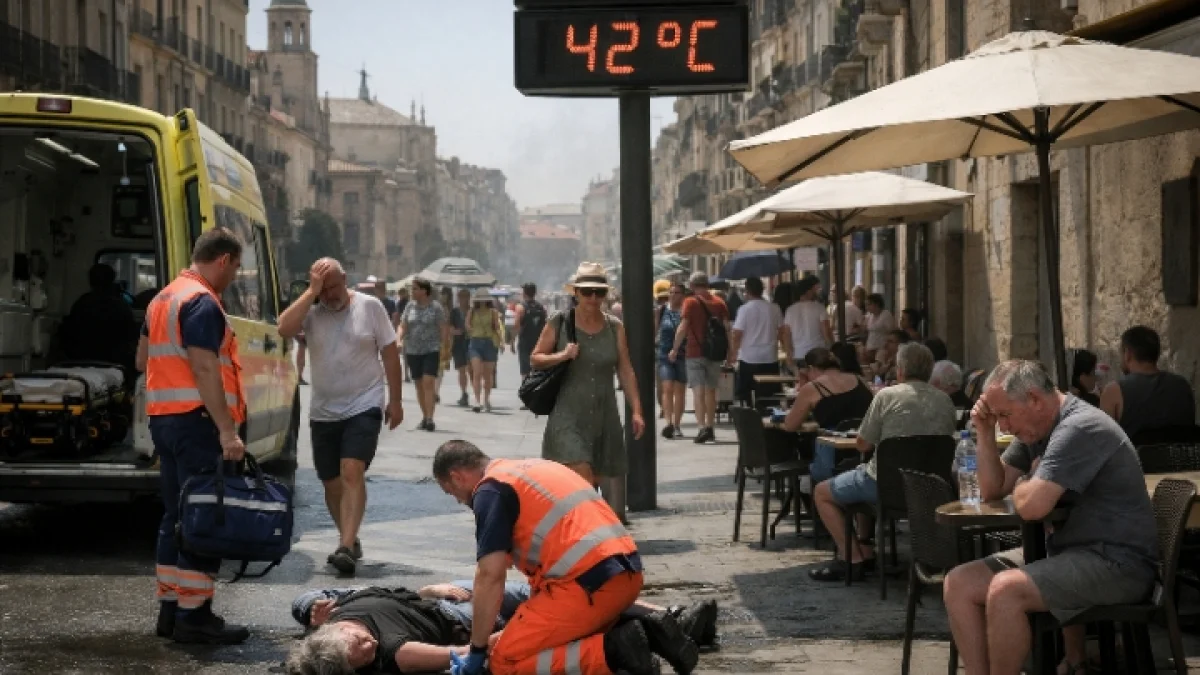
WASHINGTON — U.S. health and weather officials warned Americans celebrating the extended Independence Day holiday to take precautions against dangerous heat as a prolonged heat dome pushed temperatures and humidity to hazardous levels across much of the central and eastern United States.
The National Weather Service (NWS) said excessive heat warnings and heat advisories remained in effect across broad sections of the country, with more than 185 million people under heat alerts ahead of July 4 festivities. Forecasters warned that heat index values could reach as high as 115 degrees Fahrenheit (46 degrees Celsius) in some areas, while unusually warm overnight temperatures were expected to provide little relief.
Health officials urged residents to stay hydrated, limit strenuous outdoor activity during the hottest parts of the day, seek air-conditioned spaces and check on older adults, young children and others at greater risk of heat-related illness.
The U.S. Centers for Disease Control and Prevention says heat stroke is a medical emergency that can cause permanent disability or death without immediate treatment. Symptoms include confusion, altered mental status, slurred speech and loss of consciousness, while heat exhaustion may present with dizziness, nausea and heavy sweating.
New York City Health Commissioner Alister Martin warned residents to prepare for the dangerous conditions, writing that "heat strokes are fast, deadly, and almost always preventable," while encouraging people to use air conditioning, drink water and check on neighbors.
The extreme weather also prompted organizers and public agencies to expand safety measures for holiday events. In Washington, cooling tents, misting stations, water refill locations and additional medical personnel were deployed around Independence Day celebrations after high temperatures disrupted some activities. Elsewhere, officials canceled or postponed parades, festivals and other outdoor events because of the heat.
Meteorologists said the prolonged heat was being driven by a persistent high-pressure system, commonly known as a heat dome, which traps hot air near the surface and suppresses cloud formation, allowing temperatures to build over several days. Forecasters said the combination of high temperatures and humidity significantly increased the risk of heat-related illness, particularly for people without reliable cooling.
The NWS said dangerous conditions were expected to continue through the holiday weekend in many areas, with some locations likely to challenge daily temperature records. Officials advised anyone attending fireworks displays, parades or other outdoor gatherings to remain hydrated, seek shade whenever possible and recognize the warning signs of heat illness, noting that elevated evening temperatures could keep health risks high even after sunset.