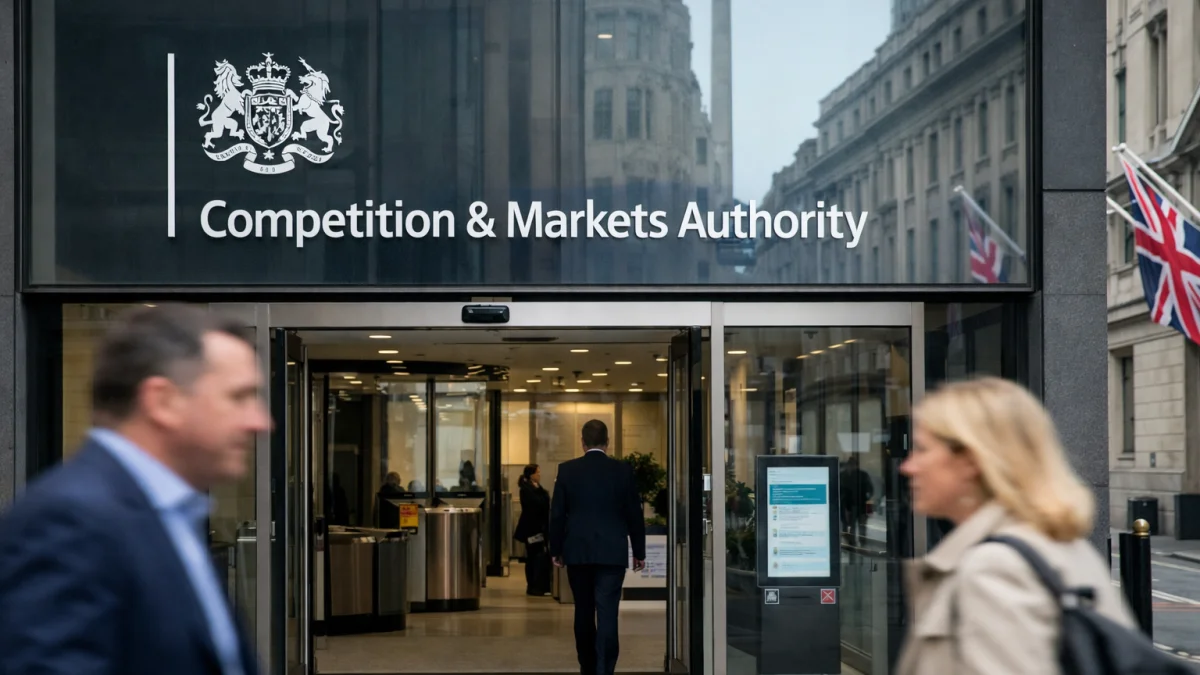
The collapse of the proposed $3.7 billion merger between Getty Images and Shutterstock has become more than the failure of a high-profile media transaction. It has demonstrated the continuing ability of the United Kingdom's competition regulator to reshape global corporate strategy, even when a deal has secured approval elsewhere. Getty confirmed it would terminate the agreement after deciding it would not accept conditions imposed by the UK's Competition and Markets Authority (CMA), effectively ending a transaction that had been presented as a response to rapid technological change in the visual-content industry.
The outcome is significant because it illustrates how a single national regulator can determine the fate of multinational mergers whose commercial rationale extends well beyond its domestic market. The transaction had already cleared U.S. antitrust review, yet the CMA's insistence that Shutterstock divest its editorial business proved unacceptable to Getty's board. Rather than proceed under those conditions, Getty chose to abandon the merger entirely.
Getty and Shutterstock announced the merger in January 2025, arguing that consolidation would strengthen their ability to compete in a market undergoing structural disruption. Advances in generative artificial intelligence have altered demand for traditional licensed imagery, increasing competitive pressure on established providers while creating incentives to invest in new technologies and expand digital offerings. Company executives argued that combining their businesses would generate significant cost savings while supporting investment in AI-enabled products and services.
The CMA's investigation, however, distinguished between different segments of the visual-content market. While the regulator concluded that the merger did not pose material competition concerns in the global stock-image business, it reached a different conclusion regarding editorial photography supplied to UK media organizations. According to the CMA, Getty and Shutterstock represented two of the most significant competitors in supplying news, sports and entertainment imagery to British publishers. Removing one of those competitors risked reducing customer choice and increasing prices.
To address those concerns, the regulator concluded that Shutterstock's editorial business would need to be sold to an independent buyer capable of preserving competition. The proposed remedy extended beyond celebrity-photo agencies such as Backgrid and Splash and encompassed Shutterstock's broader editorial operations. Getty ultimately determined that accepting those conditions would undermine the commercial logic of the merger.
The decision reinforces the increasingly influential role of the CMA in international merger enforcement. Although the United Kingdom represents a smaller market than the United States or the European Union, several multinational technology and media companies have found that satisfying British regulators has become essential for completing global transactions. Previous interventions, including the CMA's order requiring Meta to unwind its acquisition of Giphy, established the regulator's willingness to require structural remedies or prohibit transactions where competition concerns cannot be resolved. Getty's decision to abandon the Shutterstock merger rather than comply with the required divestiture adds another prominent example.
The case also highlights differences in regulatory priorities across jurisdictions. U.S. authorities did not prevent the merger from proceeding, while the CMA concluded that specific competition risks remained in the UK's editorial-content market. Such divergence reflects the fact that competition authorities assess transactions according to the characteristics of their own markets and legal frameworks rather than seeking uniform international outcomes. For multinational companies, this increases both regulatory complexity and execution risk when pursuing large cross-border acquisitions.
Financial markets reacted quickly to the collapse of the transaction. Shutterstock shares fell sharply after Getty announced its decision, reflecting the disappearance of the acquisition premium and renewed uncertainty over the company's standalone strategy. Getty also acknowledged that it would pursue strategic financing alternatives after terminating the agreement, indicating that the company remains focused on adapting its capital structure and business strategy without the anticipated merger synergies.
For the broader visual-content industry, the failed merger underscores the tension between technological disruption and competition policy. Established licensing businesses face mounting pressure from AI-generated imagery, evolving customer demand and changing content-production economics. Consolidation offers one possible response, but regulators continue to weigh potential efficiency gains against the preservation of competitive markets, particularly where professional news organizations depend on a limited number of specialist suppliers. The CMA's analysis concluded that maintaining competition in editorial imagery outweighed the efficiencies claimed by the merging companies within the UK market.
The episode may also influence future merger planning across technology, media and digital-content sectors. Companies considering transactions with global implications may place greater emphasis on anticipating jurisdiction-specific regulatory concerns, especially where remedies could alter the strategic value of a deal. Structural divestitures that appear manageable from a regulatory perspective may nonetheless prove commercially unacceptable if they remove assets viewed as central to the transaction's rationale.
The confirmed position is that the Getty-Shutterstock merger will not proceed after Getty rejected the CMA's required divestiture of Shutterstock's editorial business. Getty has indicated it will evaluate alternative financing and strategic options, while Shutterstock will continue operating independently. Regulators and market participants will now monitor how both companies respond to continuing AI-driven disruption and whether future consolidation attempts in the sector are structured differently to address increasingly rigorous antitrust scrutiny.