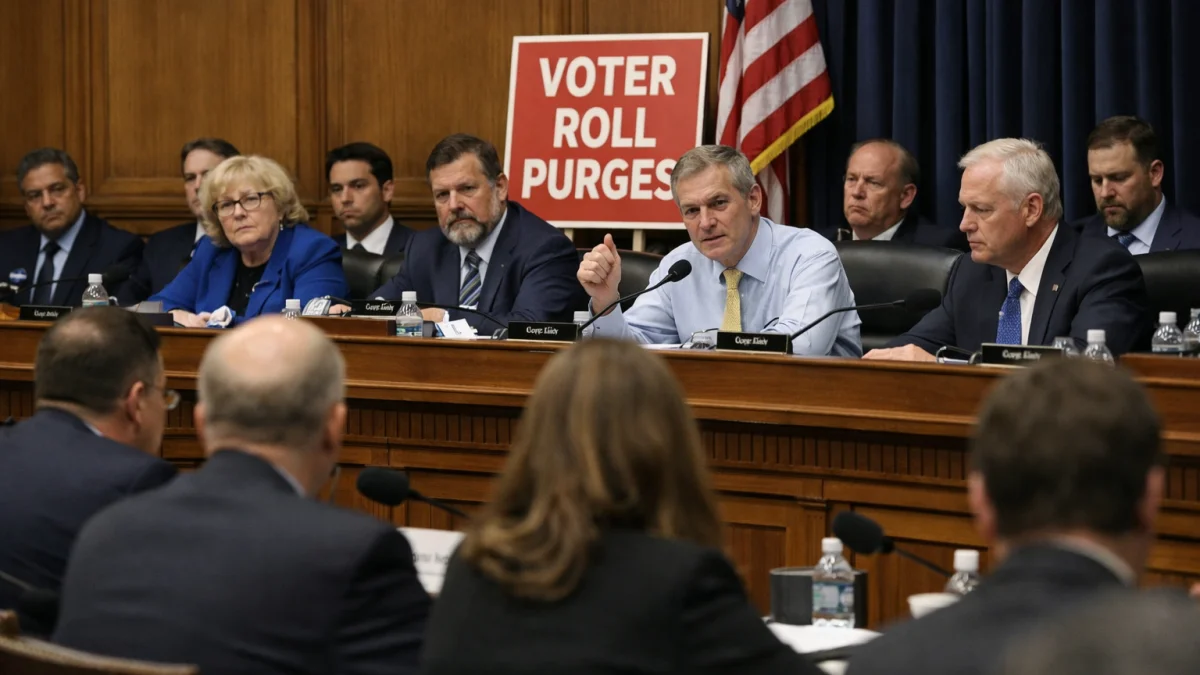
WASHINGTON — A longstanding federal restriction that generally bars states from conducting systematic voter roll purges within 90 days of a federal election is facing a renewed legal challenge from Republican officials, setting up a U.S. Supreme Court case that could reshape election administration ahead of future national contests.
The dispute centers on the National Voter Registration Act of 1993, which requires election officials in most states to complete programs for systematically removing ineligible voters at least 90 days before a federal election. The provision, commonly known as the law's "quiet period," was intended to reduce the risk that eligible voters could be mistakenly removed too close to Election Day without sufficient time to restore their registration.
Republican officials in Arizona and Ohio, joined by the Republican National Committee and backed by the Trump administration in related litigation, argue that the restriction should be interpreted more narrowly. They contend that efforts to identify and remove non-U.S. citizens from voter rolls fall outside the statute's prohibition or qualify as individualized reviews rather than systematic removal programs.
The Supreme Court this week agreed to hear an Arizona case, known as RNC v. Mi Familia Vota, that could clarify the scope of the federal law. The case also involves Arizona's documentary proof-of-citizenship registration requirements, though a final ruling is not expected until next year.
The legal challenge follows years of disputes over voter roll maintenance and election integrity. Republican officials have argued that more aggressive reviews are necessary to ensure voter lists remain accurate and prevent ineligible voting. State investigations, however, have consistently found that voting by noncitizens is rare.
Voting rights advocates and several election law scholars say weakening the 90-day restriction could increase the risk that eligible voters are removed because of database errors shortly before elections. They argue the quiet period provides time to resolve registration mistakes before ballots are cast.
The debate has also expanded into separate litigation over federal access to state voter registration records. The Trump administration has sought voter-roll data from multiple states as part of broader efforts to verify voter eligibility, but several federal courts have rejected those requests, citing limits under existing federal law and concerns over voter privacy.
With the statutory quiet period for this year's federal elections approaching in early August, election officials, advocacy groups and state governments are closely watching the pending litigation. Unless courts order otherwise, the existing provisions of the National Voter Registration Act remain in effect while the Supreme Court prepares to hear the Arizona case during its upcoming term.