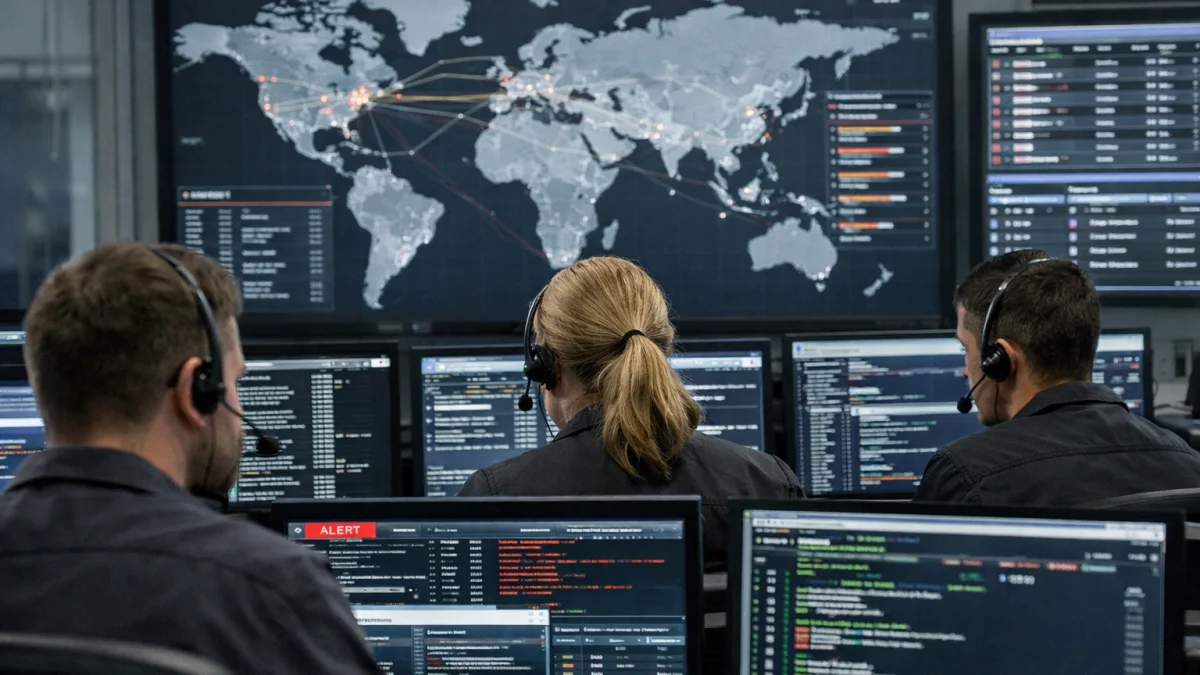
LONDON—Cybersecurity companies and government cyber defense agencies are warning organizations to strengthen digital defenses as geopolitical tensions increase the risk of cyber espionage, disruptive attacks and opportunistic cybercrime targeting businesses, government networks and critical infrastructure.
Recent threat intelligence published by cybersecurity firm SentinelOne found that state-linked hacking groups associated with both China and India conducted cyberespionage campaigns against Pakistani law enforcement agencies between 2024 and 2026, underscoring how regional security tensions are increasingly accompanied by activity in cyberspace. The company said the campaigns appeared focused on gathering intelligence rather than causing disruption. Chinese authorities denied involvement, while India's embassy did not immediately comment on the report.
Government agencies have also urged organizations to prepare for elevated cyber risks. Britain's National Cyber Security Centre (NCSC) recently advised organizations with operations, assets or supply chains in the Middle East to review their cybersecurity posture, warning that rapidly evolving regional developments could increase exposure to cyber activity by Iran-linked actors, even though it said there had been no significant change in the direct threat to the United Kingdom at the time of its advisory.
The warnings reflect broader concerns that periods of international tension often coincide with increases in phishing campaigns, distributed denial-of-service attacks, ransomware activity and cyberespionage carried out by state-backed groups, criminal organizations or self-described hacktivists seeking to exploit uncertainty.
Industry researchers have also highlighted the growing role of artificial intelligence in both offensive and defensive cyber operations. A joint advisory issued in June by the cybersecurity agencies of the Five Eyes intelligence alliance urged governments and private organizations to strengthen foundational security practices while preparing for AI-enabled cyber threats, including faster and more sophisticated attacks.
Separately, more than 60 companies joined the United Kingdom's Cyber Resilience Pledge this month, committing to measures including stronger board-level oversight of cybersecurity, wider use of government security services and improved supply-chain protections. British officials said the initiative forms part of a broader effort to improve resilience against evolving cyber threats affecting both public and private sectors.
Cybersecurity specialists continue to recommend that organizations promptly apply software updates, implement multi-factor authentication, monitor networks for unusual activity, maintain tested incident-response plans and strengthen employee awareness against phishing and other social engineering tactics.
Authorities and private-sector researchers said they will continue monitoring cyber activity as geopolitical developments evolve, while emphasizing that organizations should remain vigilant even in the absence of evidence of imminent large-scale cyberattacks.