SINGAPORE — Crude oil prices rose on Friday and were on track for strong weekly gains as renewed military tensions involving the United States and Iran heightened concerns over potential disruptions to energy supplies moving through the Strait of Hormuz, a key artery for global oil exports.
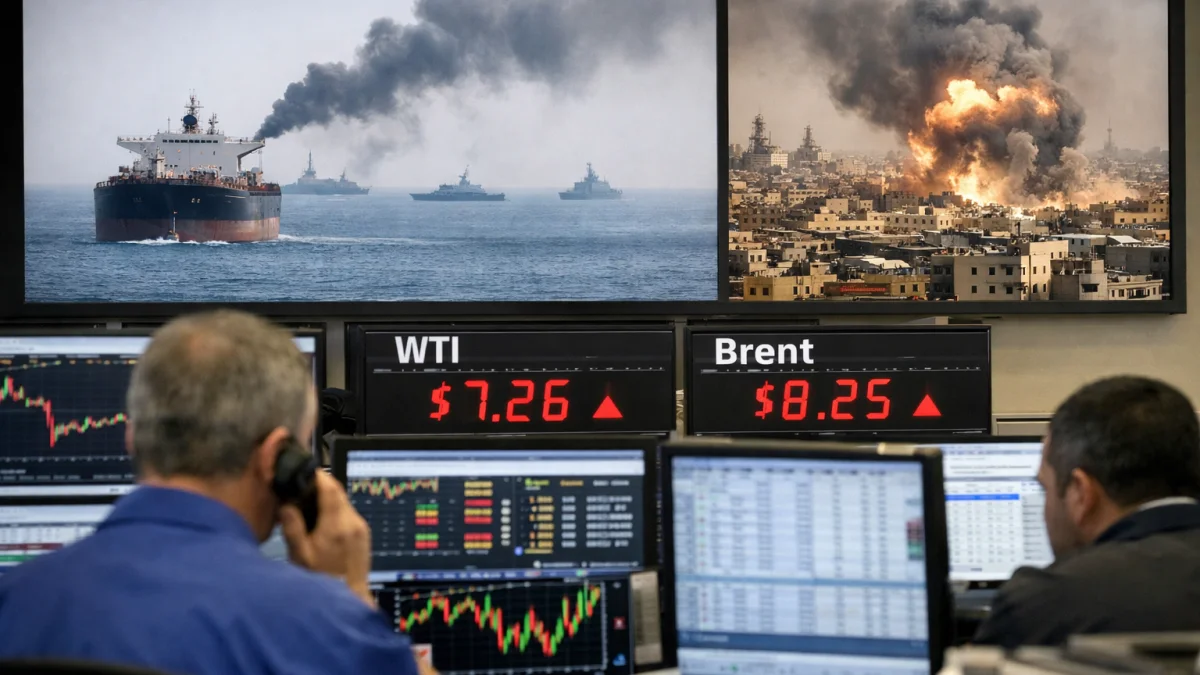
Brent crude futures climbed about 0.8% to roughly $76.90 a barrel during trading, while U.S. West Texas Intermediate crude gained about 0.6% to around $72.50 a barrel. For the week, Brent was set to advance about 7% and WTI approximately 6%, reflecting a renewed geopolitical risk premium in energy markets.
Market sentiment shifted after a fresh exchange of military strikes between Washington and Tehran reignited fears that shipping through the Strait of Hormuz could face further disruption. The waterway normally carries about one-fifth of global oil and gas shipments, making it one of the world's most strategically important energy transit routes. Tanker traffic has slowed following recent attacks and heightened security concerns, although some liquefied natural gas carriers have continued transiting the passage.
Analysts said the prospect of prolonged disruption to maritime trade has overshadowed expectations that global oil markets would remain comfortably supplied later this year. The latest escalation has increased uncertainty surrounding the pace at which shipping activity through the strait can return to normal.
The International Energy Agency said global oil supply recovered by about 4.1 million barrels per day in June following earlier improvements in regional conditions, but production remained well below pre-conflict levels. The agency warned that renewed hostilities could threaten expectations for stronger supply growth if instability persists or shipping constraints worsen.
The IEA also noted that tighter supplies of refined products, including gasoline and diesel, have supported refining margins even as crude production has partially recovered. The agency said recent gains in global inventories could prove temporary if renewed conflict further restricts exports from the Gulf region.
Despite the latest price gains, traders continued to monitor official statements from Washington and Tehran for signs that diplomatic efforts could reduce tensions. Market participants said crude prices remain highly sensitive to developments affecting the Strait of Hormuz, where the pace of commercial shipping is expected to remain under close scrutiny in the coming days.