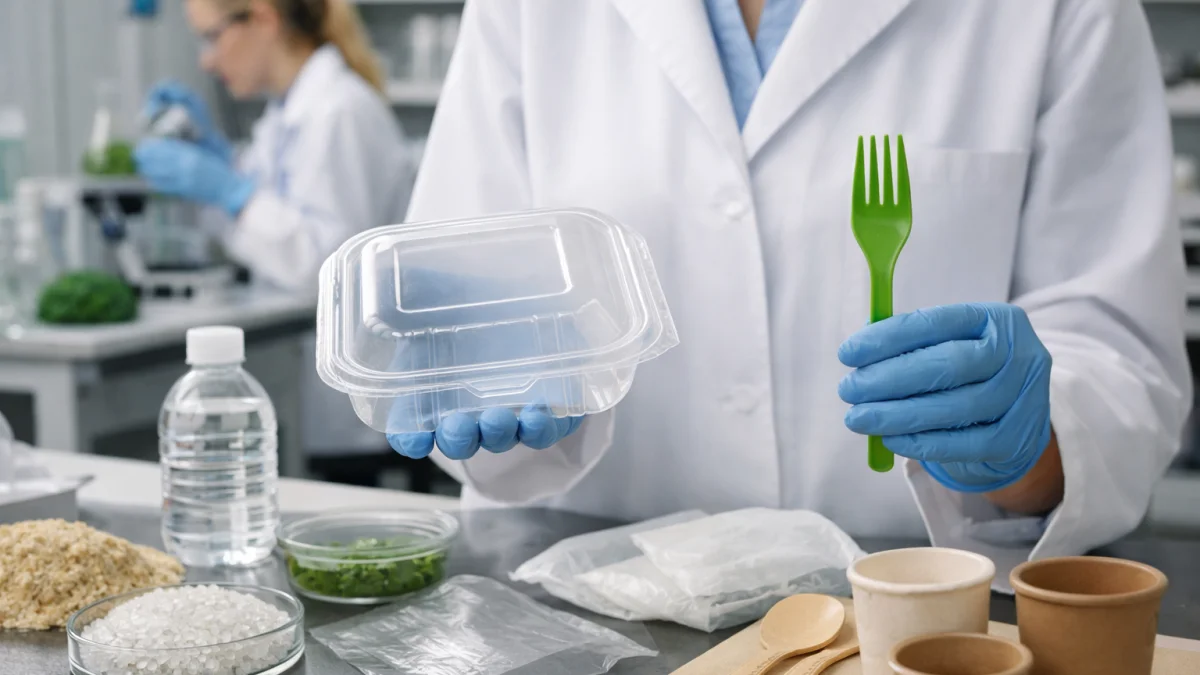
ESPOO, Finland — Finnish researchers and industry partners have developed cellulose-based films and coatings that match key performance characteristics of conventional plastics while offering recycling or biodegradation options, marking a step toward replacing fossil-based packaging materials with renewable alternatives.
The development, announced in June by VTT Technical Research Centre of Finland and LUT University, comes through the Films for Future (F3) bio-based materials project. According to the organizations, the technology enables cellulose to be processed as a polymer rather than as a fiber, producing transparent films and coatings with mechanical strength and barrier properties comparable to those of traditional plastic packaging.
The advance is significant as manufacturers face tighter environmental requirements, including provisions under the European Union's Packaging and Packaging Waste Regulation, which emphasize recyclability, reduced plastic content and lower environmental impacts throughout product life cycles. Researchers said the new materials are designed to meet industrial performance requirements while supporting existing packaging processes.
The project involves collaboration between research institutions and industrial partners, including Metsä Board. According to VTT, the cellulose films are inherently biodegradable, while the coatings are engineered to remain compatible with fiber-based recycling systems or biodegrade where appropriate. Researchers said the platform is intended to reduce dependence on conventional plastic films used in packaging applications.
"Plastic films are one of the most widely used packaging formats, yet they are among the most difficult to recycle and a major source of persistent environmental pollution," said Ali Harlin, research professor at VTT Technical Research Centre of Finland and one of the coordinators of the F3 project, in a statement released by the organization. He added that researchers are working with manufacturers to meet evolving regulatory requirements while maintaining product protection, shelf life and production efficiency.
Riku Talja, development manager at Metsä Board, said in the same statement that scalability and compatibility with existing manufacturing and recycling systems would be critical for commercial adoption. "Solutions that align with current converting technologies and recycling infrastructure are far more likely to transition from pilot-stage innovation to industrial use," he said.
According to VTT, the materials have demonstrated oxygen barrier performance comparable to conventional plastics in pilot-scale production. Initial target applications include dry food packaging, bakery products and fiber-based packages requiring transparent barrier layers. Researchers also said the technology could eventually find uses in medical materials, electronics and functional coatings, although those applications remain under development.
The organizations said the next confirmed phase of the project will focus on scaling the technology for commercial applications while improving barrier performance under humid conditions and integrating additional functionalities into the cellulose-based material platform.