BEIJING — A Chinese supercomputer has taken the top position in the latest TOP500 ranking of the world’s most powerful systems, displacing a leading U.S. machine and marking China’s return to the No. 1 spot for the first time since 2017.
The LineShine system, installed at the National Supercomputing Centre in Shenzhen, debuted at the head of the biannual list released on Tuesday at the ISC 2026 conference in Hamburg, Germany. It achieved a performance of 2.198 exaflops on the High Performance Linpack benchmark, according to the TOP500 organization.
LineShine, built by the Shenzhen Cloud Computing Center using domestically developed LingKun processors and LingQi interconnect, features more than 13 million cores. It overtook the U.S. Department of Energy’s El Capitan system, which had held the top ranking previously.
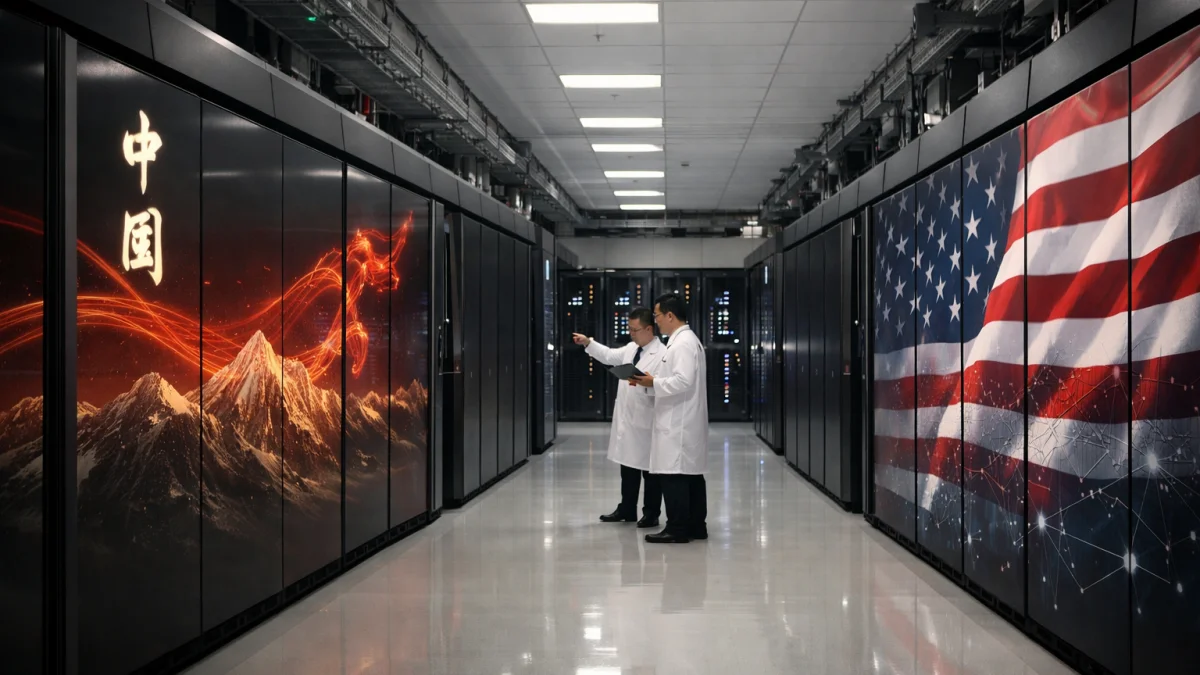
The development highlights ongoing competition between the United States and China in high-performance computing. China has increased its presence on the list, with reports indicating it now accounts for the largest number of systems among the top 500.
U.S. systems, including El Capitan at Lawrence Livermore National Laboratory, continue to feature prominently, with multiple American machines ranking in the top positions alongside others from Europe.
"This achievement marks China's return to the top of global supercomputing since 2017," state-affiliated media reported following the announcement.
The LineShine system relies entirely on Chinese-designed technology, amid U.S. export restrictions on advanced chips that have influenced Beijing’s push for self-reliance in the sector. Experts have noted that while the system excels on the standard TOP500 benchmark, its performance on mixed-precision tests relevant to certain AI workloads ranked lower.
The TOP500 list, compiled twice a year, serves as a reference for tracking global trends in supercomputing capabilities used for scientific research, weather modeling, and other applications. Details on the full distribution of systems and performance metrics for lower-ranked entries were published alongside the top results.
U.S. officials and industry representatives have emphasized continued investment in domestic supercomputing infrastructure, including exascale systems. The broader technological competition between the two countries spans multiple domains, including semiconductors and artificial intelligence.
As of Wednesday, the new rankings have drawn attention from technology analysts and policymakers. Further updates to the list are expected in November, with both nations advancing projects in high-performance computing.