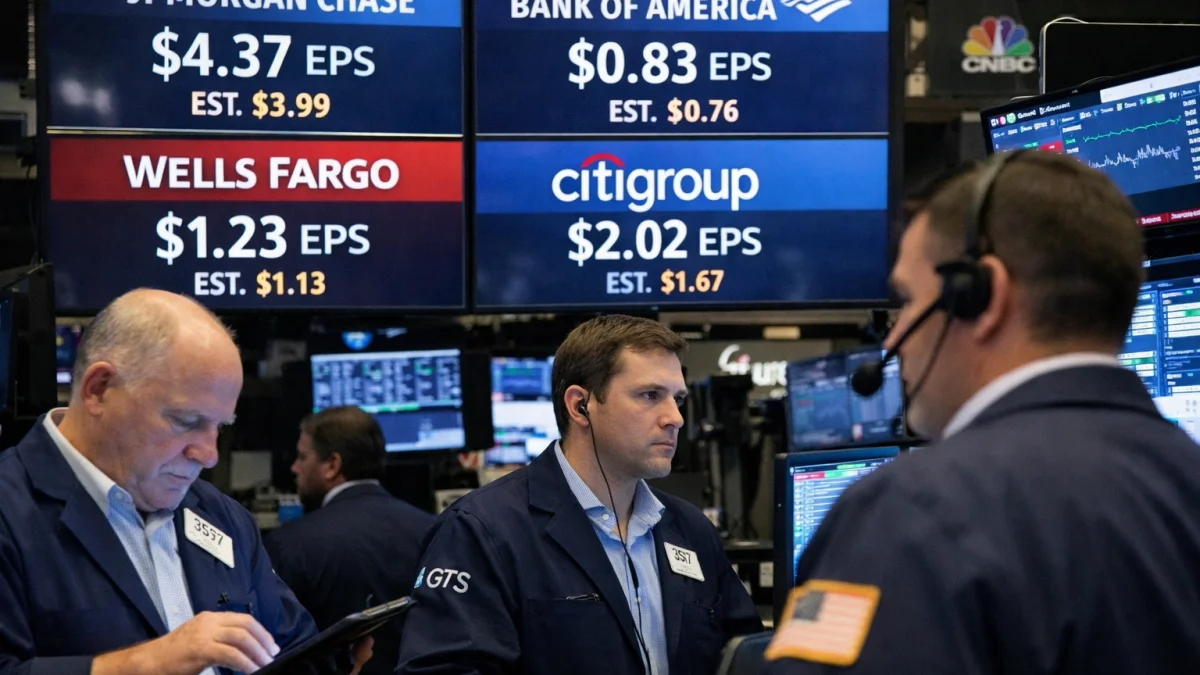
NEW YORK — Major U.S. banks have broadly exceeded Wall Street expectations in second-quarter earnings, buoyed by strong trading activity, a rebound in investment banking and resilient credit quality, even as executives cautioned that geopolitical risks, inflation and elevated asset prices could weigh on the outlook later this year.
JPMorgan Chase, Bank of America, Citigroup, Wells Fargo, Goldman Sachs and Morgan Stanley all reported results that topped analyst forecasts during the latest reporting cycle, extending momentum for the banking sector after a resurgence in capital markets activity.
Trading desks benefited from heightened market volatility, while investment banking revenue climbed as mergers and acquisitions, equity offerings and debt underwriting recovered from subdued levels seen in recent years. Analysts said stronger-than-expected client activity helped offset pressure on traditional lending businesses, where net interest margins remained constrained by higher funding costs and competition for deposits.
JPMorgan reported record quarterly profit, while Goldman Sachs posted sharply higher earnings supported by gains in equities trading and investment banking. Citigroup also exceeded estimates with strong markets and banking performance, although its shares fell after management warned of higher expenses and a more challenging second half. Bank of America, Wells Fargo and Morgan Stanley likewise reported earnings above consensus expectations.
Despite the stronger-than-expected results, bank executives struck a cautious tone about the economic outlook.
JPMorgan Chief Executive Jamie Dimon said the U.S. economy had remained resilient but pointed to persistent inflation, geopolitical tensions, fiscal deficits and elevated asset prices as continuing risks. Goldman Sachs Chief Executive David Solomon also said the current pace of capital markets activity may not be sustained indefinitely, citing the cyclical nature of dealmaking and trading revenues.
Analysts said the results highlighted the industry's ability to generate fee income beyond traditional lending, with investment banking and trading compensating for continued pressure on net interest income. Credit losses also remained relatively low across most major lenders, supporting profitability.
Attention is now shifting to whether banks can maintain earnings momentum through the remainder of 2026 as investors monitor interest-rate policy, economic growth, corporate deal activity and geopolitical developments that could influence client demand and financial markets.