LONDON — Investors are increasingly scrutinizing valuations across the artificial intelligence sector as heightened market volatility, rising financing costs and questions over future earnings have prompted a reassessment of some of the technology industry's strongest-performing stocks.
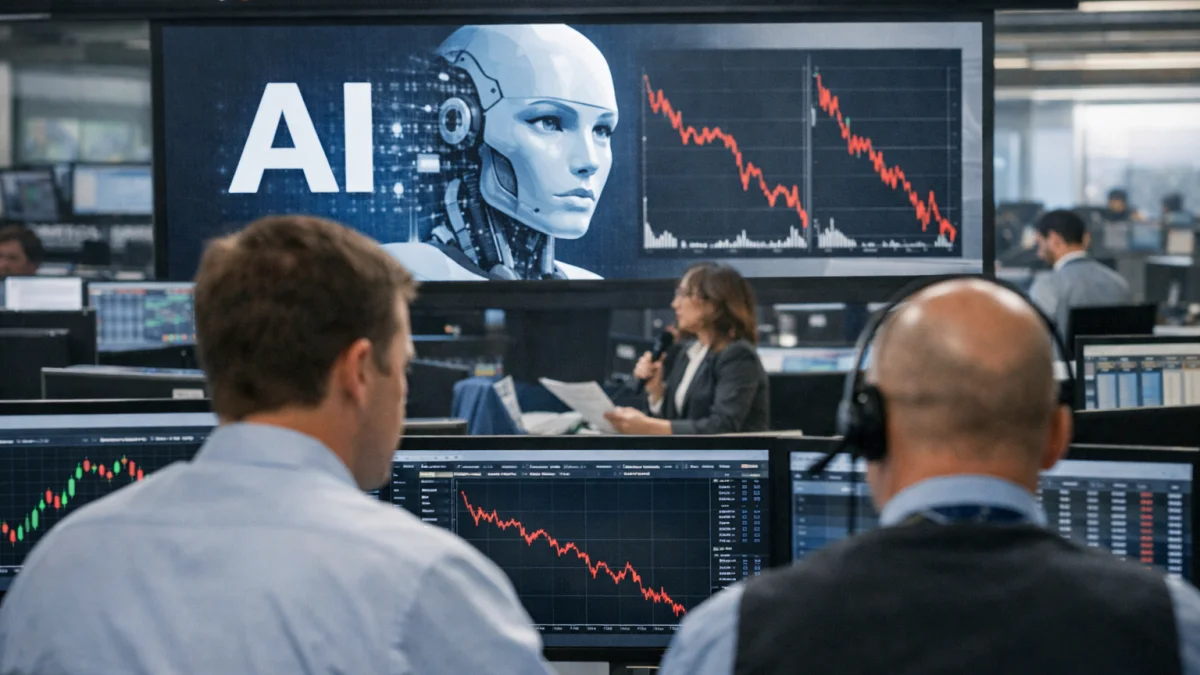
Technology shares have come under pressure in recent trading, contributing to broader market swings as investors evaluate whether years of rapid gains in AI-related companies can be sustained by revenue growth and long-term profitability. European technology stocks weakened this week amid renewed concerns over elevated valuations, while semiconductor shares were among those leading declines.
Market participants said the reassessment reflects growing attention to the substantial capital expenditure required to build AI infrastructure, including advanced chips, data centers and power capacity, alongside uncertainty over the pace at which businesses will convert AI investment into earnings.
The Bank of England, in its July Financial Stability Report, said equity prices for AI-related companies had risen sharply and that valuations had become more stretched by some measures. The central bank warned that expectations for strong long-term earnings remain uncertain and depend on continued investment, financing availability and widespread adoption of AI technologies. It added that a reassessment of those assumptions could trigger broader equity declines amplified by market concentration and leverage.
The report also noted that AI-focused companies have increasingly turned to external financing as investment needs have expanded beyond internally generated cash flow, increasing the financial system's exposure to the sector. While authorities said there was little evidence that AI borrowing had displaced funding for other sectors, they emphasized the need to monitor risks associated with rapid credit growth and complex financing structures.
Some hedge funds have reduced exposure to crowded AI-related trades following recent volatility. Goldman Sachs said systematic investment funds experienced their weakest performance since August 2025 after sharp moves in technology and semiconductor stocks, underscoring how concentrated positioning can magnify market swings.
Analysts cautioned, however, that valuation concerns do not necessarily imply weakening demand for AI technologies. Many companies continue to report strong investment in AI infrastructure, and institutional investors remain active in financing projects across the semiconductor, software and data-center industries.
Regulators have also intensified scrutiny of so-called "AI washing," or misleading claims about artificial intelligence capabilities, while investors increasingly differentiate between companies demonstrating measurable commercial returns from AI and those relying primarily on expectations of future growth.
Markets remain focused on upcoming corporate earnings and company guidance, with investors looking for evidence that continued AI spending can translate into sustained profitability and justify current valuations.