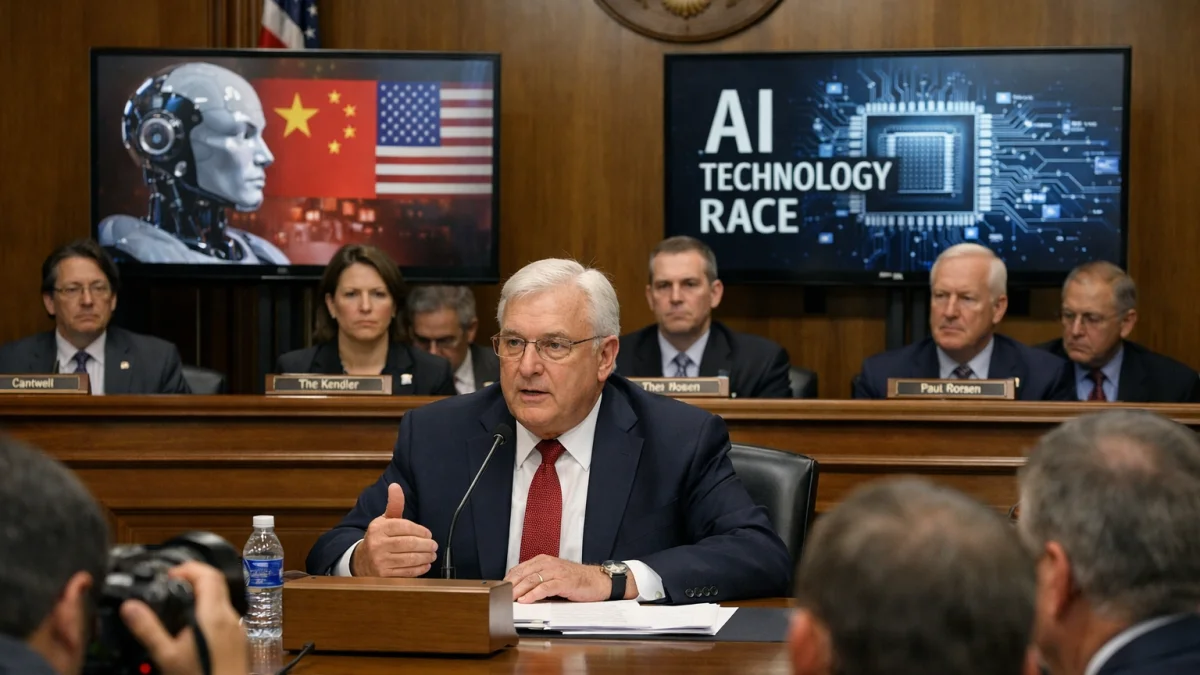
WASHINGTON — U.S. lawmakers on Tuesday examined the Bureau of Industry and Security's fiscal 2027 budget request through the lens of intensifying global competition in artificial intelligence, as the House Foreign Affairs Committee convened a hearing focused on export controls, emerging technologies and the agency's role in protecting national security.
The hearing, titled "FY27 BIS Budget: the AI Arms Race and the ICTS Office," featured testimony from Jeffrey Kessler, the U.S. under secretary of commerce for industry and security, who oversees the Commerce Department bureau responsible for administering export controls on sensitive technologies and enforcing restrictions aimed at preventing strategic technologies from reaching foreign adversaries.
According to the committee's hearing notice, lawmakers planned to review the bureau's budget priorities alongside the work of its Information and Communications Technology and Services (ICTS) Office, which is responsible for addressing national security risks associated with information and communications technology supply chains.
The session comes as Washington continues to place export controls at the center of its strategy to safeguard advanced semiconductor, artificial intelligence and other dual-use technologies. BIS has played a leading role in implementing and enforcing those controls, while Congress has increasingly scrutinized whether the agency has sufficient resources to monitor compliance, investigate violations and respond to rapid technological developments.
Committee materials identified Kessler as the sole scheduled witness, although the notice stated that witnesses could be added or changed. The hearing was scheduled to take place in the Rayburn House Office Building and was made available via live webcast.
The focus on artificial intelligence reflects a broader congressional debate over maintaining the United States' technological edge while limiting the transfer of advanced computing capabilities that could strengthen potential adversaries' military or surveillance capabilities. BIS has been at the center of that effort through licensing decisions, export enforcement and coordination with other federal agencies on technology security policies.
Tuesday's hearing was one of several congressional sessions scheduled for the day addressing technology and economic policy, according to the House calendar. The Foreign Affairs Committee's review of the BIS budget is expected to inform lawmakers' consideration of fiscal 2027 appropriations and oversight priorities for the agency.