Maria Alejandra Sanz still measures time by what happened moments before the ground gave way.
The 17-year-old high school student from the Venezuelan coastal state of La Guaira remembers that one of her closest friends, Gonzalo Marquez, had asked her for water while their dance group prepared for a graduation performance on June 24. She stepped away to fetch it. Minutes later, twin earthquakes struck, reducing buildings to rubble and separating her forever from four of the friends with whom she had shared years of rehearsals, schoolwork and plans for the future.
Sanz survived 17 hours trapped beneath the collapsed building. Wedged under concrete in near darkness, she later recounted surviving by drinking her own urine while waiting for rescuers, believing the rest of her dance troupe had likely died.
Her story has become one of the defining human accounts of Venezuela's deadliest natural disaster in recent history, illustrating how a single moment transformed the lives of thousands of families.
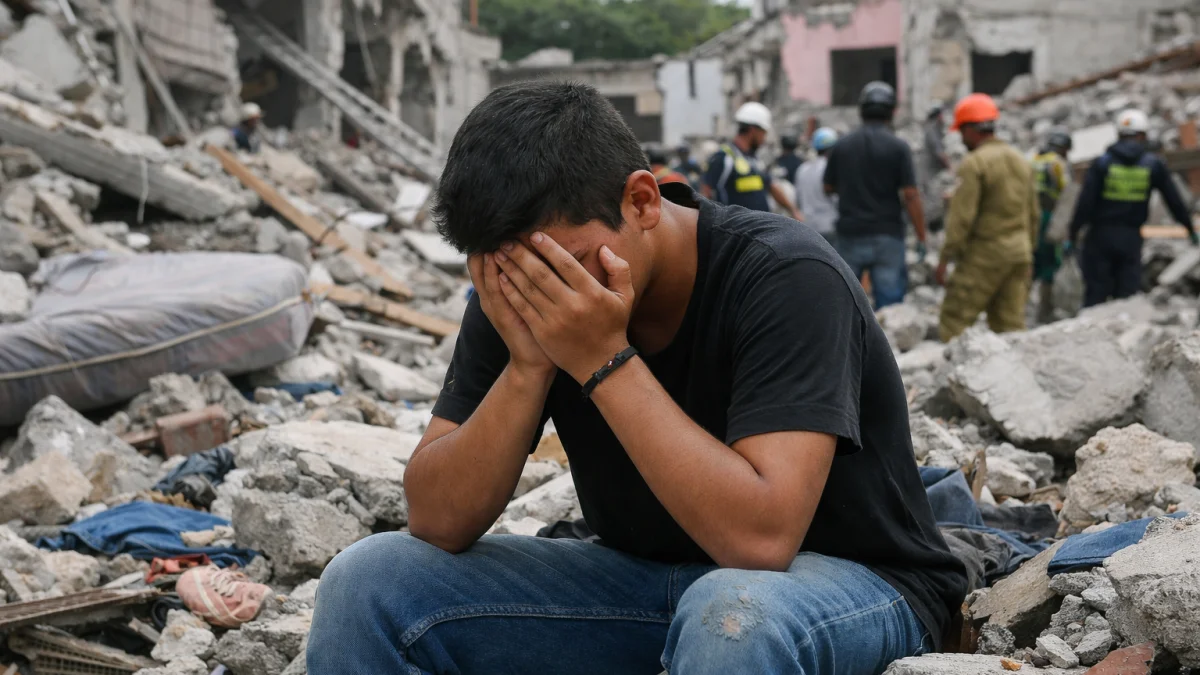
The earthquakes, measuring 7.2 and 7.5 in magnitude according to official reports, devastated parts of northern Venezuela. Authorities said the death toll had climbed to 4,490 by mid-July, with 16,740 people injured, more than 6,400 rescued and nearly 18,000 left homeless.
For Sanz, however, those numbers remain inseparable from the faces behind them.
Reuters reported that she turned away when rescue workers recovered the body of one of her closest friends from the wreckage. Four members of the dance troupe did not survive, including Marquez, whose request for water moments before the collapse inadvertently spared Sanz from being in a more dangerous part of the building.
The group had spent years dancing together and was preparing for a graduation performance, while also looking ahead to university and careers they hoped would allow them to help rebuild a country that had already endured years of political and economic turmoil. Those aspirations ended beneath the rubble for several of them.
Among those who died was Isa Campos. Reuters reported that her father, joined by volunteers, searched desperately for her while waiting for heavier rescue equipment that arrived too late. Her death became one of many stories highlighting both the determination of ordinary citizens and the challenges facing emergency responders during the critical first days after the disaster.
Across the disaster zone, neighbors, volunteers and rescue workers became the first line of response.
One volunteer, Andres Ganscka, traveled from neighboring Colombia after seeing videos of the destruction online. His decision reflected a broader wave of civilian solidarity that emerged as Venezuelans and international volunteers joined rescue efforts across affected communities.
As search-and-rescue operations gradually gave way to recovery, humanitarian agencies warned that survivors faced a second crisis.
The Pan American Health Organization said overcrowded shelters, limited access to clean water, damaged sanitation systems and disrupted healthcare services increased the risk of respiratory, digestive and vaccine-preventable diseases. More than 80 shelters were housing thousands of displaced people, while the United Nations targeted humanitarian assistance for 1.3 million people affected by the disaster.
The scale of the destruction also exposed long-standing vulnerabilities within Venezuela's healthcare system and emergency infrastructure. Aid organizations and international agencies expanded their operations as authorities continued identifying victims and supporting displaced families. Forensic teams collected genetic samples from unidentified victims to allow future identification by relatives.
For teenagers like Sanz, recovery extends beyond rebuilding homes.
Reuters reported that she often thinks about the conversations, rehearsals and ambitions she once shared with friends she now describes as remaining "young forever." Those memories accompany the physical reality of surviving a disaster that reshaped her community within minutes.
Memorial services have provided opportunities for families, classmates and neighbors to remember those who died while confronting the uncertainty that follows a catastrophe of such magnitude. Across La Guaira and Caracas, survivors continue balancing grief with practical decisions about housing, education and employment as reconstruction begins.
Weeks after the earthquakes, the rescue operations had largely ended, but their consequences continued unfolding in hospitals, temporary shelters and classrooms missing students who would never return.
For Sanz, survival has brought responsibilities she never expected. She remains one of the living witnesses to the final ordinary moments shared by a group of teenagers whose lives revolved around dance, friendship and graduation.
Those memories, preserved in her testimony, have become part of the historical record of a disaster measured not only by thousands of casualties, but also by the futures interrupted in an instant.