WASHINGTON—The U.S. trade deficit widened sharply in May as imports climbed to a record level for several categories of goods, underscoring continued demand for foreign products despite heightened global economic uncertainty and shifting trade policies, according to data released by the U.S. Census Bureau and the Bureau of Economic Analysis.
The agencies said the overall goods and services trade deficit increased to $77.6 billion in May from a revised $54.6 billion in April. Imports rose 3.3% to $395.3 billion while exports fell 3.2% to $317.7 billion. The goods deficit expanded to $106.5 billion as imports outpaced exports, while the U.S. services surplus edged higher to $28.9 billion.
Officials said the deterioration reflected both stronger imports and weaker exports during the month. Imports of capital goods reached a record high, while imports from Vietnam also set a monthly record. Petroleum exports climbed to an all-time high, partially offsetting the broader decline in exports.
The report comes as businesses continue to adjust supply chains amid uncertainty over global trade conditions, geopolitical tensions and evolving U.S. tariff policies. Economists have said companies in several industries have accelerated purchases of imported goods to guard against potential increases in transportation costs and future trade restrictions.
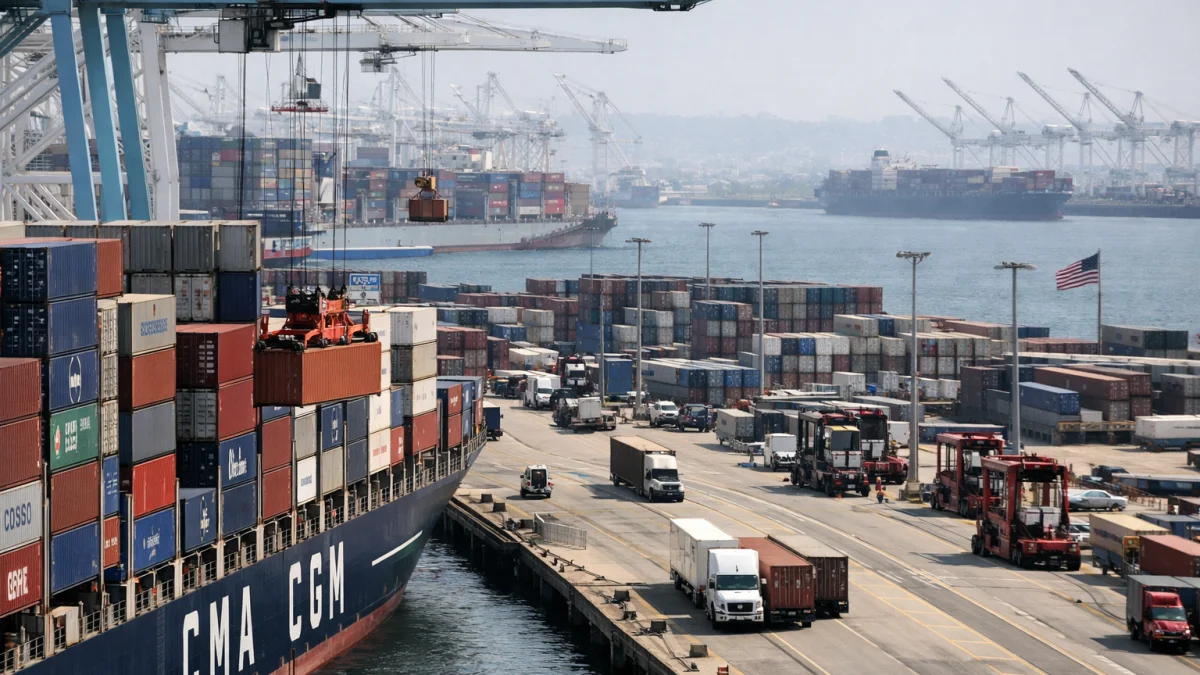
Separate shipping data point to sustained import demand. The Port of Los Angeles, the busiest U.S. container gateway, handled more than 1 million twenty-foot equivalent units in June, the third time in its history that monthly cargo volumes exceeded that level. Port officials attributed the increase largely to higher imports as retailers and manufacturers replenished inventories.
Despite the monthly increase, the cumulative U.S. goods and services deficit for the first five months of 2026 remained below the level recorded during the same period a year earlier. The Census Bureau and BEA said year-to-date exports had risen while imports were lower than in the comparable 2025 period, narrowing the trade gap overall.
The trade figures are closely monitored because net exports are a component of gross domestic product and can influence assessments of economic growth. Policymakers and investors are also watching whether changes in global demand, shipping conditions and trade policy continue to affect import and export flows in coming months.
The next monthly U.S. international trade report is scheduled for release on Aug. 4, according to the Bureau of Economic Analysis.