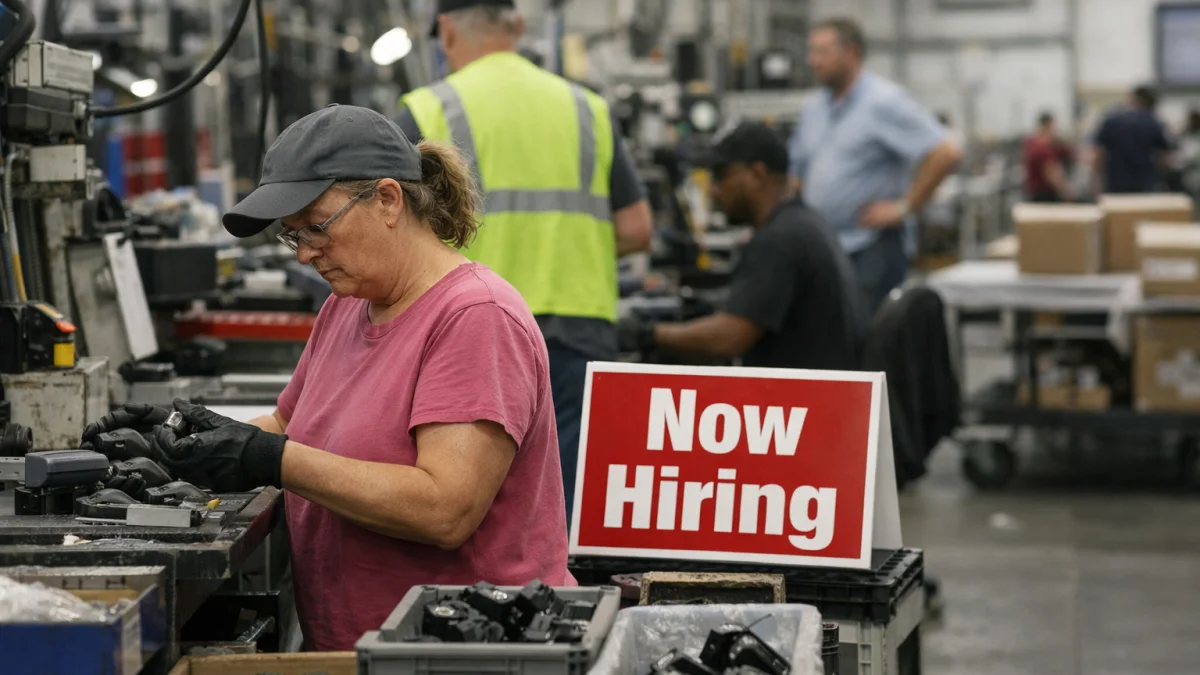
WASHINGTON — U.S. employers added just 57,000 jobs in June, the weakest monthly hiring gain in months, while earlier payroll figures were revised lower, signaling a sharp cooling in labor market momentum even as the unemployment rate edged down.
The Labor Department said nonfarm payrolls increased by 57,000 jobs last month, well below economists' expectations of about 110,000. It also revised April and May payroll growth downward by a combined 74,000 jobs, indicating hiring had been weaker than previously reported.
The unemployment rate fell to 4.2% from 4.3% in May, but the decline largely reflected a shrinking labor force rather than stronger hiring. About 720,000 people left the labor force during the month, pushing the labor force participation rate down to 61.5%, its lowest level in more than five years, according to the Bureau of Labor Statistics.
The report suggested employers remained cautious amid elevated inflation, geopolitical uncertainty and slowing economic activity. While layoffs have generally remained limited, hiring has moderated across much of the economy after a stronger-than-expected stretch earlier this year.
Healthcare, professional and business services, social assistance, manufacturing and construction posted job gains in June. By contrast, the leisure and hospitality sector lost about 61,000 positions, weighing heavily on overall employment growth. Wage growth remained moderate, with average hourly earnings rising 3.5% from a year earlier, below the pace of consumer inflation.
Economists said the weaker payroll growth, combined with lower labor force participation, pointed to a labor market that is gradually losing momentum after remaining resilient through much of the past year. Some analysts also cited the effects of higher gasoline prices and broader economic uncertainty following recent geopolitical tensions as factors weighing on hiring and consumer demand.
Financial markets interpreted the report as reducing the likelihood of an imminent interest-rate increase by the Federal Reserve, with investors lowering expectations for additional policy tightening in the near term. The central bank has said future decisions will depend on incoming economic data as it continues to seek a return of inflation to its 2% target.
The June employment report will be among the key indicators policymakers monitor ahead of the Federal Reserve's next monetary policy meeting later this month.