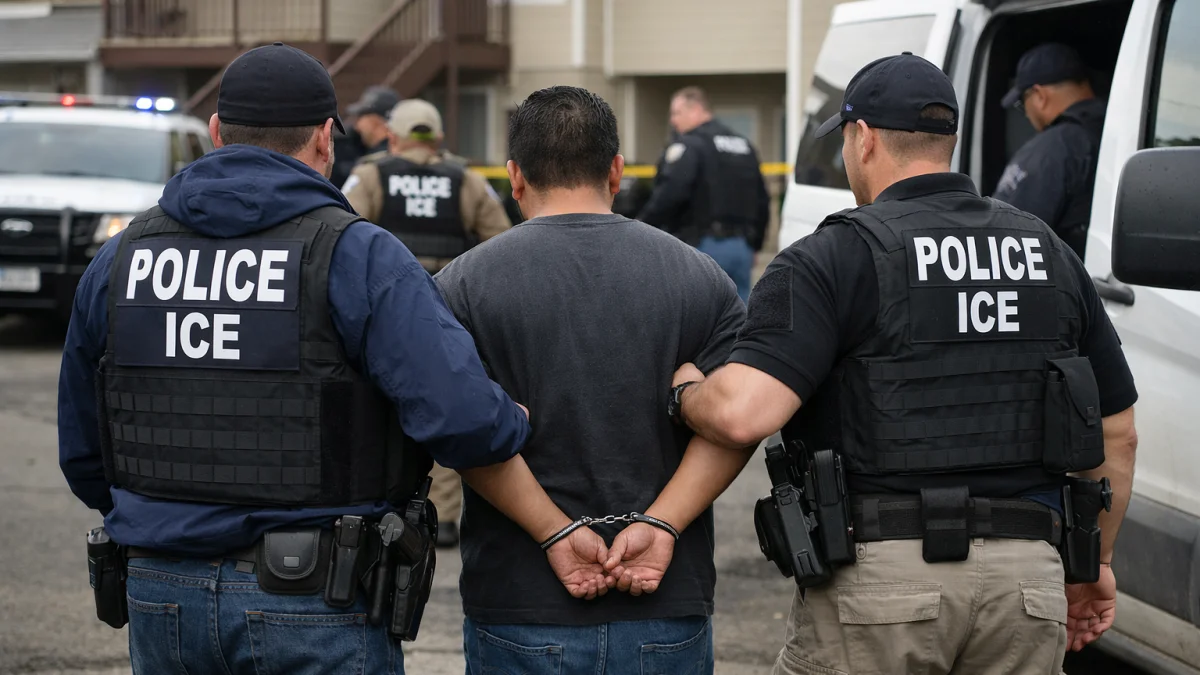
The Trump administration is attempting to reconcile its aggressive immigration enforcement agenda with mounting scrutiny over the conduct of U.S. Immigration and Customs Enforcement (ICE) after a series of fatal shootings prompted an abrupt policy shift that was then publicly reversed by President Donald Trump. The latest development underscores the growing challenge facing the administration as it seeks to sustain expanded enforcement operations while responding to concerns over officer tactics, public safety, and accountability.
The significance of the episode extends beyond a single operational decision. It illustrates the tension between the administration's commitment to increasing arrests and deportations and the operational risks associated with broader field enforcement. The temporary suspension of most ICE traffic stops following two fatal shootings suggested that senior officials recognized the need to reassess enforcement practices. Trump's subsequent insistence that traffic stops remain an essential law enforcement tool highlighted competing priorities within the administration and reinforced immigration enforcement as a central political objective.
The immediate controversy followed separate fatal encounters involving ICE officers in Texas and Maine. In Maine, Colombian national Johan Sebastián Durán Guerrero was shot during an enforcement operation in which authorities were reportedly attempting to execute a warrant for another individual. Days earlier, another fatal shooting occurred during an ICE operation in Houston. The incidents generated protests, prompted calls for investigations from state officials and members of Congress, and renewed criticism from immigrant advocacy organizations regarding ICE's operational methods. Investigations into both shootings remain ongoing.
Initially, administration officials instructed ICE officers to suspend most routine vehicle stops while reviewing procedures. The guidance reportedly allowed exceptions for criminal warrants and joint operations with other law enforcement agencies. According to officials cited by multiple news organizations, the review was intended to evaluate officer safety and enforcement tactics after the recent incidents.
Trump's public rejection of that approach highlighted the political importance his administration places on visible immigration enforcement. The president argued that traffic stops remain one of ICE's most effective methods for locating individuals subject to removal and warned against limiting what he characterized as a critical crime-fighting tool. His remarks effectively reversed the impression that the administration was preparing a broader retreat from existing enforcement practices.
The policy debate comes as ICE has significantly expanded operations since Trump returned to office in 2025. The administration has directed the agency to accelerate arrests and deportations while broadening interior enforcement beyond detention facilities and border operations. Former immigration officials note that vehicle stops have become an increasingly important tactic because they allow officers to apprehend targeted individuals away from homes and workplaces, potentially reducing operational complications but also increasing the likelihood of unpredictable roadside encounters.
The recent shootings have intensified long-standing questions about oversight mechanisms within ICE. Critics have pointed to the absence of body cameras in some enforcement operations and argued that greater transparency is necessary whenever federal officers use lethal force. In response, the Department of Homeland Security has moved to expand body-camera deployment across ICE arrest teams, reflecting an effort to strengthen documentation of encounters while investigations proceed. Supporters of the administration argue that officers frequently confront dangerous and rapidly evolving situations and caution against drawing conclusions before official investigations are completed.
Political reactions have reflected broader divisions over immigration policy. Democratic officials and several state leaders have called for independent investigations and questioned whether current enforcement practices adequately protect both officers and civilians. Some Republican lawmakers have likewise expressed concern over the specific tactics used during recent operations while continuing to support stronger immigration enforcement overall. Others have defended ICE's expanded mission, arguing that operational adjustments should not undermine broader efforts to enforce federal immigration law.
The episode also demonstrates the operational complexity of implementing an ambitious immigration agenda. Expanding enforcement increases the frequency of direct encounters between federal officers and the public, making training, operational planning, and accountability increasingly important. Even limited tactical adjustments can carry broader political implications because they may be interpreted either as necessary safety reforms or as signals that enforcement priorities are changing.
For the administration, the challenge is balancing operational effectiveness with public confidence in federal law enforcement. For ICE, maintaining enforcement intensity while reducing the likelihood of further controversial incidents has become an immediate institutional priority. The adoption of additional body cameras and reviews of operational procedures suggest officials acknowledge the importance of strengthening safeguards even as broader enforcement objectives remain unchanged.
The current situation remains fluid. Federal investigations into the recent fatal shootings continue, while the administration has reaffirmed its commitment to robust immigration enforcement despite briefly considering operational restrictions. Officials are also monitoring implementation of expanded body-camera requirements, reviewing enforcement procedures, and assessing whether further policy adjustments are necessary as investigations establish the facts surrounding the recent incidents.