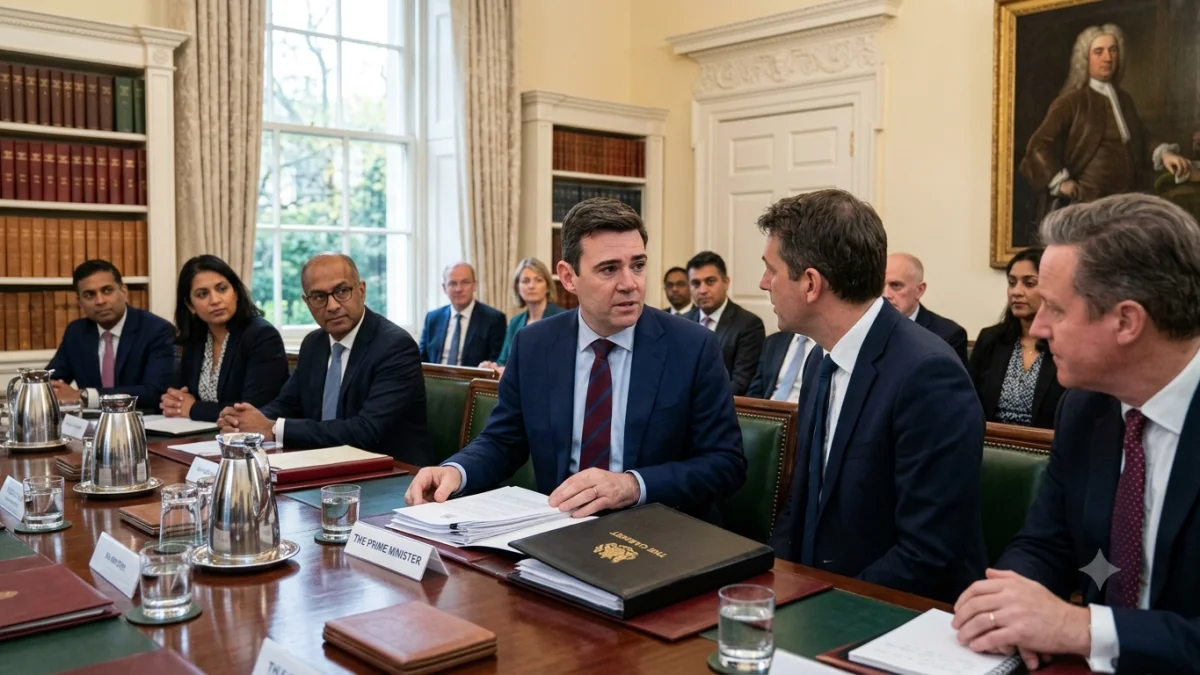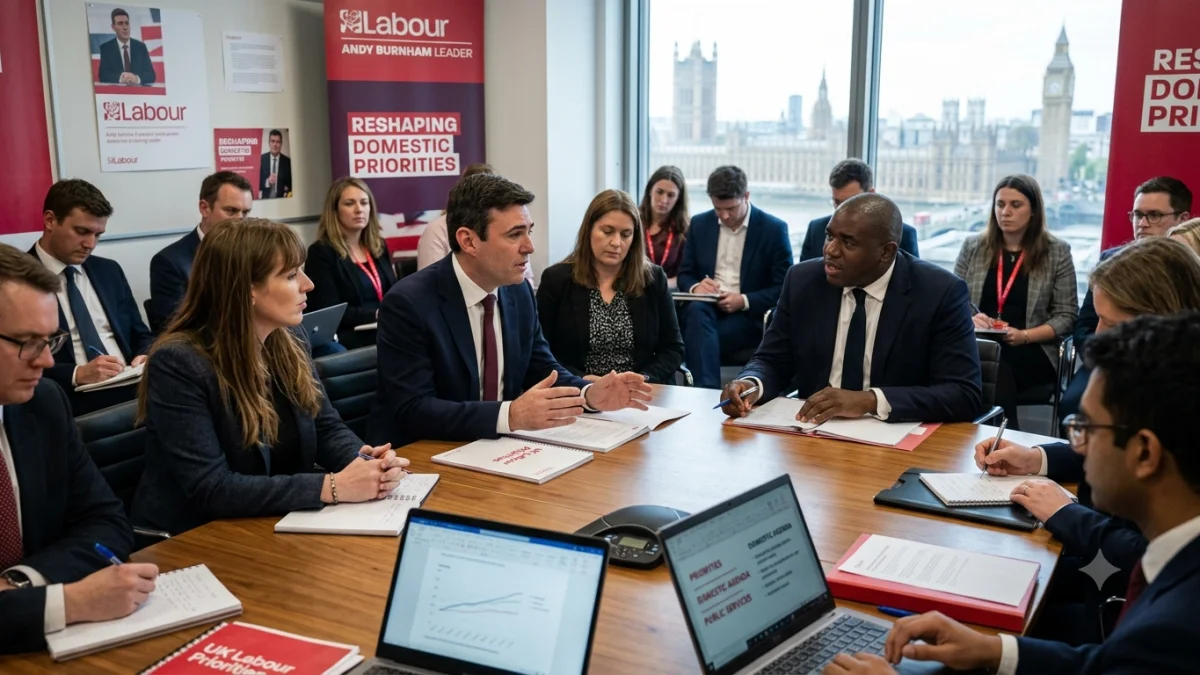
Andy Burnham's elevation to the leadership of Britain's governing Labour Party marks the most significant political transition since Labour returned to power, placing a politician closely identified with regional devolution and local government at the center of national decision-making. Confirmed as Labour leader on July 17 after securing overwhelming backing from Labour MPs and affiliated organizations, Burnham is expected to assume the premiership with a commitment to redirect government attention toward economic inequality, public services and regional investment.
The leadership change matters because it signals not only a change in personnel but also a recalibration of Labour's governing priorities after mounting political pressure on former Prime Minister Keir Starmer. Burnham inherits a parliamentary majority but faces a more demanding political environment than the one Labour entered following its 2024 election victory. Slowing economic growth, persistent cost-of-living pressures, strained public finances and growing competition from Reform UK have increased pressure on Labour to demonstrate tangible improvements before the next general election.
Burnham's political identity has been shaped by his tenure as Mayor of Greater Manchester, where he became one of Britain's most prominent advocates for devolved government. His national platform emphasizes dispersing political and economic power away from Westminster toward cities and regions, arguing that stronger local institutions can improve public services, attract investment and reduce regional disparities. In his leadership speech, Burnham pledged to restore what he described as hope in communities that have felt economically and politically neglected.
That emphasis represents a shift in governing style as much as policy. Whereas Starmer's administration was frequently associated with centralized decision-making and fiscal caution, Burnham has argued that local authorities should exercise greater influence over transport, housing, skills and economic development. Analysts note that his experience in municipal government provides practical administrative credentials, but they also caution that scaling regional governance models to the national level presents significantly greater institutional and fiscal challenges.
Economic policy is likely to become the principal test of the new leadership. Burnham has promoted what he calls "good growth in every postcode," combining industrial policy, infrastructure investment, expanded social housing and decentralization while maintaining commitments to fiscal discipline intended to preserve financial market confidence. Those objectives reflect the broader dilemma confronting many European governments: stimulating growth while operating within tight budget constraints and elevated public debt. Economists note that balancing investment ambitions with existing fiscal rules will require difficult spending decisions or new sources of revenue.
Public services are also expected to receive renewed emphasis. Labour enters the transition facing continued pressure over the National Health Service, housing affordability, transport and local government finances. Burnham's longstanding advocacy for integrated public services and affordable transport has raised expectations among Labour supporters, although delivering measurable improvements will depend on both Treasury resources and implementation capacity across government departments.
Politically, Burnham must also preserve Labour's broad electoral coalition while responding to changing voter preferences. Surveys and recent electoral trends have shown increasing fragmentation across Britain's political landscape, with Reform UK expanding its support in parts of England while Labour continues to compete with the Conservatives, Liberal Democrats and nationalist parties in different regions. Some analysts argue Burnham's appeal among traditional Labour voters in northern England could strengthen Labour's position in former industrial areas. Others caution that maintaining support in southern constituencies may require balancing different priorities on taxation, immigration and public spending.
Foreign policy is unlikely to dominate Burnham's initial domestic agenda but remains an important area of scrutiny. Britain continues to face strategic challenges stemming from the war in Ukraine, instability in the Middle East and pressure from NATO allies to increase defense spending. Burnham has pledged continued support for NATO while acknowledging the need to reconcile higher defense commitments with domestic spending priorities. Observers note that, unlike many recent prime ministers, Burnham enters office with comparatively limited foreign policy experience, making the early management of international crises an important measure of his leadership.
The transition also reflects Labour's effort to redefine its political narrative. Burnham has framed his leadership around rebuilding trust between government and communities that believe economic gains have been unevenly distributed. Supporters argue that his record in Greater Manchester demonstrates an ability to combine pragmatic governance with visible local engagement. Critics question whether policies developed in a metropolitan region can be successfully expanded across the United Kingdom's more complex national economy and constitutional framework.
The immediate picture is therefore one of continuity in Labour's parliamentary control but adjustment in governing priorities. Burnham begins his leadership with substantial backing inside the party and a mandate to pursue greater regional empowerment, economic renewal and public service reform. Whether those priorities translate into measurable policy outcomes will depend on forthcoming fiscal decisions, legislative proposals and the government's ability to deliver results amid constrained public finances and an increasingly competitive political landscape. Officials, investors and political observers are now monitoring the composition of Burnham's cabinet, the first major policy announcements from Downing Street and the government's autumn fiscal plans as the clearest indicators of how the new leadership intends to convert campaign commitments into national policy.