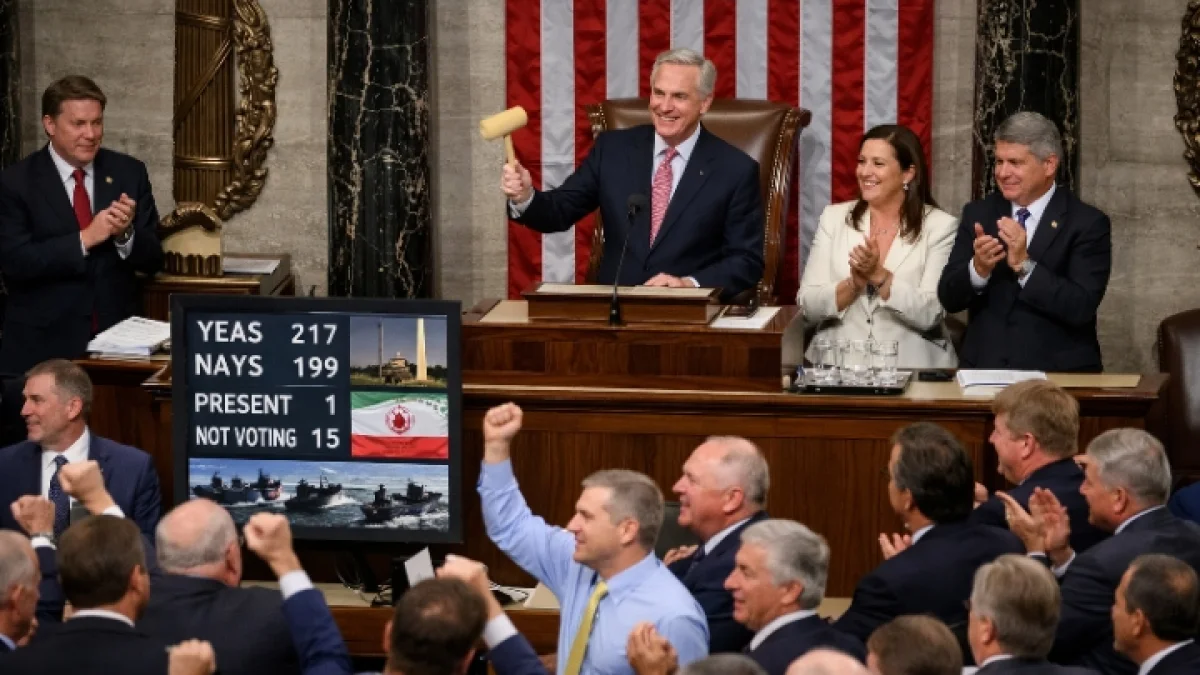
WASHINGTON — The U.S. House of Representatives passed a sweeping $1.15 trillion defense policy bill on Wednesday, advancing legislation that expands military cooperation with Israel and comes as Republicans seek separate funding for the U.S. war with Iran.
The annual National Defense Authorization Act for fiscal year 2027, known as the NDAA, cleared the House after Republicans overcame internal divisions and Democratic opposition. The measure now moves to the Senate, where its provisions will have to be reconciled with the chamber's version of the defense policy bill.
The legislation authorizes more than $1 trillion in military spending and includes provisions related to U.S.-Israeli defense cooperation, according to reports on the House measure. The bill also provides for a pay raise for U.S. troops and sets broad military policy for the coming fiscal year.
The House action came alongside a separate Republican-backed effort to provide additional resources for the conflict with Iran. House Republicans advanced a budget framework that would allow lawmakers to develop a package of up to $95 billion, including as much as $60 billion for military operations and $13 billion for intelligence, according to congressional reporting on the proposal. The framework also includes funding for other priorities and election-related measures.
The Iran funding effort has drawn opposition from Democrats, who have questioned the cost of the conflict and sought greater congressional oversight of U.S. military operations. Earlier this year, the House narrowly rejected a measure directing President Donald Trump to remove U.S. forces from hostilities against Iran, with the vote ending in a 212-212 tie.
The defense bill itself faced a procedural setback during consideration when the House rejected a motion to recommit by a vote of 213-216. The vote was followed by final House action on the legislation.
The measures underscore the central role of Iran-related military spending in the congressional debate over defense policy this year. The NDAA must still pass the Senate and be signed by the president to become law, while the separate budget framework must advance through the Senate before any resulting Iran funding package can take effect.