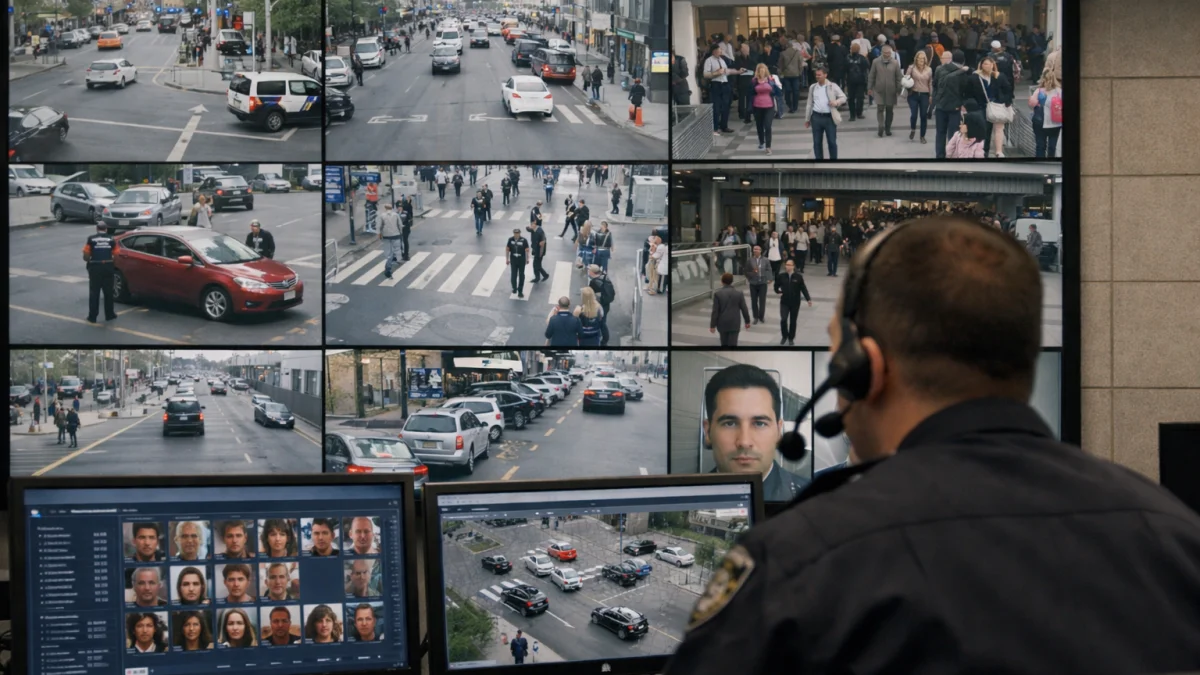
WASHINGTON — The rapid expansion of surveillance technologies in criminal investigations is intensifying debate among policymakers, law enforcement agencies and civil liberties advocates, as authorities increasingly rely on tools such as automated license plate readers, facial recognition systems and AI-assisted video analysis to identify suspects and solve crimes.
Police departments across several countries say the technologies have improved investigative speed by helping officers process large volumes of digital evidence, locate stolen vehicles, identify wanted suspects and reconstruct events from surveillance footage. Officials argue the systems can generate investigative leads that would otherwise require extensive manual review.
At the same time, privacy organizations and legal experts have raised concerns that expanding surveillance networks could enable the collection of personal information from people who are not suspected of criminal activity. Critics have questioned how long data are retained, who can access it and what safeguards exist to prevent misuse or unauthorized disclosure.
Recent incidents have added to those concerns. Security researchers disclosed this month that improperly configured software exposed live and archived drone video feeds used by the San Francisco Police Department, including footage of police operations and metadata that should not have been publicly accessible. The department said it addressed the issue after being notified.
Facial recognition technology remains one of the most contested tools. Supporters say it can help identify suspects in serious crimes and locate missing people, while researchers and advocacy groups warn that inaccurate matches and algorithmic bias can contribute to wrongful arrests if results are not independently verified. Recent reviews of empirical research have concluded that human oversight and clear operational standards remain essential to limit errors.
Governments in several jurisdictions are reviewing or expanding legal frameworks governing biometric surveillance. In the United Kingdom, the Home Office has consulted on new rules covering police use of facial recognition and other biometric technologies, seeking to balance investigative needs with privacy protections and public accountability.
Technology companies supplying surveillance platforms have said their systems are designed to assist investigations rather than replace human decision-making. Privacy advocates, however, argue that greater transparency is needed regarding how algorithms operate, how watchlists are compiled and what mechanisms exist for individuals to challenge incorrect identifications.
As governments continue to adopt AI-enabled investigative tools, lawmakers, regulators and courts are expected to play a central role in determining how technological capabilities can be used while protecting civil liberties and maintaining public confidence in criminal justice systems.