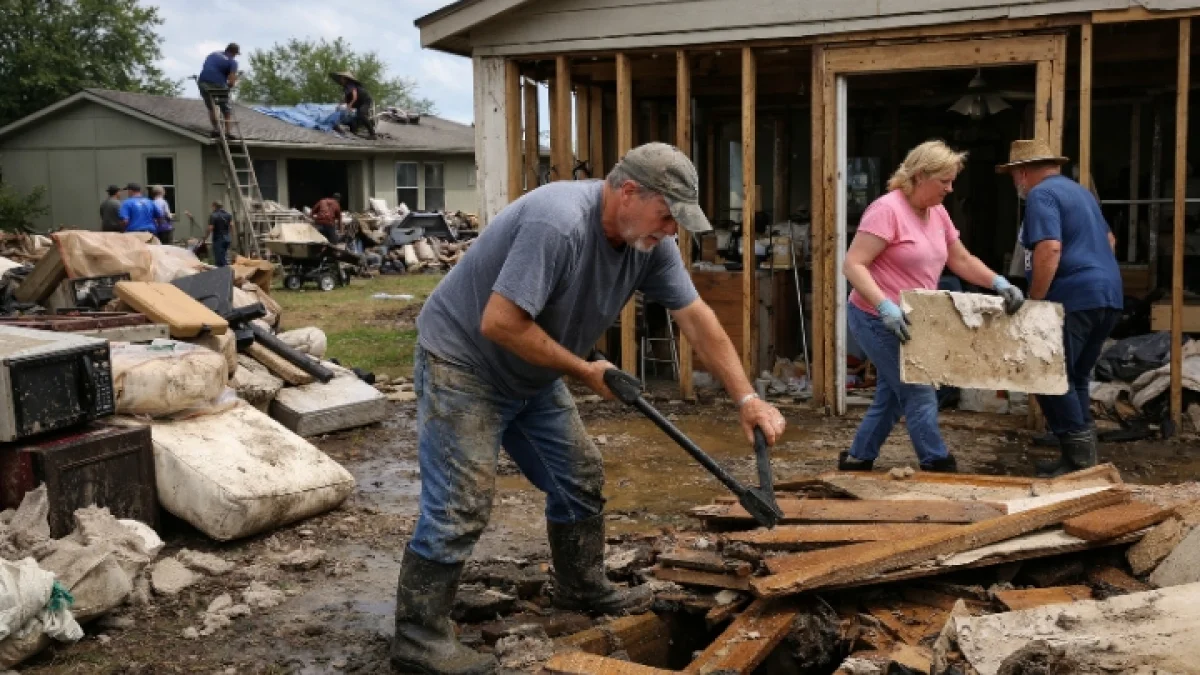
The work of rebuilding had barely begun to settle into routine when the water came back.
At a shelter at Calvary Temple Church in Kerrville, Texas, Soyla Reyna was helping people displaced by flooding in mid-July when nearly 50 residents arrived seeking supplies and a place to stay, according to The Texas Tribune. Many had lost homes or recreational vehicles as rapidly rising water swept through the area, bringing back memories of the catastrophic flood that struck the Texas Hill Country a little more than a year earlier.
“A lot of it was unbelievable,” Reyna told the newspaper. “People are devastated by the reoccurrence.” She said both floods had come during the night, a detail that added to the fear and confusion for residents who had already lived through the earlier disaster.
For communities along the Guadalupe River, recovery in 2026 has become a race against a disaster that has returned before the previous one was fully repaired. The July 2025 flood killed 119 people in Kerr County and more than 100 across the wider region, according to local reporting. A year later, another round of severe flooding damaged or destroyed hundreds of homes in the same county, forcing some residents back into shelters and leaving local officials facing a new demand for long-term housing and repairs.
The second disaster did not simply erase the progress made since 2025. It exposed how incomplete that progress remained.
Texas Gov. Greg Abbott said on July 20 that 135 homes in Kerr County had been destroyed or heavily damaged by the latest flooding, while another 490 homes and about 100 businesses sustained damage. Most of the affected residents were owners of single-family homes, he said, underscoring the scale of the rebuilding challenge facing families who had already spent a year trying to restore their lives.
The numbers tell only part of the story. For residents who had rebuilt walls, replaced belongings or repaired businesses after the 2025 flood, the new water brought a different calculation: whether the repairs could be repeated, whether they could afford to do so, and whether the place they called home could remain safe.
The July 2026 flooding also unfolded differently from the disaster a year earlier. The 2025 event was extraordinarily deadly, while the latest flooding produced fewer deaths but caused widespread damage and hundreds of rescues. In some locations, including parts of the Guadalupe River corridor, water levels exceeded those recorded during the previous year's flood. The geography of the Hill Country — steep terrain, shallow soils and waterways that can rise rapidly — leaves communities vulnerable when heavy rainfall falls across the watershed.
For those who survived the first flood, the second brought a familiar landscape of destruction. The Texas Tribune reported that residents again encountered debris, damaged vehicles and water lines on homes, scenes that echoed the aftermath of 2025. But there was also evidence of what residents and communities had learned. Warning systems and preparedness efforts put in place after the earlier catastrophe helped some people respond more quickly, according to local reporting.
The contrast between the two floods has shaped the way residents talk about recovery. In 2025, the immediate question was survival and the search for missing people. In 2026, many communities were still working through the longer, less visible process of rebuilding homes, replacing possessions and restoring businesses when another emergency arrived.
Kerr County's recovery had shown signs of progress before the latest floods. One year after the 2025 disaster, some homes had been rebuilt, businesses had reopened and community life had begun to resume, even as families continued to grieve those who died. The damage from the 2025 floods was estimated at between $18 billion and $22 billion across the region, according to CBS Texas.
That recovery now faces another test.
The immediate work is practical: removing debris, finding temporary housing and repairing roads and buildings. Abbott said the focus in areas where the water had receded was shifting toward debris removal and rebuilding, while warning that floodwaters moving downstream could continue to threaten communities beyond the hardest-hit parts of the Hill Country.
Aid groups have moved into the gap. The Salvation Army said it expanded relief operations across Uvalde and Zavala counties after the July flooding, working with other disaster-response organizations to provide meals, supplies and support. The organization reported serving thousands of meals and distributing cleanup and hygiene kits as residents began the difficult task of clearing damaged homes and property.
The rebuilding effort also extends beyond houses. Along the Guadalupe River, environmental groups and volunteers have begun restoring trees and vegetation damaged by the 2025 flood. The San Antonio Botanical Garden's TREES initiative has collected more than 850,000 seeds from the upper watershed and is raising thousands of plants, with a long-term goal of restoring tens of thousands of trees. Supporters say healthy vegetation can help slow floodwaters, hold sediment and restore river habitats.
For residents, however, recovery is measured in more immediate terms.
It is the family trying to return to a repaired house. The business owner assessing another round of damage. The volunteer opening a church shelter for neighbors who had already endured one disaster. It is also the question confronting communities that have now seen two major floods in successive summers: how to rebuild when the landscape has not stopped changing.
At the church in Kerrville, Reyna's experience captured that uncertainty. People were arriving for help after a second flood had struck homes and communities still carrying the consequences of the first.
The work of rebuilding continues, but for many residents of the Texas Hill Country, the task is no longer simply restoring what was lost. It is trying to decide what can be rebuilt, what must be changed and how to prepare for the possibility that the river may rise again.