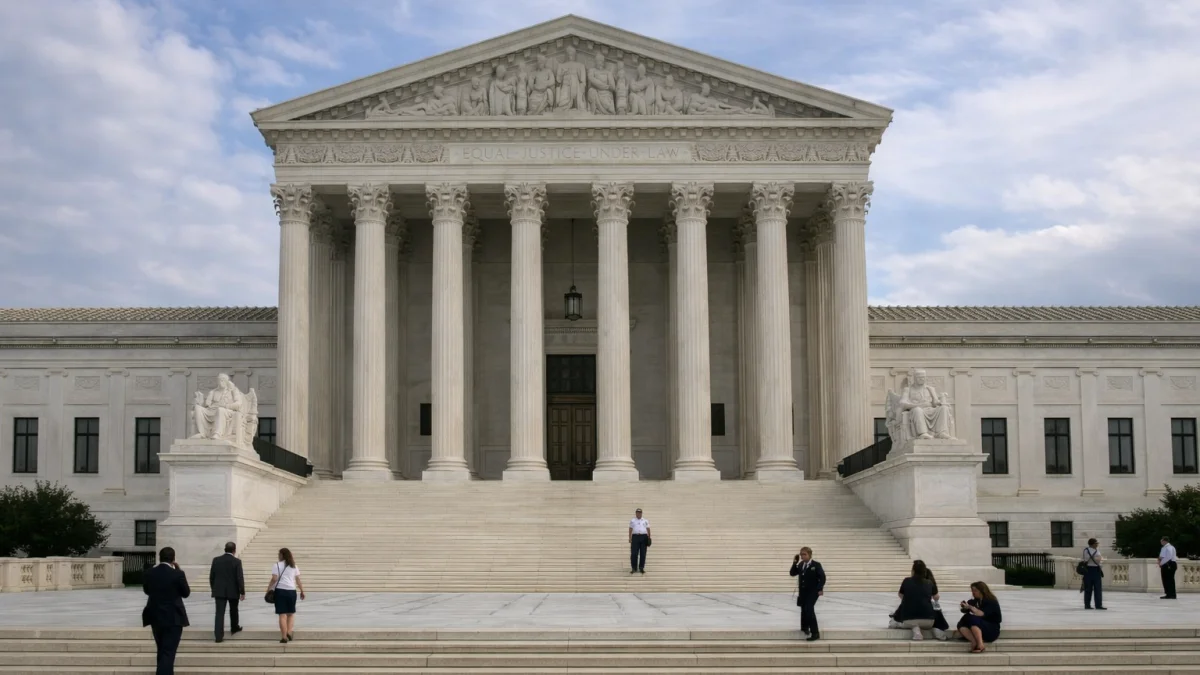
WASHINGTON — A series of U.S. Supreme Court rulings issued at the close of its 2025–26 term has significantly reshaped the balance of power between the presidency, Congress and independent federal agencies, delivering President Donald Trump major legal victories on executive authority while rejecting several of his administration's signature policy initiatives.
The court's most consequential decision came in a 6-3 ruling on June 29 that overturned the 1935 precedent Humphrey's Executor v. United States, holding that Congress cannot shield members of the Federal Trade Commission from removal by the president through statutory "for cause" protections. The decision upheld Trump's dismissal of FTC Commissioner Rebecca Slaughter and expanded presidential authority over many independent regulatory agencies.
The ruling marked one of the most significant changes to the structure of the federal government in decades, reinforcing a constitutional view that executive officials exercising presidential authority must remain accountable to the president. The court, however, indicated that the decision should not be read as extending automatically to the Federal Reserve, whose unique role in monetary policy presents different constitutional considerations.
The broader impact of the ruling is already emerging in lower courts. U.S. District Judge Tanya Chutkan this week said the Supreme Court's decision could require dismissal of a lawsuit brought by former Equal Employment Opportunity Commission member Jocelyn Samuels, who challenged Trump's removal from the agency before the expiration of her term.
The Supreme Court's term nevertheless produced setbacks for the administration. The justices rejected Trump's effort to restrict birthright citizenship through executive action and ruled against the administration in a dispute over tariffs, underscoring limits on presidential authority in other areas.
Legal scholars said the term reflected the court's continued willingness to strengthen presidential control over the executive branch while maintaining constitutional constraints in selected policy disputes. The decisions collectively shifted authority away from Congress in matters involving the organization and supervision of the executive branch, even as the court declined to endorse every administration position.
The rulings are expected to influence litigation involving other independent agencies, including challenges to statutory protections for federal officials and future disputes over presidential removal authority. Several pending cases are already being reassessed by lower courts in light of the Supreme Court's decisions, with additional legal challenges likely as agencies and litigants adapt to the new constitutional framework.