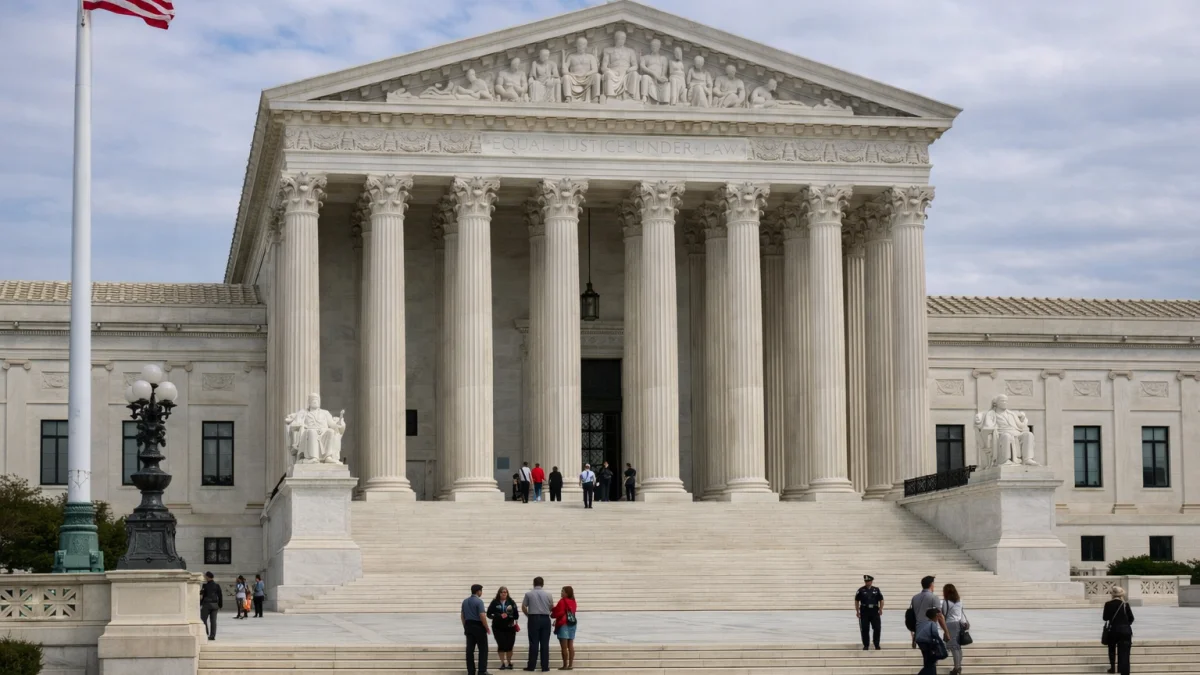
The U.S. Supreme Court has ruled that the president may remove officials at certain independent federal agencies without the job protections that Congress had created, overturning a nearly century-old legal precedent and reshaping the balance of power between the White House and regulatory institutions. In a 6-3 decision in Trump v. Slaughter, the court allowed President Donald Trump’s removal of Federal Trade Commission (FTC) Commissioner Rebecca Slaughter and rejected statutory limits that had required “cause” before removing FTC commissioners.
The ruling is significant because it changes the constitutional framework that allowed some federal agencies to operate with a degree of independence from direct presidential control. For decades, agencies such as the FTC, Federal Communications Commission, National Labor Relations Board and other multi-member commissions were structured with protections intended to reduce political interference in regulatory decisions. The court’s decision narrows those protections by holding that officials exercising executive power must remain accountable to the president, who is elected to oversee the executive branch.
The case centered on the 1935 precedent Humphrey’s Executor v. United States, which arose after President Franklin Roosevelt attempted to remove an FTC commissioner. That decision held that Congress could limit presidential removal authority for officials at certain independent agencies, creating the legal foundation for “for-cause” protections that remained in place for more than 90 years. The Supreme Court’s new ruling overturns that precedent and reflects a broader shift in the court’s interpretation of presidential authority under Article II of the Constitution.
Chief Justice John Roberts, writing for the majority, argued that agencies such as the FTC perform functions that are fundamentally executive in nature, including enforcement actions, investigations, rulemaking and other regulatory responsibilities. The majority concluded that allowing Congress to restrict the president’s ability to remove such officials improperly limits presidential supervision of the executive branch.
The decision strengthens the president’s ability to influence the direction of regulatory agencies through personnel decisions. Supporters of expanded presidential removal power argue that elected presidents should have greater authority to implement their policy agendas and that accountability is clearer when agency leadership can be directly changed by voters’ chosen executive. Opponents argue that independent agencies were designed precisely to provide stability and expertise in areas where regulation can be affected by short-term political pressures.
The ruling could have broad implications across the federal regulatory system. Congress has created numerous agencies with structures designed to separate day-to-day regulatory decisions from presidential politics. While the Supreme Court decision directly addressed the FTC, legal analysts said the reasoning may affect other agencies whose leaders previously had similar removal protections.
The decision also comes amid a broader legal debate over the scope of executive power. In recent years, the Supreme Court has issued rulings that have limited certain forms of administrative authority and changed the relationship between courts, agencies and the executive branch. The latest ruling continues that trend by placing greater emphasis on presidential control over officials responsible for carrying out federal laws.
The court, however, treated the Federal Reserve differently. In a separate case involving Federal Reserve Governor Lisa Cook, the justices blocked Trump’s attempt to remove her, indicating that the central bank’s structure may remain subject to separate constitutional analysis because of its unique role in monetary policy and economic stability.
The practical effects of the ruling will depend on how future presidents use the expanded removal authority and how Congress responds. The immediate confirmed change is that certain independent agency officials no longer have the same statutory protection from presidential removal that existed under Humphrey’s Executor. Legal observers will continue to monitor how lower courts apply the decision, how agencies adjust their leadership structures, and whether additional challenges arise involving other regulatory bodies.