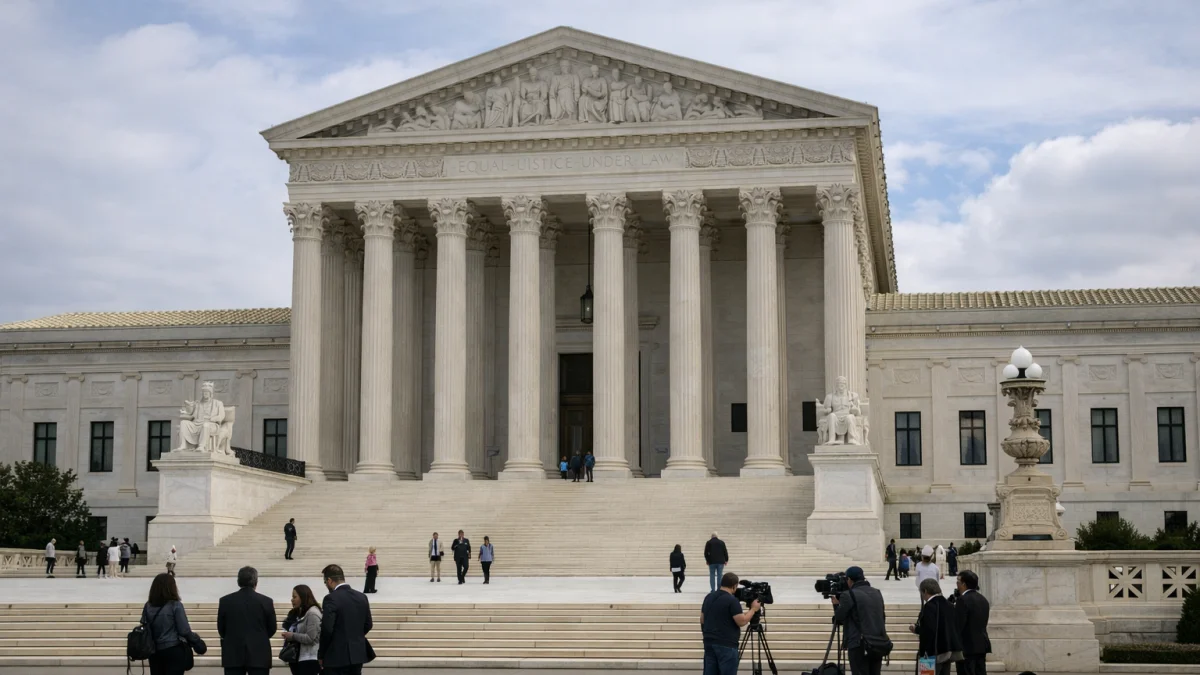
WASHINGTON — The U.S. Supreme Court’s ruling on federal campaign finance limits has reshaped the legal landscape for the 2026 midterm elections, prompting political parties and election officials to assess how the decision will affect campaign spending rules ahead of November’s congressional contests.
The case, National Republican Senatorial Committee v. Federal Election Commission, involved limits under the Federal Election Campaign Act that restrict how much political parties can spend in coordination with federal candidates. The restrictions were designed to prevent parties from using coordinated spending to bypass contribution limits, while challengers argued the rules violate First Amendment protections for political speech.
The Supreme Court’s consideration of the dispute came as candidates and party committees prepared for the midterm elections, with both major parties watching for changes that could affect fundraising strategies, advertising operations and coordination between campaigns and national committees.
Supporters of loosening the restrictions argued that political parties should have broader ability to support their own candidates and communicate with them about election spending. They said the limits placed unnecessary constraints on political organizations.
Opponents of changing the rules argued that coordinated spending limits remain an important safeguard against corruption and against efforts to evade contribution restrictions. Democratic Party officials and campaign finance advocates warned that weakening the limits could significantly alter the balance of federal campaign finance regulation.
The dispute followed a long-running debate over the role of money in U.S. elections. The Supreme Court has previously issued major campaign finance decisions, including rulings addressing independent political spending and contribution limits, creating a legal framework that distinguishes between protected political expression and government restrictions intended to prevent corruption.
The ruling arrives during a closely watched election cycle in which control of Congress will be contested. Party committees have been building fundraising operations for the 2026 races, and political organizations are expected to review the decision’s implications for campaign planning and legal compliance.
The Federal Election Commission, which enforces federal campaign finance laws, is responsible for implementing the rules governing federal candidates, parties and political committees. Officials and campaigns are expected to adjust their strategies based on the court’s interpretation of the law.
The Supreme Court’s decision leaves parties and candidates preparing for the next stage of the election cycle under the updated legal framework, with federal campaign finance rules now guiding spending and coordination decisions as the 2026 midterm elections approach.