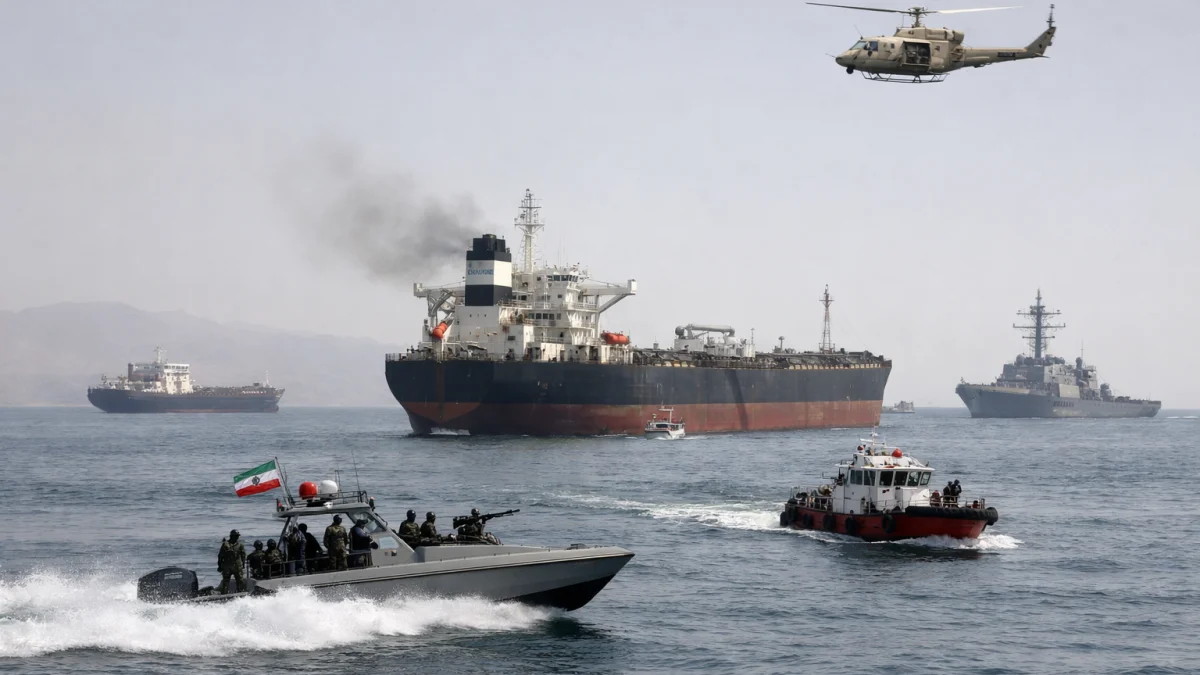
DUBAI — Vessel traffic in the Strait of Hormuz remained severely disrupted on Monday following an Iranian drone strike on a commercial cargo ship last week, with the United Nations pausing efforts to evacuate stranded vessels from the Persian Gulf.
The Singapore-flagged M/V Ever Lovely was hit by a one-way attack drone on June 25 while exiting the strait along the Omani coast, according to U.S. Central Command and the United Kingdom Maritime Trade Operations. The projectile struck the vessel's starboard side, damaging the bridge, but caused no injuries and the ship remained operational.
U.S. officials attributed the attack to Iran's paramilitary Revolutionary Guard. The strike came hours after Iran warned vessels against using routes through the strait without its permission, amid disputes over designated traffic lanes.
In response, the United States conducted strikes on June 26 targeting Iranian missile and drone storage locations and coastal radar sites near the strait and on Qeshm Island, U.S. Central Command said. President Donald Trump described Iran's action as a "foolish violation" of a fragile ceasefire agreement reached earlier in June.
The International Maritime Organization halted its mission to evacuate hundreds of ships and more than 11,000 seafarers stranded in the region since earlier hostilities, Arsenio Dominguez, the agency's secretary-general, confirmed. The pause followed the attack on the Ever Lovely, which was not part of the evacuation effort.
Shipping data showed commercial transits through the strait at a fraction of normal levels, with only a handful of vessels moving daily compared to more than 100 before the broader conflict escalated earlier this year. Maritime tracking indicated restricted flows, with operators facing elevated insurance costs and security risks.
Iran has asserted control over traffic separation schemes in the waterway, insisting vessels use routes closer to its coastline. The U.S. and allies have supported alternative southern passages near Oman, contributing to tensions. Iran has denied violating the ceasefire, framing its actions as necessary to manage the waterway.
The Strait of Hormuz handles about one-fifth of global oil trade under normal conditions. The latest incidents have kept oil and product tanker movements minimal, though isolated LNG transits have occurred.
As of Monday, no further attacks on commercial shipping were reported in the immediate vicinity, but the Joint Maritime Information Center and UKMTO advised heightened caution. Efforts to expand safe southern routes continued, according to U.S.-led maritime authorities.
The situation underscores the fragility of the recent U.S.-Iran understanding aimed at restoring maritime flows following months of conflict that had largely halted traffic. No immediate resumption of large-scale evacuations or normalized shipping was announced.