South Carolina Governor Henry McMaster's appointment of Darline Graham Nordone as interim U.S. senator following the death of Sen. Lindsey Graham ensures the state retains full representation in the Senate during a period of significant legislative activity while opening a rapid political contest over who will hold the seat beyond the end of the current term. The appointment follows the sudden death of Graham, one of the Senate's most influential Republican lawmakers, and comes under South Carolina law authorizing the governor to fill a Senate vacancy until an elected successor takes office.
The decision carries significance beyond the temporary replacement of a veteran senator. Graham had become one of the Republican Party's most prominent voices on national security, judicial nominations, and foreign policy over more than two decades in the Senate. His death created an immediate vacancy on several influential committees and removed an experienced negotiator from debates over defense appropriations, intelligence authorities, and judicial confirmations. Filling the seat quickly preserves the Republican conference's numerical strength while reducing disruption during an active legislative period.
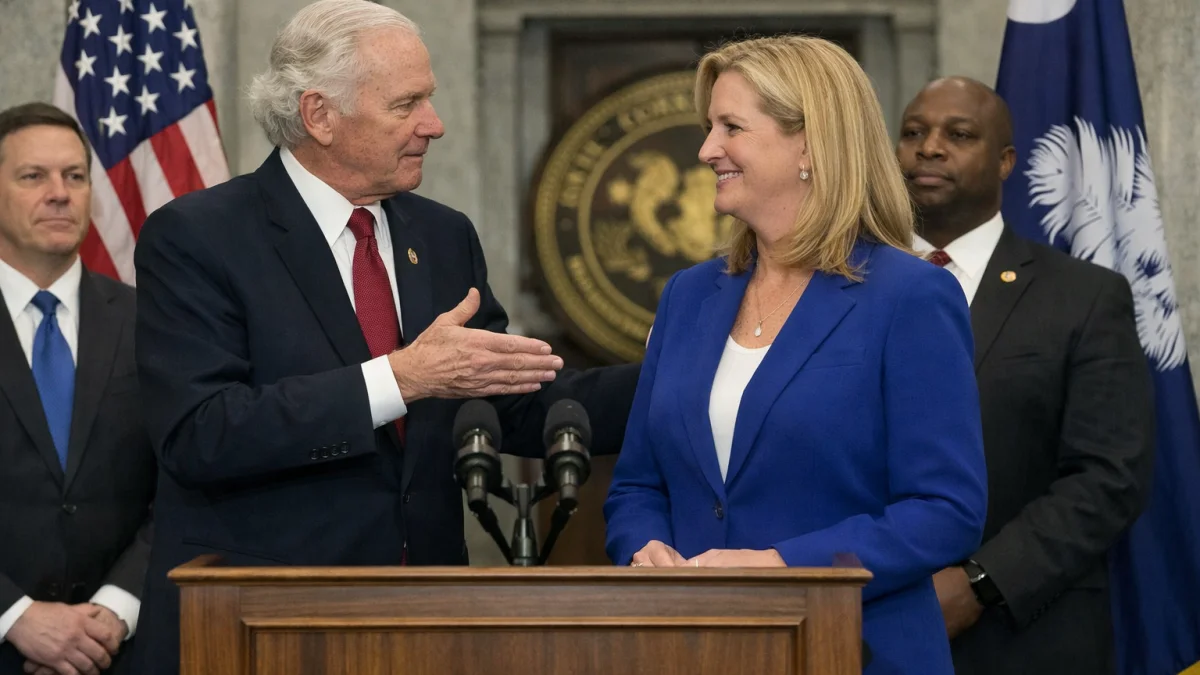
McMaster selected Graham's sister, Darline Graham Nordone, who has served as commissioner of the South Carolina Commission for the Blind since 2019 and previously worked in state public service. The governor described the appointment as both a legal responsibility and a tribute to the late senator's public service. According to the governor's office, Nordone will become the first woman to represent South Carolina in the U.S. Senate and will serve until Jan. 3, 2027, when the next Congress convenes following the November general election.
The appointment also reflects the interaction between state law and national politics. Because Graham had already secured the Republican nomination for another Senate term before his death, South Carolina Republicans must conduct a special primary to select a replacement nominee for the November ballot. State officials have scheduled candidate filing for late July, followed by a special primary on Aug. 11 and, if necessary, a runoff later in the month before the Nov. 3 general election. The compressed timetable places unusual emphasis on party organization and candidate recruitment while ensuring voters, rather than the governor's appointee, determine who will serve the next full six-year term.
President Donald Trump publicly endorsed Nordone before McMaster announced the appointment, describing her selection as an appropriate tribute to her brother. Senate Majority Leader John Thune also welcomed the appointment, underscoring the importance Republican leaders attached to restoring the party's full Senate voting strength. While Trump's endorsement attracted attention, the appointment remained the governor's constitutional authority under South Carolina law.
The practical implications extend to Senate operations. Graham's death coincides with the temporary absence of Senate Minority Leader Mitch McConnell because of illness, leaving Republicans managing both a leadership challenge and the loss of one of their most experienced committee members. Although Nordone's appointment restores the party's numerical advantage, replacing Graham's institutional influence will be considerably more difficult. His long tenure on the Judiciary and Appropriations committees, together with his prominent role in foreign policy debates, made him an influential figure whose expertise cannot be replicated immediately by any interim successor.
The appointment has also shaped the emerging Republican contest for the permanent seat. Political observers have viewed the choice of a caretaker rather than an established elected official as one that avoids giving a prospective candidate the advantages of incumbency during the abbreviated campaign. Multiple Republican figures have been mentioned as potential candidates, while Democrat Annie Andrews remains her party's nominee for the November election. The interim appointment therefore separates the immediate constitutional need to maintain Senate representation from the electoral process that will determine South Carolina's longer-term representation.
Historically, governors frequently appoint temporary senators following vacancies, particularly when deaths occur close to regularly scheduled elections. Such appointments are intended to preserve representation while allowing voters to select a permanent officeholder through the electoral process. In South Carolina's case, the statutory framework provides a clear sequence of appointment, special party nomination, and general election, limiting uncertainty over the succession process.
For now, the immediate constitutional vacancy has been filled, and South Carolina will retain two voting senators as Congress continues work on pending legislation. Attention now shifts to the special Republican primary, the November general election, and how Graham's committee responsibilities and legislative influence will be redistributed within the Senate. Those developments, along with Nordone's brief tenure and the evolving race to succeed her brother permanently, remain the principal issues being monitored by state officials, congressional leaders, and political observers.