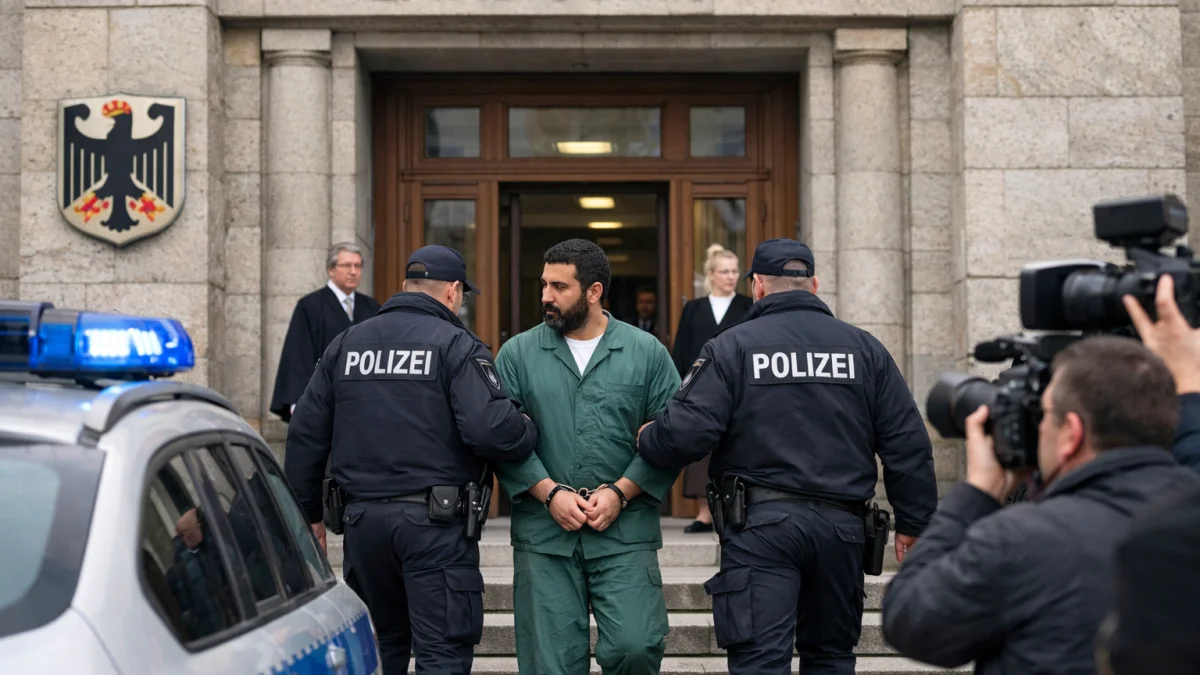
BERLIN — A German court has sentenced a Saudi psychiatrist to life imprisonment for a deadly car-ramming attack on a Christmas market in the eastern city of Magdeburg in December 2024, after convicting him of murder and other offenses, authorities said on Friday. The court also found the defendant's guilt to be of "exceptional gravity," a designation under German law that generally prevents release after the standard 15-year period for life sentences.
The defendant, identified in German court proceedings as Taleb A. in line with the country's privacy rules, was found guilty over an attack in which prosecutors said six people were killed and hundreds of others were injured after a rented vehicle was driven through a crowded Christmas market. The victims included five women and a nine-year-old boy, according to prosecutors.
The Regional Court in Magdeburg ruled that the attack had been planned in advance and that the defendant acted alone. Prosecutors said he carried out the assault after becoming frustrated over the outcome of civil legal disputes and unsuccessful criminal complaints, rather than because of a conventional extremist ideology. Investigators also said he was not under the influence of alcohol at the time of the attack.
During the proceedings, prosecutors argued that the defendant intentionally drove into the crowded market with the aim of causing mass casualties. The trial required extensive security measures and was held in a specially prepared courtroom because of the large number of victims, witnesses and legal representatives involved, according to German media and court officials.
Presiding Judge Elke Lindner said the court had determined the defendant bore "particularly serious guilt," according to German news agency dpa, a finding that significantly limits the possibility of early release.
The defendant had previously appeared publicly as a critic of Islam and had expressed support for far-right views on social media, investigators said. Court-appointed experts testified that he had a narcissistic personality disorder but concluded he was criminally responsible for his actions. Throughout the trial, he repeatedly disrupted proceedings and showed little remorse, according to prosecutors.
The ruling is subject to appeal. As of Friday, no immediate response from the defense regarding a possible appeal had been reported.