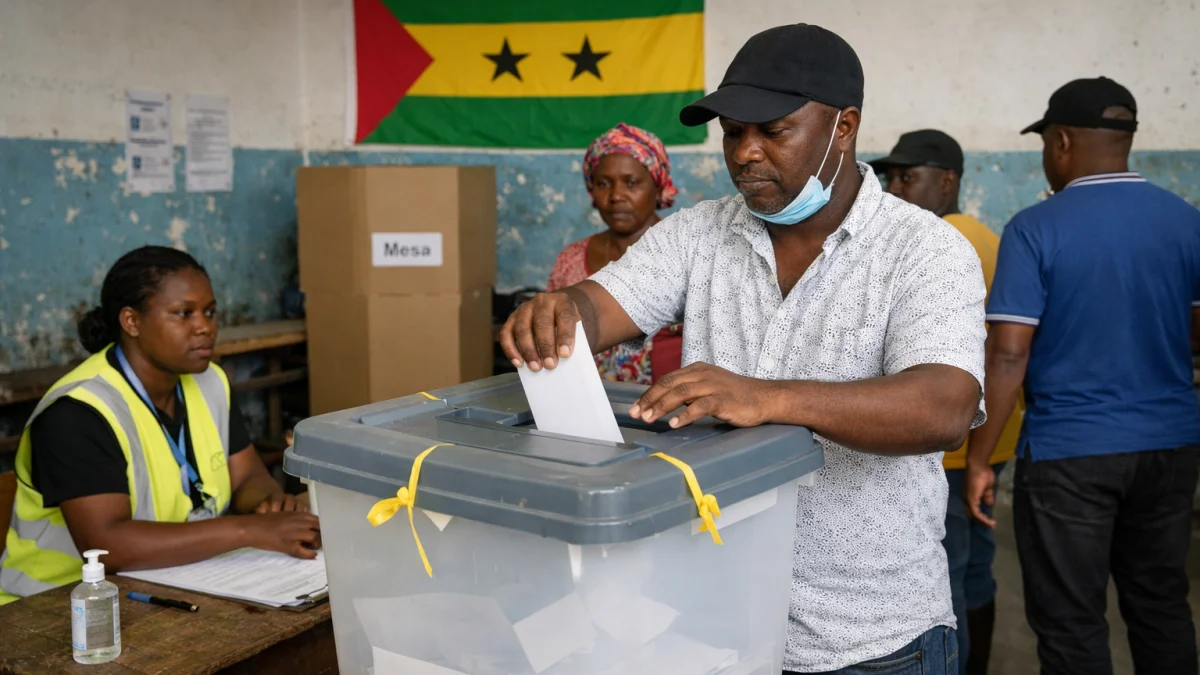
SÃO TOMÉ — Voters in São Tomé and Príncipe went to the polls on Sunday in a closely watched presidential election featuring incumbent Carlos Vila Nova and several challengers amid political tensions in the small Gulf of Guinea nation.
The National Election Commission said about 142,000 voters were registered for the vote, including citizens living abroad. International observer missions, including those from the European Union, the Community of Portuguese Language Countries (CPLP) and other groups, monitored the electoral process.
Vila Nova, who won the presidency in 2021 as the candidate of the Independent Democratic Action (ADI) party, is seeking a second term as an independent after a political split with his former allies. His relationship with ADI deteriorated after he dismissed Prime Minister Patrice Trovoada’s government in 2025, triggering a period of political uncertainty.
The election featured five approved candidates, including ADI parliamentary leader Nito D’Abreu, former prime minister Jorge Bom Jesus, and legal professionals Miques João Bonfim and Eugénio Tiny, according to electoral authorities. The Constitutional Court rejected the candidacy of businessman and football federation president Domingos Monteiro after ruling he did not meet eligibility requirements.
Monteiro criticized the decision, saying it violated equal rights, while authorities maintained the ruling was based on constitutional requirements. The dispute added to tensions surrounding the campaign.
Political alliances shifted ahead of the vote. The Movement for the Liberation of São Tomé and Príncipe–Social Democratic Party (MLSTP/PSD), historically a rival of ADI, backed Vila Nova, while ADI supported D’Abreu’s candidacy. Bom Jesus remained on the ballot despite attempting to withdraw after his party’s decision to support the incumbent.
The election took place against the backdrop of public concerns over economic conditions, including inflation, unemployment, fuel shortages and electricity disruptions. Candidates also highlighted corruption and governance as major issues during the campaign.
São Tomé and Príncipe, a former Portuguese colony that gained independence in 1975, has maintained a record of competitive multiparty elections and peaceful transfers of power. The presidential vote was held separately from legislative elections scheduled for later in 2026.
Authorities were expected to continue counting ballots and release official results through the electoral process. If no candidate secured more than 50% of the vote, a second round would be required under the country’s electoral rules.