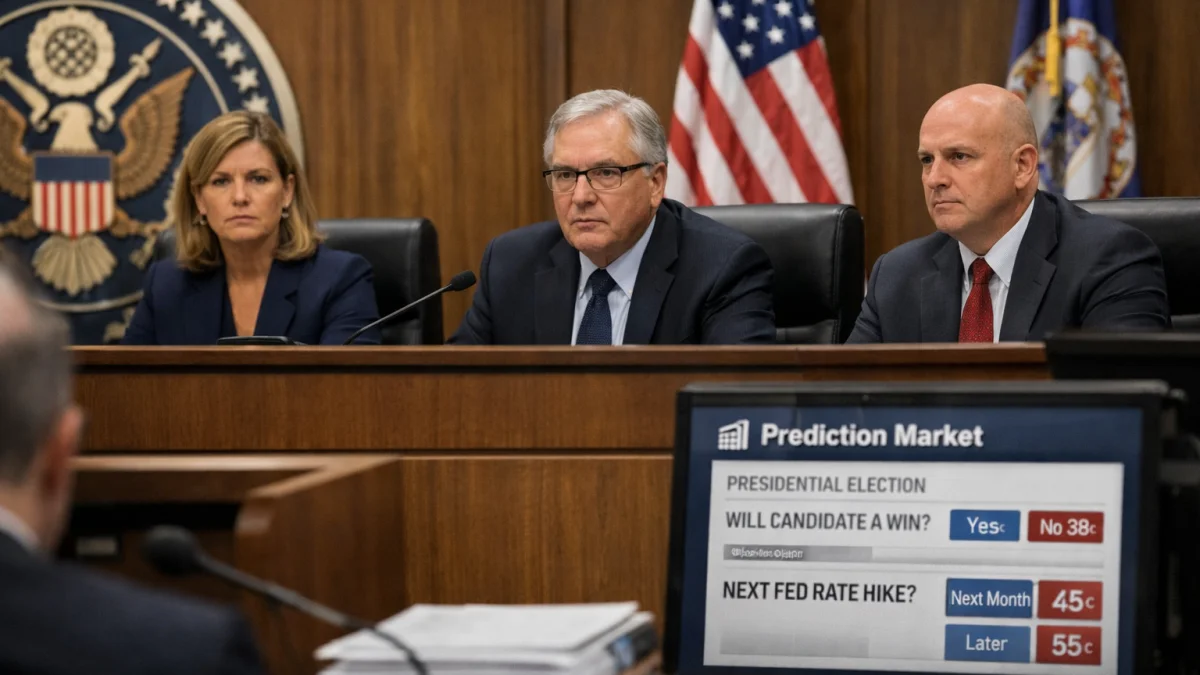
WASHINGTON — Prediction market operators are facing mounting regulatory and legal challenges from multiple U.S. states, intensifying a dispute over whether platforms that allow users to trade on the outcomes of future events should be regulated as financial markets or as gambling businesses.
The scrutiny has centered on platforms including Kalshi and Polymarket, which offer contracts tied to elections, sports, economic indicators and other events. State officials in several jurisdictions have argued that some of those products amount to unlicensed gambling under state law, while federal regulators have maintained that certain prediction markets fall under federal commodities regulation.
The conflict has expanded in recent months through a series of lawsuits, cease-and-desist orders and competing court actions. Arizona, Connecticut and Illinois have taken enforcement measures against prediction market operators, while Kentucky recently filed lawsuits alleging that platforms including Kalshi and Polymarket were offering illegal sports betting services in the state, according to court filings and statements from state officials.
Washington state also sued Kalshi earlier this year, alleging that the company violated state gambling laws. Nevada, Massachusetts and Tennessee have likewise been involved in legal disputes over prediction-market products, according to court records and legal analyses.
Federal regulators have pushed back against state actions. The U.S. Commodity Futures Trading Commission (CFTC) has argued in court that it has exclusive authority over federally regulated event-contract markets. In an April statement accompanying litigation against several states, CFTC Chairman Michael S. Selig said the agency would continue to defend its jurisdiction over such markets.
“The CFTC will continue to safeguard its exclusive regulatory authority over these markets and defend market participants against overzealous state regulators,” Selig said.
State officials have disputed that position. Connecticut Attorney General William Tong said prediction-market contracts targeted by state regulators constitute “unlicensed illegal gambling” under state law. Arizona Attorney General Kris Mayes similarly argued that no company can choose which state laws to follow.
The debate has gained prominence as prediction markets have expanded rapidly and attracted significant investment. Industry participants contend that the contracts function as regulated financial instruments and provide information about future events, while critics and some state regulators argue that sports-related contracts closely resemble traditional wagering.
As of Thursday, litigation involving federal regulators, state governments and prediction-market operators remained active in multiple courts. Several cases are still pending, and details of how the jurisdictional dispute will ultimately be resolved remain unclear.