The latest escalation in the confrontation between the United States and Iran has brought the Strait of Hormuz back to the center of global attention. But for many families inside Iran, the renewed U.S. naval blockade and a fresh round of American strikes have translated less into geopolitical headlines than into renewed uncertainty over daily life.
President Donald Trump announced on July 13 that the United States would reinstate a blockade on Iranian shipping and continue military operations after days of renewed exchanges between U.S. and Iranian forces. U.S. officials said the objective was to prevent attacks on commercial shipping while keeping the strategic waterway open to international traffic. Iranian leaders rejected Washington's claims, insisting Tehran remained the rightful guardian of the strait and condemning the strikes.
For households across Iran, the announcement revived concerns that had briefly eased after last month's interim agreement between Washington and Tehran appeared to reduce the intensity of fighting.
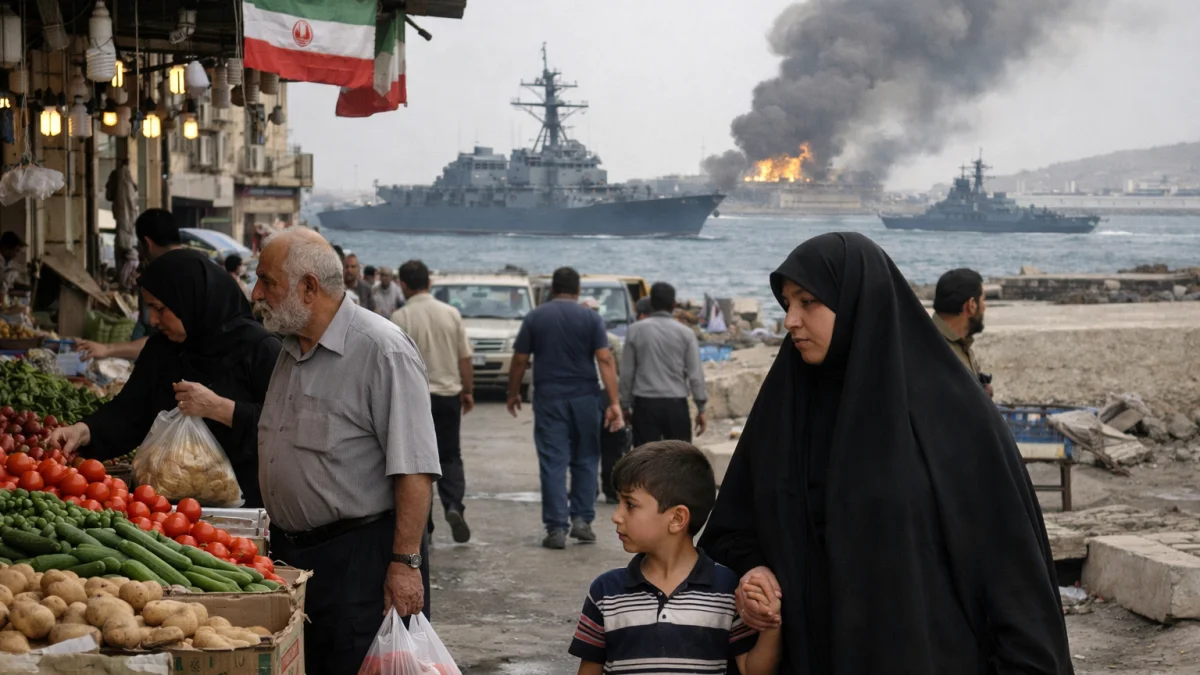
In June, Reuters reporting from Tehran found that many Iranians greeted the temporary halt in hostilities with caution rather than celebration. Months of conflict, combined with years of sanctions, had already strained household finances, disrupted businesses and eroded confidence that economic conditions would improve quickly. Even after the ceasefire, residents interviewed by Reuters described carefully limiting spending and doubted that stability would return soon.
The renewed military action threatens to deepen those anxieties.
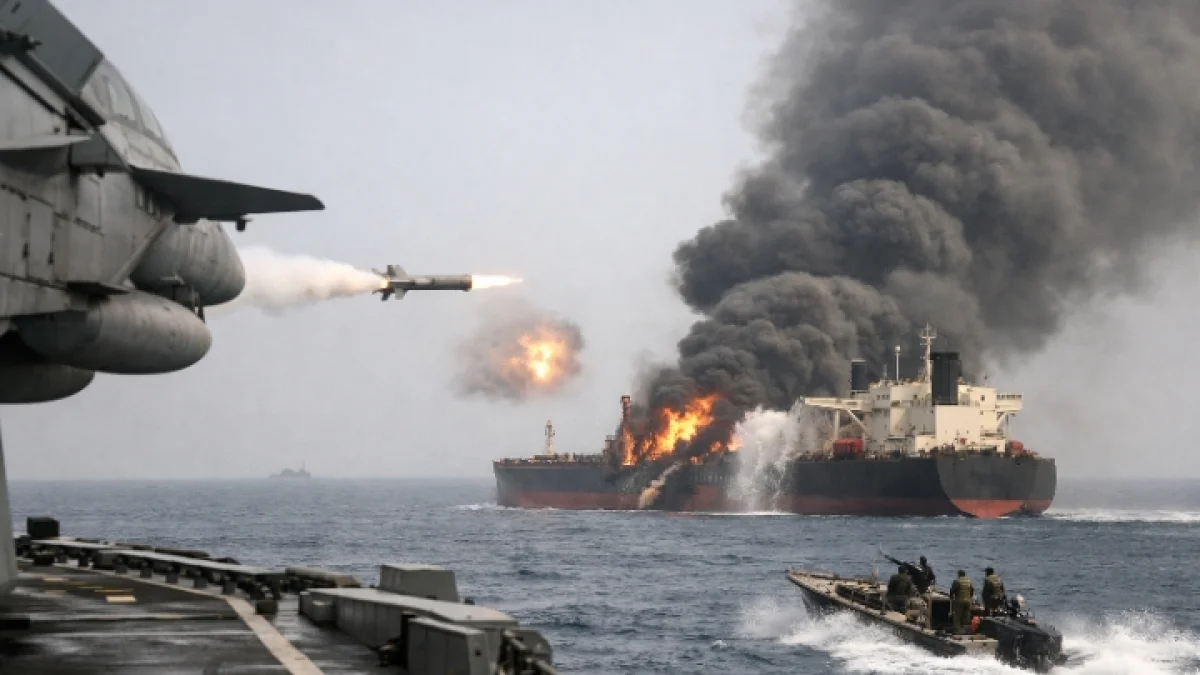
Explosions were reported in Bandar Abbas and other locations after U.S. Central Command launched another round of strikes targeting Iranian military capabilities associated with operations around the Strait of Hormuz, according to Reuters. Iranian authorities also reported additional explosions in southern provinces while officials vowed to continue resisting U.S. pressure.
Bandar Abbas occupies a central place in Iran's commercial life. The port handles much of the country's maritime trade, making developments there significant not only for military planners but also for workers, transport companies, shopkeepers and families whose livelihoods depend on imports and exports.
The disruption extends beyond Iran's borders. Shipping companies, insurers and energy markets closely monitor security conditions in the Strait of Hormuz, through which roughly one-fifth of the world's seaborne oil normally passes. Renewed attacks on commercial vessels and uncertainty over safe navigation have again pushed freight costs and oil prices higher while increasing concerns about inflation in countries far from the Gulf.
Inside Iran, however, the consequences are measured less by global commodity markets than by everyday purchasing decisions.
Reuters reported in June that many families were already adapting to prolonged hardship. Some delayed major purchases, while others focused on essential goods amid uncertainty about future prices and employment. The temporary diplomatic opening had raised hopes that conditions might stabilize, but few people interviewed expected rapid relief after years of sanctions and wartime disruption.
The latest escalation has complicated those expectations.
The United States says the blockade is directed specifically at Iranian shipping rather than international commerce, arguing that commercial vessels from other countries will continue to receive protection while transiting the strait. Iranian officials reject that characterization and accuse Washington of violating international norms while attempting to dictate access to one of the world's most important maritime corridors.
Those competing narratives leave civilians navigating a reality shaped by events largely beyond their control.
The broader conflict has evolved into an uneven confrontation marked by intermittent missile strikes, drone attacks and naval operations rather than continuous large-scale warfare. Reuters has reported that even during periods officially described as ceasefires, military exchanges continued while negotiations struggled to produce a durable settlement.
For families, that uncertainty makes planning difficult. Businesses face shifting supply conditions. Workers worry about employment if trade slows further. Consumers monitor prices that can change rapidly as transport costs rise or supplies become less predictable.
The renewed confrontation also underscores how quickly diplomatic progress can unravel.
The interim agreement announced in June had been intended to reopen shipping lanes and create a 60-day window for negotiations. The latest exchanges of fire, together with the reinstated blockade, have placed that framework under severe strain. Both governments continue to accuse the other of undermining the agreement while military operations continue across the Gulf.
For many Iranians, the return of military escalation reinforces a lesson learned through years of sanctions, political tension and intermittent conflict: periods of relative calm can prove fragile.
Whether shopping for household necessities, managing small businesses or waiting for relatives working in trade and transport to return safely, families continue adjusting to conditions that shift with each new military announcement.
As diplomats and military commanders debate the future of the Strait of Hormuz, the rhythm of ordinary life inside Iran remains closely tied to decisions made far beyond the country's neighborhoods and marketplaces—where the next headline can quickly become tomorrow's challenge for households already accustomed to living with uncertainty.