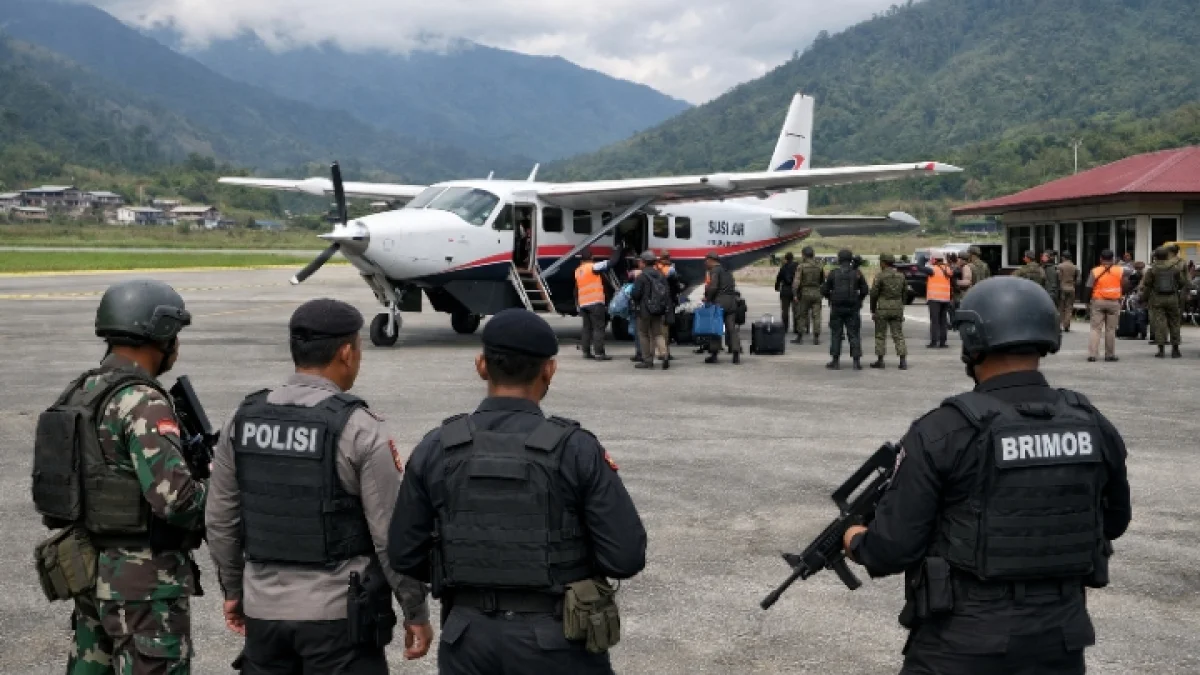
JAKARTA — Indonesian authorities have restored air access to the remote Balinggama area in Papua Highlands after troops and local residents cleared the wreckage of a mission aircraft destroyed in a deadly separatist attack earlier this month, the military said.
The aircraft, a Pilatus Porter operated by PT Associated Mission Aviation (AMA), was burned after an attack on July 2 that killed its American pilot, Nicholas F. Goselin, according to Indonesian authorities. The military said reopening the airstrip would allow humanitarian, church and commercial flights serving the isolated community to resume.
Lieutenant General Lucky Avianto, commander of Indonesia's Joint Regional Defense Command III, said military personnel, working with residents, religious leaders and traditional community representatives, removed the wreckage after security forces secured the surrounding area.
"The airstrip is the only transportation route connecting Balinggama with surrounding areas," Avianto said in a statement released by the military. He said restoring operations was essential to ensure deliveries of supplies, social services and other necessities to communities in the mountainous region.
The military said troops would remain deployed around the airstrip to maintain security and support the resumption of pioneer flights, which provide a vital transport link for remote settlements inaccessible by road.
The West Papua National Liberation Army (TPNPB), the armed wing of the Free Papua Movement, claimed responsibility for the attack. The group said it targeted the aircraft because it believed civilian flights were supporting Indonesian security operations, an allegation denied by the Indonesian military, which said the aircraft was conducting a civilian mission.
Authorities recovered Goselin's body on July 3 after securing the area. Indonesian officials said seven indigenous Papuan passengers aboard the aircraft survived the attack.
The latest incident underscores the security challenges facing aviation in Indonesia's easternmost region, where aircraft provide essential transport for passengers, food, fuel, medical supplies and humanitarian assistance. Violence linked to the long-running separatist insurgency has repeatedly disrupted air services in remote districts.
Church organizations have recently urged the Indonesian government to safeguard humanitarian access in Papua, warning that attacks on aircraft serving remote communities risk further isolating civilians who depend on air transport for basic services.