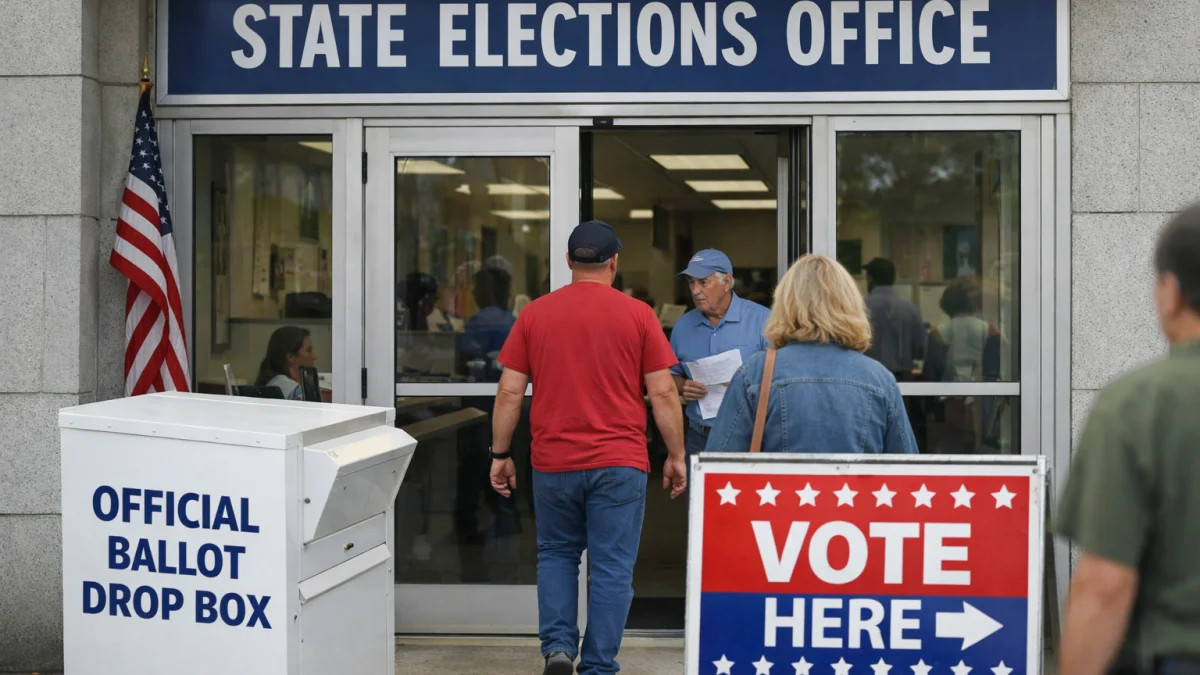
WASHINGTON — Legal disputes over federal requests for statewide voter registration records intensified across the United States this month, as courts continued to weigh the Justice Department's authority to obtain unredacted voter rolls while several states argued the demands exceed federal law and threaten voter privacy ahead of the 2026 midterm elections.
The litigation stems from a nationwide effort by the U.S. Department of Justice to obtain complete voter registration lists from states, saying the records are needed to evaluate compliance with federal election laws and voter list maintenance requirements. The department has filed lawsuits against numerous states that declined to provide the requested data, citing provisions of the Civil Rights Act of 1960 and other federal election statutes.
Federal judges have issued differing rulings in recent weeks. On July 8, a federal judge in Florida ordered the Department of Homeland Security to restore four Republican-led states' access to a federal citizenship verification database used for voter eligibility checks, while another federal judge maintained a separate nationwide injunction limiting use of the system, highlighting conflicting judicial interpretations that may require appellate review.
Separately, courts have dismissed several Justice Department lawsuits seeking unredacted voter rolls, including recent rulings involving New York and West Virginia. Judges said the department had not established a sufficient legal basis under the Civil Rights Act to compel production of the records, according to the court decisions.
The Justice Department has defended its requests, saying accurate voter registration records are essential to election integrity and that Congress authorized federal oversight of election administration. In previous statements, Attorney General Pamela Bondi and Assistant Attorney General Harmeet K. Dhillon said the department would continue pursuing litigation where states refused to comply with federal requests.
State election officials and voting rights advocates have challenged the requests, arguing that unredacted voter rolls contain sensitive personal information, including partial Social Security numbers and driver's license data, and that state privacy laws restrict disclosure. Several states have maintained that they already provide publicly available voter information while withholding confidential data protected under state law.
The dispute has expanded beyond the courtroom. Last week, the Justice Department sent letters to election officials in all 50 states and the District of Columbia warning they could face criminal liability if they knowingly permitted ineligible noncitizens to remain on voter rolls or vote unlawfully. State officials from several jurisdictions responded that they already enforce applicable election laws and criticized the federal warnings as unnecessary.
Appeals remain pending in several cases, and courts are expected to continue considering the scope of federal authority over access to state voter registration records in the months leading to the November 2026 midterm elections.