The classrooms of the Republic of Panama school in Venezuela's coastal state of La Guaira no longer resemble a place of lessons. Radios crackle across desks, volunteers track new arrivals on handwritten lists and digital spreadsheets, and families who lost homes sleep beside the few belongings they managed to carry from collapsed neighborhoods. Many of the young people coordinating the shelter are themselves survivors of the twin earthquakes that struck northern Venezuela on June 24, yet they now spend their days organizing food, assigning sleeping spaces and helping neighbors navigate an uncertain future.
As rescue operations gradually give way to the long process of recovery, communities across the hardest-hit regions are confronting two realities at once: the grief of lives lost and the practical work of rebuilding. The disaster has become one of Venezuela's deadliest natural catastrophes in recent history, drawing thousands of international rescue workers even as local volunteers formed the backbone of the earliest response before heavy equipment arrived.
Official figures released on July 4 put the death toll at 2,954, with more than 16,000 people injured. Authorities said nearly 30,000 Venezuelan officials were working alongside more than 3,200 international rescue personnel from multiple countries as searches continued despite diminishing hopes of finding survivors beneath the rubble.
Yet even after the critical first days had passed, rescue teams continued to find reasons to persist.
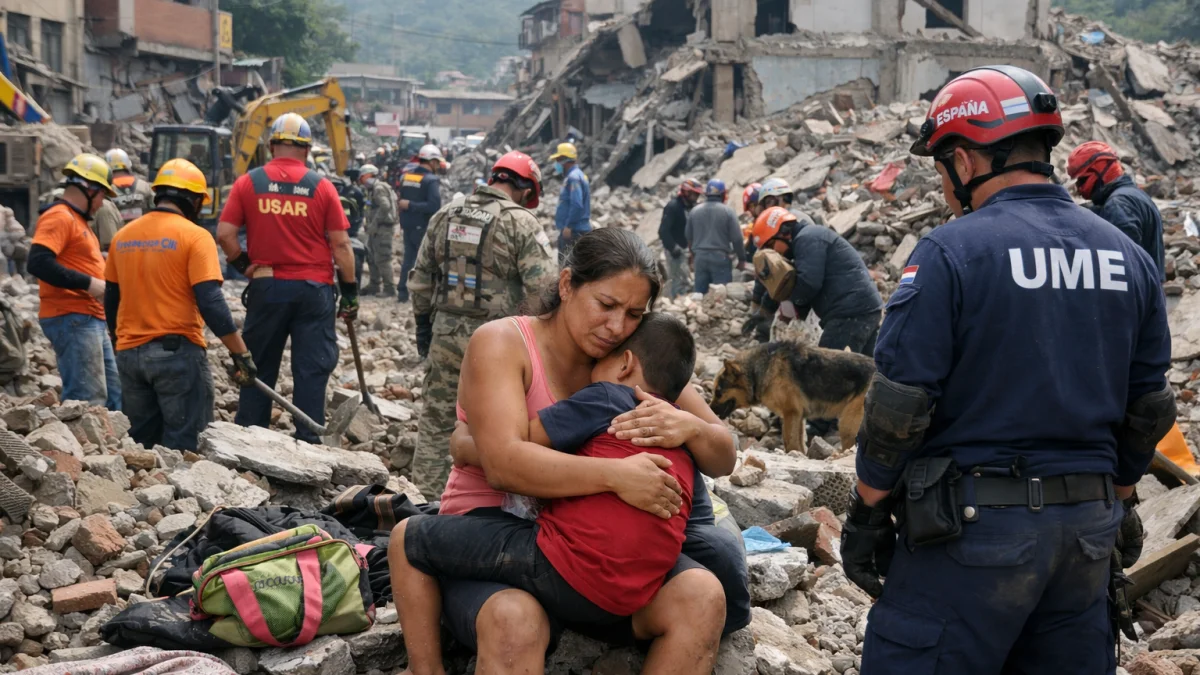
In La Guaira, rescuers from Venezuela worked with specialists from France and the United States to free a father and son who had survived four days trapped beneath a collapsed building. The painstaking operation lasted about 12 hours as crews carefully removed debris while using specialized search equipment to avoid triggering another collapse. Both survivors emerged dehydrated and weak but alive, offering a rare moment of relief for exhausted rescuers. The rescue followed the successful extraction of a mother and her nine-month-old baby the previous day.
Those rescues became symbols of a broader international effort that brought emergency teams from across the Americas and Europe to Venezuela. Search specialists, firefighters, engineers and medical personnel worked alongside local volunteers, often in unstable conditions complicated by hundreds of aftershocks and damaged infrastructure.
For many residents, however, the focus has already shifted from rescue to survival.
At the Republic of Panama shelter, volunteers in their twenties oversee registration, meal distribution and basic services for hundreds of displaced residents. Reuters reported that the shelter's managers rotate responsibilities around the clock despite having lost homes or family members themselves. Their improvised digital tracking system helps account for residents while they wait for replacement identity documents, government assistance and information about permanent housing.
Among those waiting is Deisy Tapias, one of many survivors who told Reuters she faces profound uncertainty about what comes next. Aid organizations working in the shelters have warned that limited privacy, shortages of child-friendly facilities and the needs of vulnerable residents will remain major challenges long after search operations conclude.
The earthquakes exposed vulnerabilities that extended beyond damaged buildings. Residents and volunteers described struggling during the first days with limited heavy machinery and an insufficient official presence in some neighborhoods. Those concerns have fueled public frustration even as authorities expanded deployments and accepted international assistance. Interim President Delcy Rodríguez acknowledged the country's grief and declared a national mourning period.
International organizations say reconstruction is likely to take months or years. Beyond restoring homes and public buildings, recovery will require rebuilding essential services and supporting thousands of families displaced by the disaster. Medical teams continue treating injuries while humanitarian agencies work to provide food, shelter and sanitation in communities where entire neighborhoods were damaged.
The emotional weight of recovery is visible in quieter moments as well. Families continue returning to damaged streets hoping for news of missing relatives. Some pause near piles of concrete where apartment buildings once stood, waiting as search crews carefully probe voids that might still conceal survivors or provide answers. Rescue workers, meanwhile, increasingly balance the hope of another extraordinary survival with the responsibility of recovering those who could not be saved.
The rescue of individuals long after conventional survival windows has reminded responders why searches continue despite daunting odds. Every successful extraction has depended on cooperation among local volunteers, Venezuelan emergency personnel and international teams willing to work hour after hour through unstable debris fields.
As Venezuela moves from emergency response toward reconstruction, the country's recovery will be measured not only by the buildings that rise again but also by the communities striving to restore daily life. In schoolrooms converted into shelters, on streets still lined with rubble and at rescue sites where silence alternates with the sounds of heavy equipment, survivors continue the difficult work of rebuilding—supported by neighbors, volunteers and rescuers from around the world who answered their call in the aftermath of disaster.