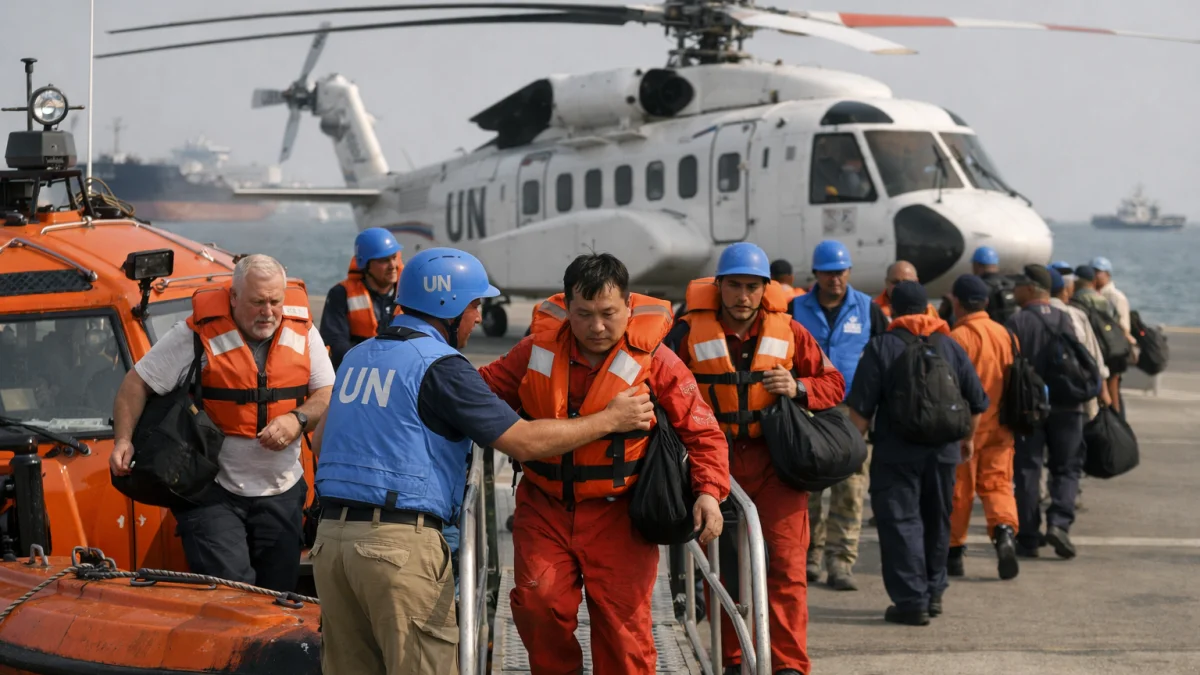
LONDON — The United Nations evacuated about 2,500 seafarers from the Persian Gulf before suspending its emergency maritime operation after an attack on a commercial vessel heightened uncertainty over safe passage through the Strait of Hormuz, leaving efforts to move thousands of remaining crew members temporarily on hold.
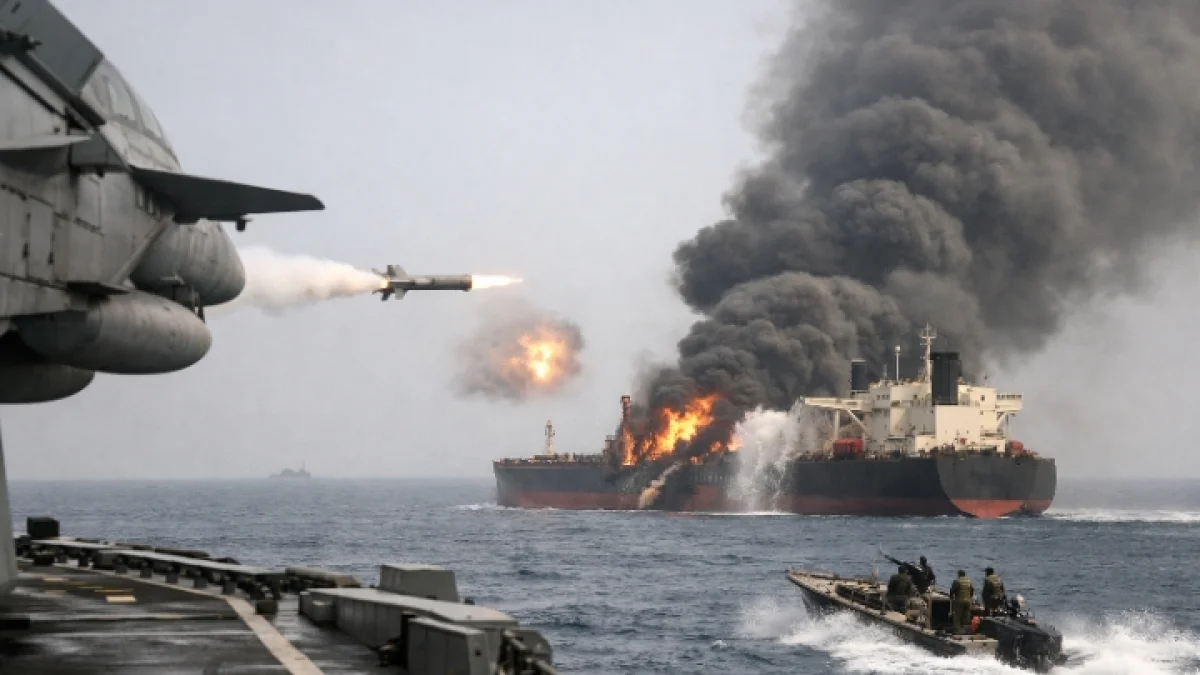
The UN's International Maritime Organization (IMO) said it had helped 115 vessels carrying roughly 2,500 seafarers leave the Gulf during the first three and a half days of the operation before halting further evacuations on June 25 following the attack on the container ship Ever Lovely near Oman's coast.
IMO Secretary-General Arsenio Dominguez said the vessel was not participating in the UN-led evacuation framework when it was struck. He said the agency paused operations to verify that adequate safety guarantees remained in place before allowing additional ships to transit the strategic waterway.
"We're still on the investigation of exactly what happened to the vessel," Dominguez told reporters, adding that the immediate priority was ensuring the safety of seafarers before resuming the operation.
The evacuation campaign was launched to assist about 11,000 mariners stranded aboard around 600 commercial vessels after months of conflict involving Iran, the United States and Israel disrupted one of the world's busiest shipping lanes.
The Strait of Hormuz, which carries around one-fifth of global oil shipments in normal conditions, has become a central focus of diplomatic efforts following a preliminary U.S.-Iran agreement intended to restore commercial navigation. However, disagreements over responsibility for managing vessel movements have complicated implementation.
According to the IMO, vessels currently cannot use the internationally recognized traffic separation scheme because parts of the waterway remain contaminated by naval mines. Instead, ships have been directed through temporary northern and southern corridors established through coordination involving Iran, Oman and the United States.
Dominguez said the agency was seeking renewed assurances from all parties that vessels using either corridor would not face attack before evacuation operations resume.
The IMO has also continued discussions with Iranian maritime authorities, Oman and other governments to restore confidence in the temporary navigation arrangements.
At least 14 seafarers have been killed and more than 40 commercial vessels have been attacked since the regional conflict escalated earlier this year, according to the IMO.
As of July 1, maritime traffic had partially resumed through the Strait of Hormuz, but UN officials said the evacuation effort remained suspended while negotiations continued over security guarantees needed to restart the operation safely.