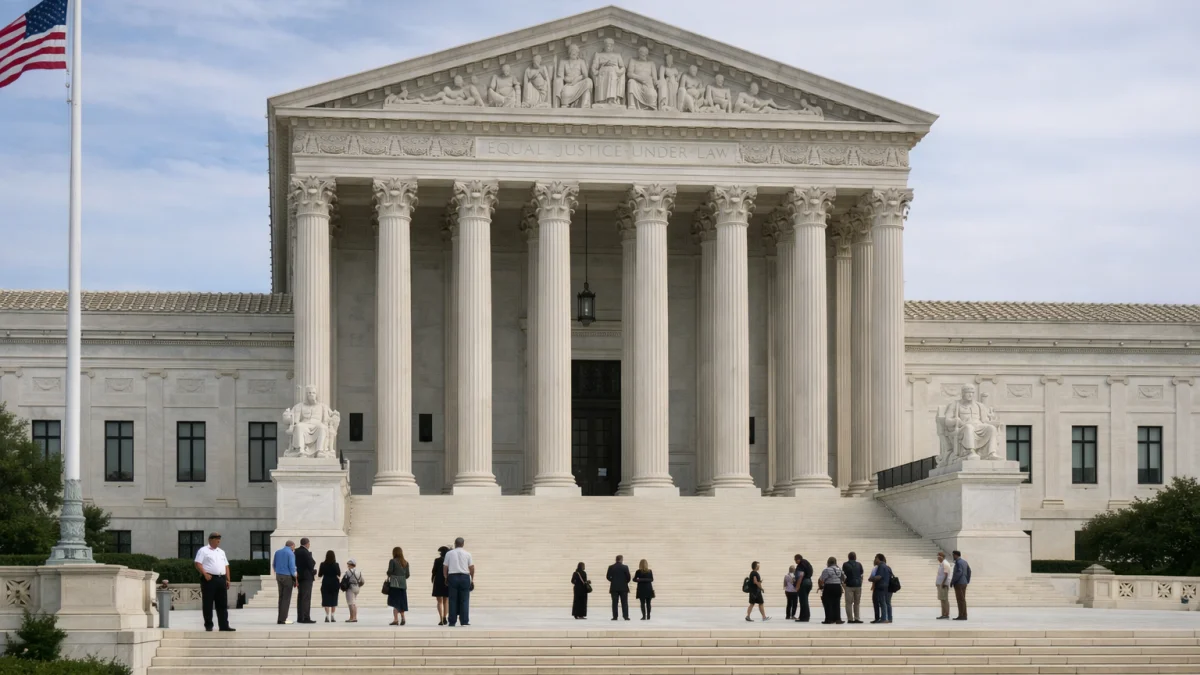
WASHINGTON — Recent U.S. Supreme Court decisions expanding presidential authority over most independent federal agencies while preserving protections for the Federal Reserve are reshaping the legal framework governing executive power and prompting new legal, political and regulatory scrutiny across Washington.
In a 6-3 ruling issued on June 29, the court held in Trump v. Slaughter that statutory restrictions preventing the president from removing Federal Trade Commission commissioners without cause violate the Constitution's separation of powers. The decision overturned the court's 1935 precedent in Humphrey's Executor v. United States, which had long shielded leaders of many independent regulatory agencies from dismissal except for specified reasons.
Chief Justice John Roberts, writing for the majority, concluded that Congress cannot insulate principal executive officers exercising executive authority from presidential removal. The ruling effectively allows presidents to dismiss leaders of numerous independent agencies at will, significantly expanding White House control over bodies responsible for regulating financial markets, labor relations and consumer protection.
In a separate decision issued the same day, the court declined to extend that reasoning to the Federal Reserve's Board of Governors, preserving statutory protections for its members. Legal analysts said the ruling leaves the central bank's monetary policy independence intact while creating uncertainty over the scope of its supervisory and regulatory functions.
The decisions have generated differing reactions from elected officials, legal scholars and financial observers. Supporters said the rulings reinforce constitutional accountability by confirming presidential authority over executive officials. Critics argued they weaken Congress's longstanding effort to insulate specialized regulators from political influence and could affect the stability of agencies designed to operate independently of changing administrations.
The implications are already being debated in Congress and the financial sector. Some Republican lawmakers have renewed calls to reduce the Federal Reserve's role in bank supervision, while Democrats have urged officials to safeguard the central bank's institutional independence. Analysts also say language in the court's opinions could encourage additional litigation challenging the structure or authority of other regulatory agencies.
No further Supreme Court action on the issue has been announced. Lower courts and federal agencies are expected to apply the rulings as litigation and administrative disputes involving presidential removal authority continue to move through the judicial system.