The U.S. Supreme Court's decision to eliminate longstanding removal protections for leaders of most independent federal agencies marks one of the most consequential shifts in the constitutional balance between Congress and the presidency in decades. By ruling that statutory "for-cause" protections for Federal Trade Commission commissioners violate the Constitution's separation of powers, the court substantially expanded presidential authority over agencies that have traditionally operated with a degree of independence from the White House.
The significance of the ruling extends well beyond the FTC. For nearly a century, the court's 1935 decision in Humphrey's Executor v. United States had allowed Congress to shield leaders of certain multimember regulatory commissions from dismissal except for specified reasons such as inefficiency, neglect of duty or malfeasance. That framework was designed to promote continuity, technical expertise and bipartisan decision-making in agencies responsible for regulating markets, competition, labor relations and other complex areas of federal policy. By overturning that precedent, the Supreme Court has redefined the institutional relationship between the executive branch and much of the administrative state.
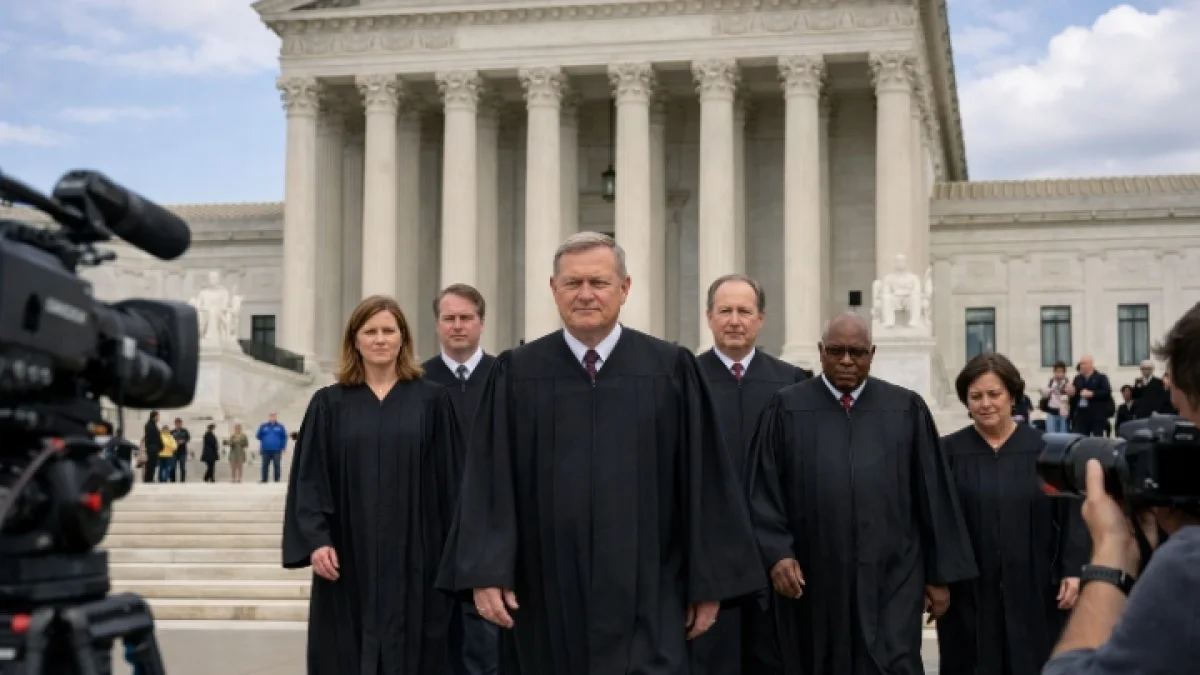
The case arose after President Donald Trump dismissed FTC Commissioner Rebecca Slaughter before the expiration of her statutory term. Lower courts had relied on Humphrey's Executor in assessing the legality of the removal, but the Supreme Court's 6-3 majority concluded that restrictions preventing the president from removing officials exercising executive authority impermissibly intruded on Article II powers. Chief Justice John Roberts, writing for the majority, concluded that the Constitution requires greater presidential control over executive officers.
The ruling fits within a broader judicial trend that has increasingly emphasized presidential accountability for executive action. Over the past decade, the court has narrowed several doctrines that insulated administrative agencies from direct presidential influence. Legal scholars have viewed the latest decision as another step toward strengthening the "unitary executive" theory, which argues that executive power ultimately rests with the president and that Congress cannot substantially limit presidential supervision of executive officials.
Supporters of the decision argue that it reinforces democratic accountability by ensuring that officials exercising executive authority remain answerable, through the president, to voters. They contend that agencies wield substantial regulatory and enforcement powers affecting businesses, consumers and financial markets, making presidential oversight constitutionally appropriate. The Trump administration characterized the ruling as restoring executive authority consistent with the Constitution's separation of powers.
Critics, however, argue that the decision weakens institutional safeguards that Congress deliberately created to reduce political influence over specialized regulators. The dissenting justices warned that fixed terms, bipartisan membership requirements and removal protections collectively helped preserve agency expertise while preventing abrupt political shifts in enforcement priorities. Without those protections, they argued, agencies risk becoming more directly responsive to changing political administrations rather than maintaining consistent application of statutory mandates.
The practical implications are likely to extend across numerous federal agencies whose leaders have historically enjoyed similar tenure protections. Legal analyses suggest that agencies such as the National Labor Relations Board, Equal Employment Opportunity Commission and several energy, communications and financial regulators could face more frequent leadership changes following presidential transitions. Businesses, investors and regulated industries may therefore encounter faster shifts in enforcement priorities, regulatory guidance and rulemaking agendas as new administrations exercise broader authority over agency leadership.
The court nevertheless stopped short of adopting an unrestricted approach to every independent institution. In a companion decision involving Federal Reserve Governor Lisa Cook, the justices declined to permit her removal, preserving the central bank's distinctive institutional status. The majority emphasized that the Federal Reserve occupies a unique constitutional and economic position, leaving intact a limited exception even as it dismantled broader protections for most independent agencies. That distinction has drawn significant attention because it indicates the court continues to recognize special considerations surrounding monetary policy and financial stability.
The ruling also raises broader constitutional questions that courts may continue to confront. Administrative law specialists note that while the decision directly addressed FTC commissioners, its reasoning could influence future litigation involving agency design, civil-service protections and congressional efforts to insulate executive officials from presidential control. At the same time, the precise boundaries of the decision remain uncertain because future cases will determine how broadly its reasoning applies across different statutory frameworks and institutional arrangements.
For now, the confirmed legal landscape is clear in one respect: the Supreme Court has fundamentally altered the constitutional framework governing presidential removal authority over most independent agency leaders. Federal agencies, regulated industries, Congress and the executive branch are assessing the decision's practical consequences, while legal observers continue monitoring subsequent litigation, agency appointments and any legislative responses that may test the scope of the court's new constitutional standard.