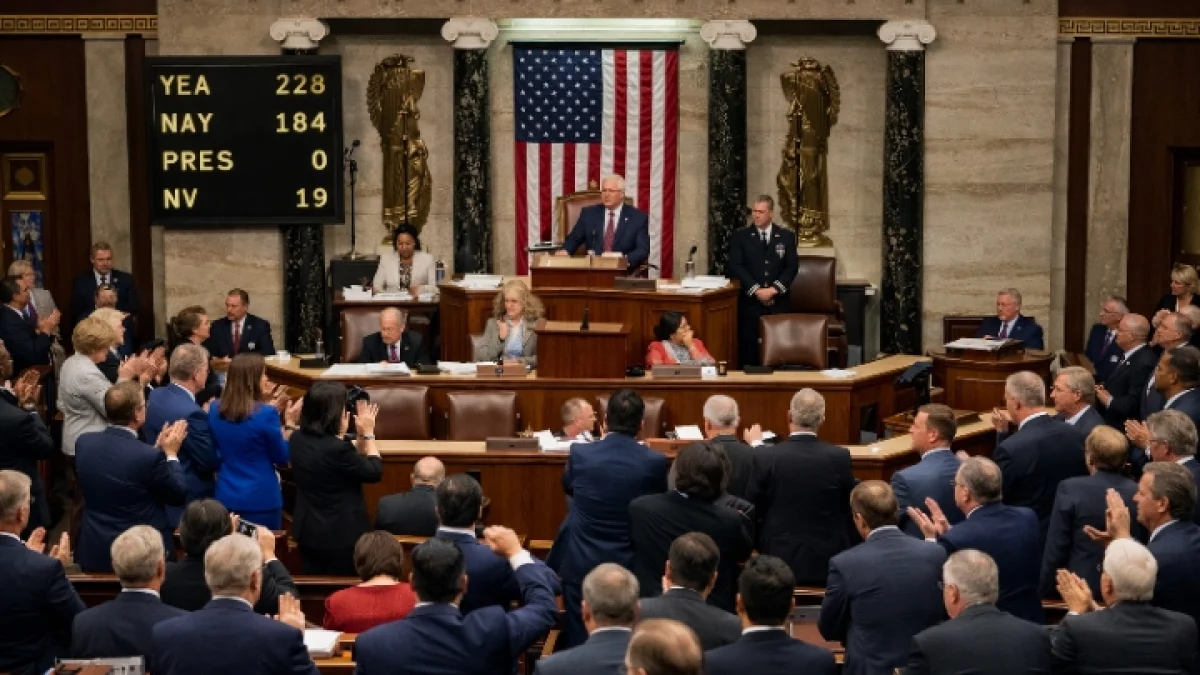
WASHINGTON — The U.S. House of Representatives passed legislation on Wednesday restricting stock trading by members of Congress, their spouses and dependent children, advancing an ethics measure that has drawn bipartisan support but faces an uncertain path in the Senate.
The Stop Insider Trading Act passed 232-198, with 13 Democrats joining Republicans in support, according to the House vote. The measure would generally bar covered lawmakers and family members from purchasing individual stocks while the lawmaker is in office, while allowing them to retain existing holdings and certain diversified investments.
The bill also would require public notice between seven and 14 days before a covered stock sale. Violations could result in a fee of at least $2,000 or 10% of the transaction value, as well as forfeiture of gains from the prohibited transaction, according to a House summary of the legislation.
The measure was sponsored by Republican Representative Bryan Steil of Wisconsin, chairman of the House Administration Committee, and has been promoted by lawmakers who argue that elected officials should not be able to trade individual stocks while possessing access to information that could affect financial markets. Representative Mariannette Miller-Meeks, a Republican from Iowa who backed the legislation, said, "If you write the laws, you shouldn't profit from them."
The bill's passage was accompanied by partisan disagreement over election provisions included in the legislation. Democrats objected to a requirement for photo identification to vote and criticized the decision to combine the voting measure with restrictions on congressional stock trading. The legislation also does not apply the stock-purchase restrictions to the president and vice president, a provision that drew further Democratic opposition.
The legislation stops short of a complete prohibition on lawmakers' investments. Members would be able to keep stocks they already own and retain certain interests in widely held investment funds and other exempt assets.
The House action marks the latest step in a yearslong effort to tighten rules governing congressional financial activity. The bill now moves to the Senate, where its prospects remain uncertain amid disagreements over the election provisions and the scope of the restrictions.