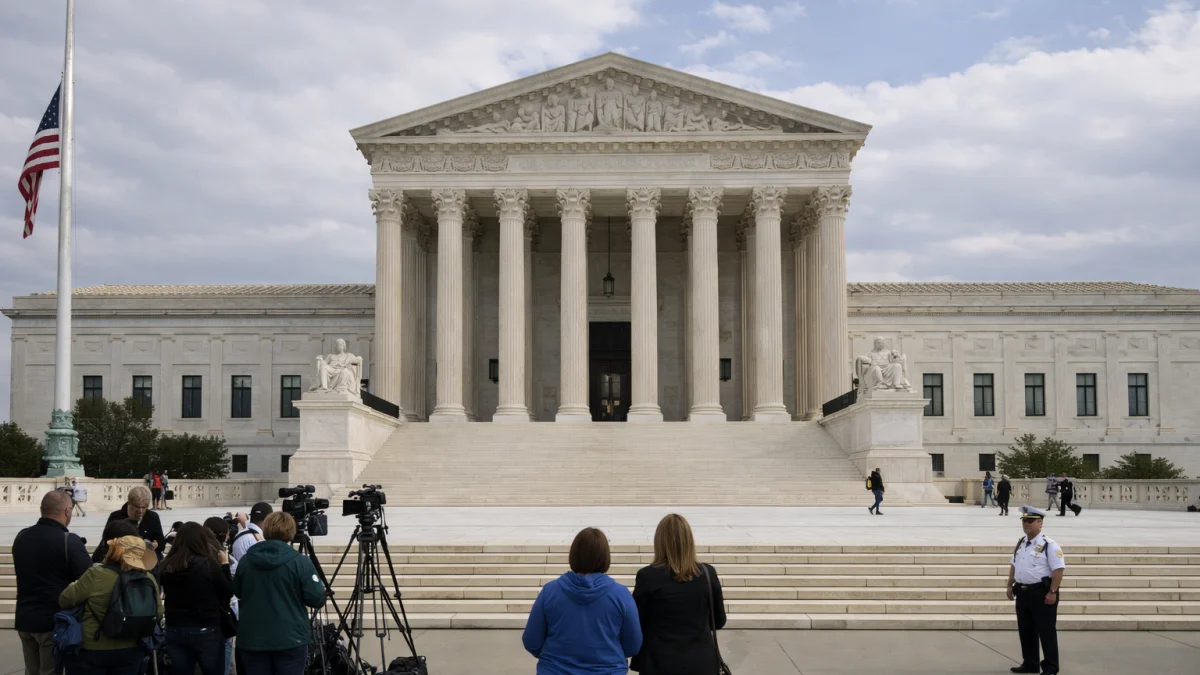
WASHINGTON — The U.S. Supreme Court ruled Monday that states may bar transgender girls and women from competing on female-designated school sports teams, upholding laws in Idaho and West Virginia in a pair of closely watched cases.
The decisions in *Little v. Hecox* and *West Virginia v. B.P.J.* resolved challenges to state statutes that require participation in girls’ and women’s athletic teams to be based on biological sex determined at birth. The rulings are expected to affect similar restrictions in more than two dozen states.
In a 6-3 decision, the Court held that such classifications do not violate the Equal Protection Clause of the 14th Amendment or Title IX, the federal law prohibiting sex discrimination in education programs receiving federal funding. The majority opinion, written by Chief Justice John Roberts, concluded that states have a substantial interest in ensuring fair competition and protecting opportunities for female athletes.
"States may separate athletic teams on the basis of biological sex without running afoul of constitutional guarantees," the Court stated, noting physiological differences that can confer competitive advantages.
The cases stemmed from lower court rulings that had blocked enforcement of the Idaho and West Virginia laws. Lindsay Hecox, a transgender woman who sought to join Boise State University’s women’s track and cross-country teams, challenged Idaho’s Fairness in Women’s Sports Act. In West Virginia, B.P.J., a transgender girl identified as female since third grade and undergoing hormone therapy, contested a similar ban on participation in middle school girls’ sports.
Justice Sonia Sotomayor dissented, joined by Justices Elena Kagan and Ketanji Brown Jackson. The dissent argued that the categorical bans fail to account for individual circumstances, such as hormone suppression, and impose disproportionate harm on transgender students.
Attorneys for the states welcomed the outcome. West Virginia Attorney General JB McCuskey said the ruling affirms that “biology matters in sports” and protects the integrity of women’s athletics.
The American Civil Liberties Union, which represented the challengers, expressed disappointment. “This decision will have devastating consequences for transgender youth who simply want to participate in school activities like their peers,” said an ACLU spokesperson.
The rulings come amid a broader national debate over transgender participation in sports. At least 27 states have enacted laws restricting transgender athletes from competing on teams consistent with their gender identity since 2020.
The Court’s decision does not address every possible application of such laws and leaves room for as-applied challenges in specific situations, according to legal analysts. It also does not directly resolve questions involving college-level athletics governed by the NCAA.
Reaction from advocacy groups on both sides was swift. Supporters of the bans, including women’s sports organizations, hailed it as a victory for female athletes. Transgender rights groups warned it could discourage participation and increase mental health risks for young people.
The cases were argued in January, with conservative justices appearing inclined during oral arguments to side with the states. A final decision arrived on the final day of the Court’s term.
No further immediate legal developments were announced by the parties involved. States with similar laws are expected to move forward with enforcement.