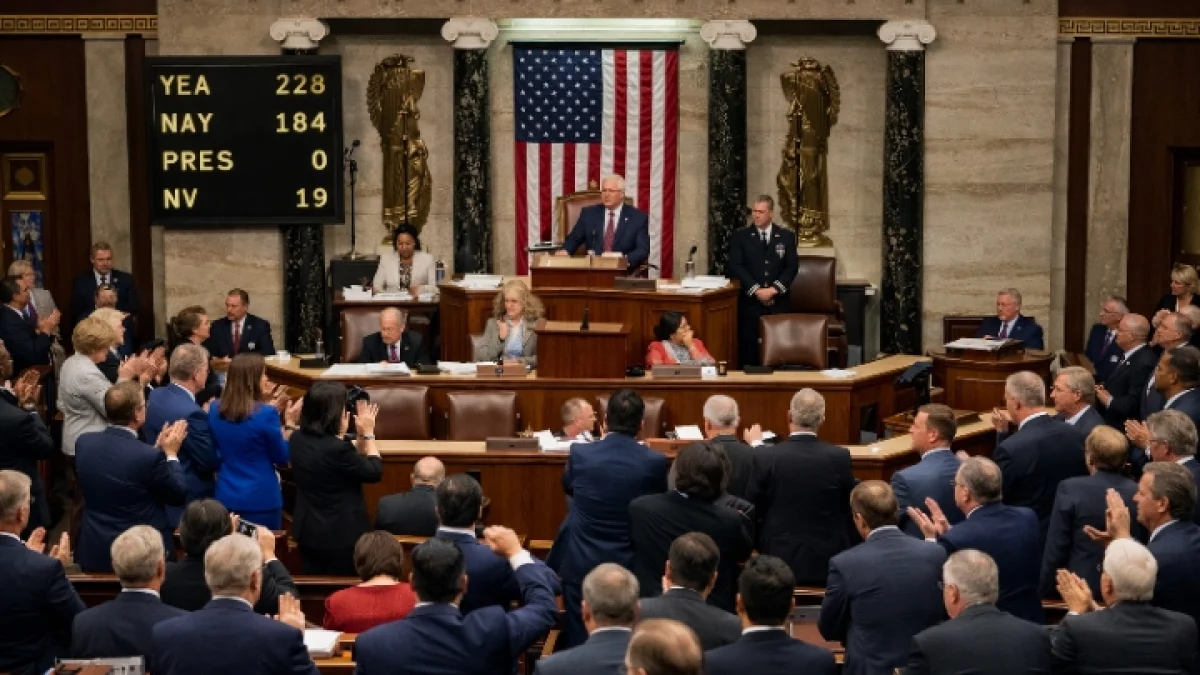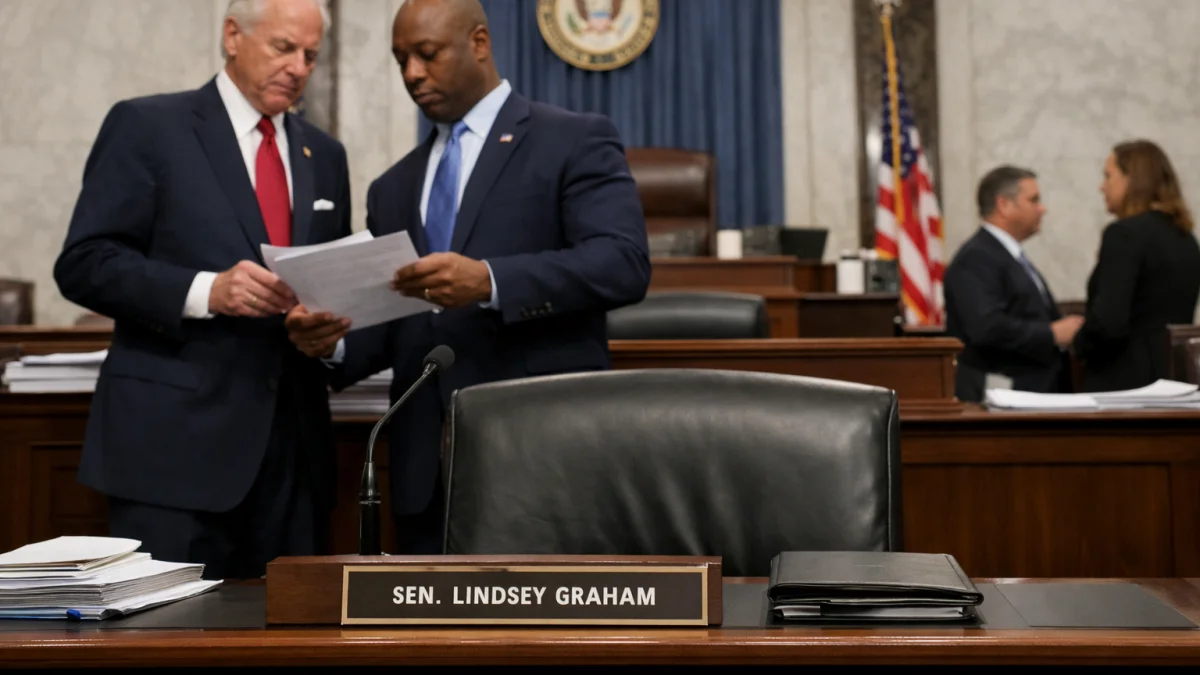
The sudden death of Republican Senator Lindsey Graham has shifted immediate attention from the political legacy of one of the Senate's most influential members to the constitutional and statutory procedures governing vacancies in the U.S. Senate. Graham's office announced that he died after what it described as a brief and sudden illness at the age of 71, creating an unexpected vacancy while he was simultaneously seeking a fifth Senate term after already securing the Republican nomination in South Carolina.
The development is significant because it activates two separate legal processes operating on different timelines. One addresses representation in the current Senate, while the other determines who will appear on the ballot for the next six-year term. The case illustrates how the Seventeenth Amendment to the U.S. Constitution, combined with state election law, is designed to preserve Senate representation while maintaining an electoral mechanism for voters to choose a longer-term successor.
Under South Carolina law, Governor Henry McMaster is responsible for appointing a temporary senator to serve the remainder of Graham's current term, which expires in January 2027. At the same time, because Graham had already become the Republican nominee through the state's primary process, state election statutes require an expedited special primary to select a replacement nominee for the November general election. Election officials have outlined a compressed timetable that includes a new candidate filing period followed by a special Republican primary and, if necessary, a runoff election.
The dual-track process reflects the broader balance embedded in the Seventeenth Amendment. Before its ratification in 1913, state legislatures selected U.S. senators. The amendment established direct election while allowing state legislatures to authorize governors to make temporary appointments until voters elect a successor. Most states, including South Carolina, have adopted appointment systems intended to avoid prolonged vacancies in congressional representation.
In practical terms, Graham's death is not expected to alter the Senate's immediate partisan balance because the appointment authority rests with a Republican governor in a state that has consistently elected Republicans to statewide federal office. Reuters reported that political analysts generally expect the seat to remain in Republican hands, although the identity of the appointee could influence both Senate committee assignments during the remainder of the current Congress and the dynamics of the special nomination contest.
The episode also underscores the legal distinction between filling an office and replacing a candidate on an election ballot. Those are governed by separate provisions of state law. Filling the Senate vacancy ensures that South Carolina maintains representation in Washington for the remainder of the current term. Replacing the deceased nominee ensures that voters retain a competitive election for the upcoming full term rather than facing a ballot that includes a deceased candidate. Election law specialists have long viewed such provisions as safeguards against unforeseen events occurring after party primaries but before general elections.
Historically, Senate vacancies arising from death have tested the resilience of these constitutional and statutory mechanisms without fundamentally disrupting congressional continuity. Governors have routinely exercised temporary appointment authority while states conducted elections under procedures established in their own laws. Although the precise timing differs among states, the principle remains consistent: preserving representation while returning the selection of a senator to voters within the framework established by federal and state law.
Beyond its procedural implications, Graham's death removes one of the Senate's most experienced Republican lawmakers at a time when institutional knowledge continues to carry significant weight. During more than two decades in the Senate, Graham held influential leadership positions on the Judiciary and Budget committees and played prominent roles in judicial confirmations, national security debates, and foreign policy toward Ukraine, Russia, Iran and Israel. His legislative experience and committee leadership made him a central figure in negotiations extending beyond his own party.
His passing therefore creates both an institutional transition and a political contest. Committee responsibilities will be redistributed under Senate rules, while South Carolina Republicans must identify a nominee under an accelerated schedule. Potential candidates have already begun to emerge in public discussion, although no official successor had been selected immediately following the announcement.
The case may also draw renewed attention among election law scholars to how states handle simultaneous vacancies and candidate substitutions during an election year. Although such situations are uncommon, they periodically require close coordination among governors, political parties, election administrators and congressional officials. Clear statutory procedures are intended to reduce legal uncertainty, minimize disruption to election administration and ensure continuity of democratic representation.
For now, the confirmed facts remain limited but consequential. Graham's death has triggered South Carolina's legally established succession process, with Governor McMaster expected to appoint an interim senator while election officials implement the state's expedited procedure for selecting a replacement Republican nominee for the November ballot. Officials will continue to monitor the appointment process, candidate filings and election timetable as the state moves to fill both the immediate Senate vacancy and the upcoming full-term seat in accordance with state law and constitutional requirements.