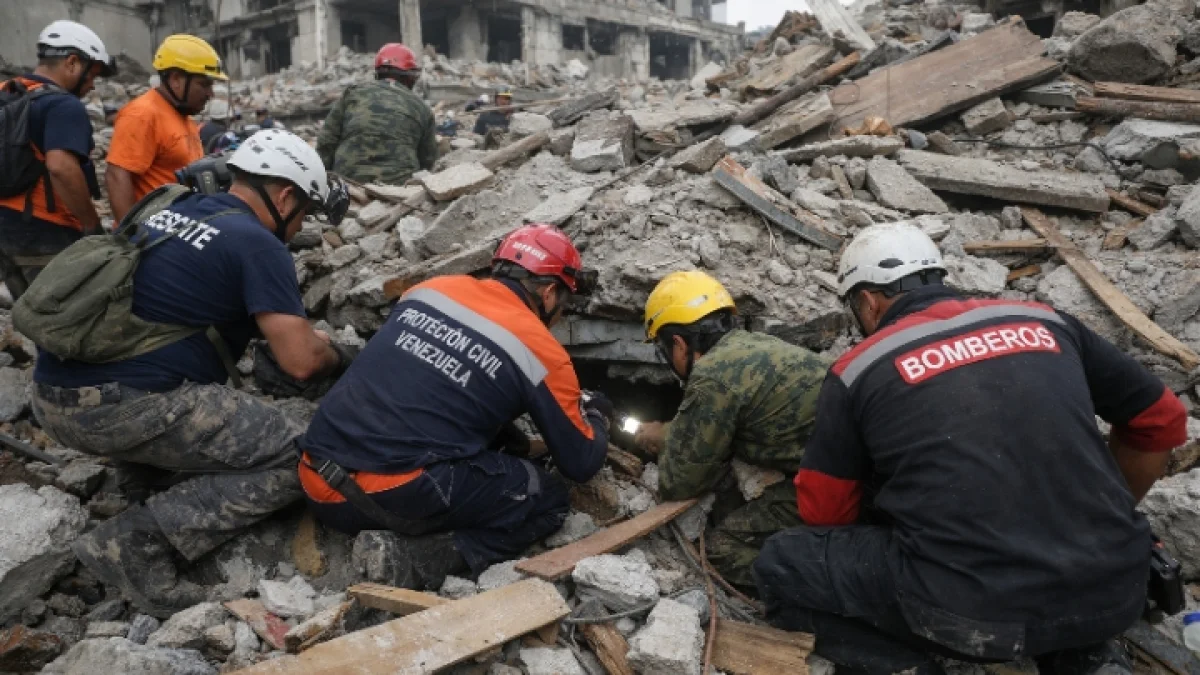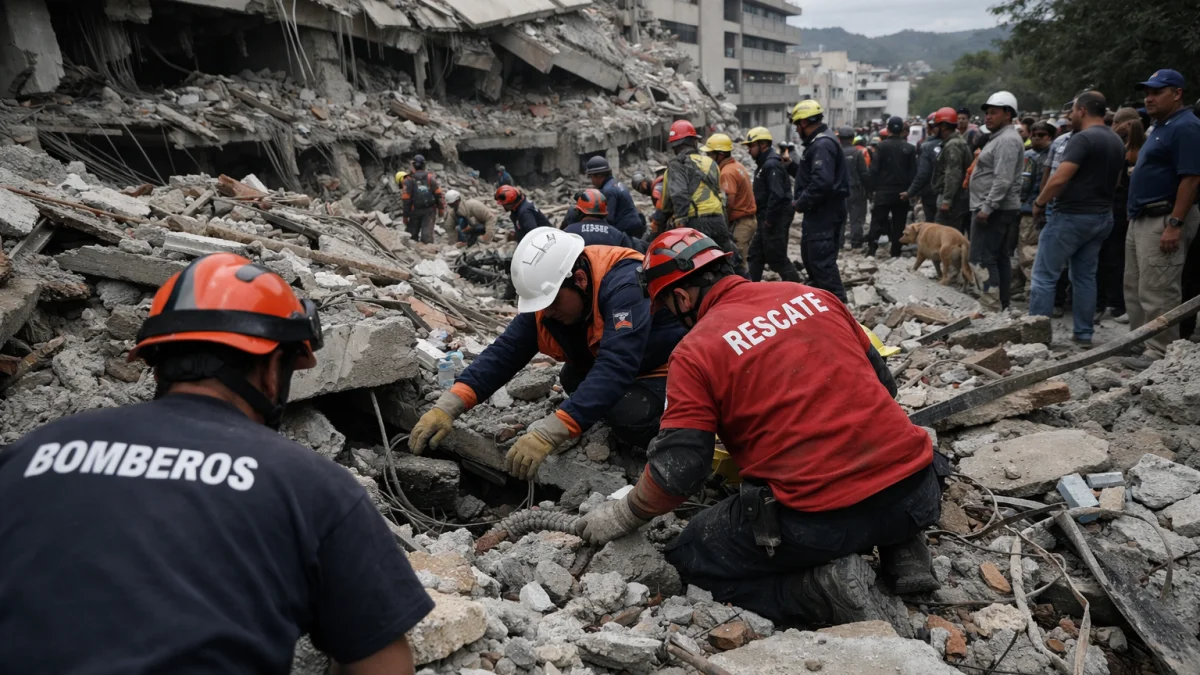
CARACAS — Rescue teams in Venezuela faced persistent obstacles on Saturday as they worked through collapsed buildings after a series of powerful earthquakes earlier this week, while frustration grew among residents over the pace and coordination of emergency efforts, according to officials and aid workers.
The earthquakes, measuring 7.2 and 7.5 in magnitude and striking within seconds of each other on Wednesday along Venezuela’s northern coast, have left at least 1,400 people dead, according to figures cited by National Assembly President Jorge Rodríguez. Authorities also report tens of thousands of people remain unaccounted for as search-and-rescue operations continue across heavily damaged areas, including La Guaira and Catia La Mar.
The disaster has triggered a large-scale response involving domestic security forces and international assistance. Officials said more than 1,600 foreign rescue personnel from multiple countries have been deployed, with military and police units numbering in the thousands also operating in restricted zones. Access to some affected neighborhoods has been limited under emergency controls, authorities said.
On the ground, rescue teams and civilians have continued digging through unstable debris using shovels, ropes and heavy equipment. Survivors have been pulled from the rubble in recent days, but aid agencies warn that the critical window for locating trapped people alive is narrowing as time passes since the quakes.
Residents in the hardest-hit coastal communities have reported delays and confusion in rescue coordination. Some have accused authorities of an inadequate response, while officials have defended their deployment of personnel and resources. One resident searching for relatives in Caraballeda said crews were failing to retrieve bodies and respond to urgent calls for help, according to reporting from the scene.
“There’s a pile of bodies over there from last night. Newborn babies,” Mileidy Romero said while searching in La Guaira, according to the Associated Press. Authorities have not independently verified specific claims about conditions in all impacted areas.
Aid groups and emergency experts note that the first 48 to 72 hours after major earthquakes are typically the most critical for rescues, though survival is still possible beyond that period in some cases if victims have access to air pockets, water or protection from injury. International teams continue to arrive and join local responders in coordinated search operations.
As of Saturday, official agencies have not released a single consolidated update on total damage across all regions, though separate estimates indicate widespread structural collapse, infrastructure damage and displacement across multiple coastal municipalities. Officials said assessment teams are still compiling verified figures.
Rescue operations are expected to continue overnight and into the coming days as authorities and international teams expand searches across collapsed residential and commercial zones, with no confirmed end date for emergency operations announced.