WASHINGTON — U.S. Supreme Court Justice Amy Coney Barrett has become the focus of sharp criticism from some conservative lawmakers, commentators and activists after joining the majority in a landmark ruling that preserved birthright citizenship under the Constitution, a decision that dealt a significant setback to President Donald Trump's immigration agenda.
Barrett joined Chief Justice John Roberts and the court's three liberal justices in concluding that the Constitution's Fourteenth Amendment guarantees citizenship to nearly all children born in the United States, regardless of their parents' immigration status. Justice Brett Kavanaugh agreed that Trump's executive order could not stand, although he based his reasoning on federal statute rather than the Constitution, producing a 6-3 judgment against the administration's policy.
The ruling struck down an executive order issued by Trump at the start of his second term that sought to deny automatic citizenship to children born in the United States to parents who were in the country unlawfully or only temporarily. Chief Justice Roberts wrote that the Fourteenth Amendment's Citizenship Clause protects those children, describing birthright citizenship as a longstanding constitutional guarantee.
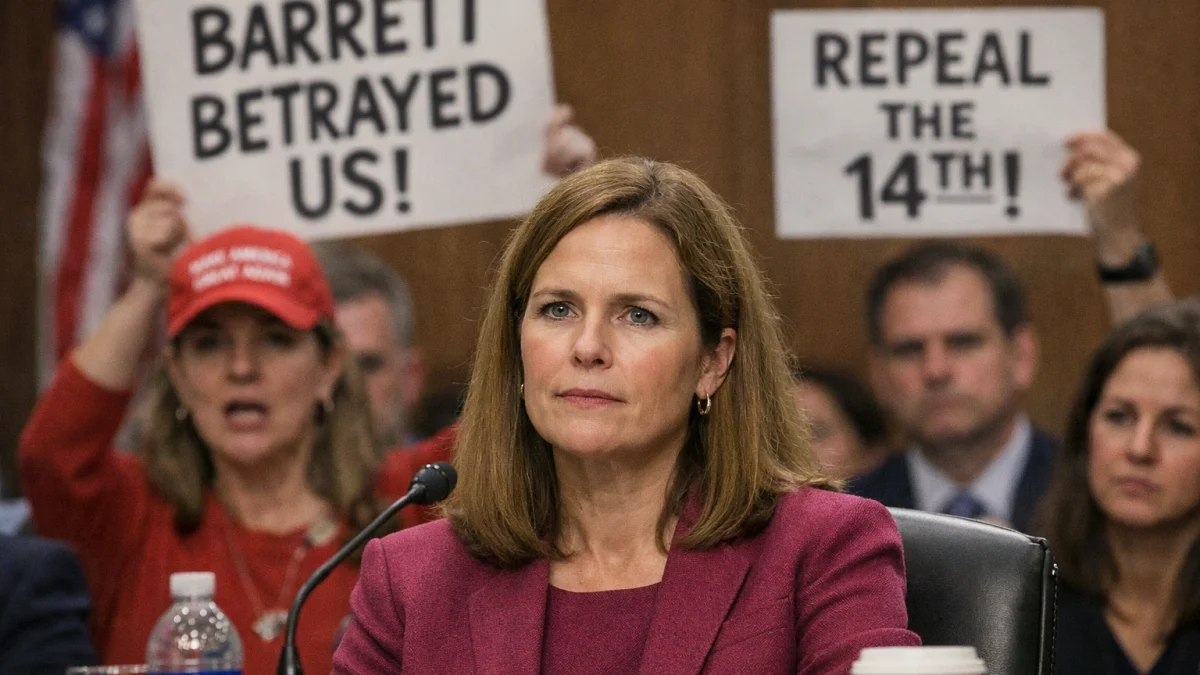
In the aftermath of the decision, Barrett drew particularly intense criticism from segments of the political right despite being one of Trump's three Supreme Court appointees. Some Republican officials and conservative commentators accused her of abandoning conservative legal principles, while others directed personal and gender-based attacks at the justice. Several conservative legal figures, however, urged critics to focus on judicial reasoning rather than personal attacks and defended Barrett's independence on the court.
The decision renewed a recurring debate within conservative circles over Republican-appointed justices who have ruled against key priorities advanced by Trump and his allies. While many legal observers had viewed the constitutional challenge to the executive order as difficult for the administration, the outcome nevertheless disappointed immigration restriction advocates who had hoped the court's conservative majority would revisit longstanding precedent on birthright citizenship.
The ruling also highlighted divisions within the court. Justices Clarence Thomas, Samuel Alito and Neil Gorsuch dissented, arguing that the Constitution does not require the broad interpretation of birthright citizenship adopted by the majority. Kavanaugh agreed the executive order was unlawful but declined to join the constitutional analysis embraced by Roberts and Barrett.
The Trump administration has indicated it will continue pursuing policies aimed at limiting what it describes as "birth tourism" and has suggested that any broader changes to citizenship law would require action by Congress following the court's decision.