NEW YORK — India renewed its call for a permanent seat on a reformed United Nations Security Council as it launched its campaign for election to a non-permanent seat for the 2028–2029 term, arguing that the world's top security body must better reflect contemporary geopolitical realities.
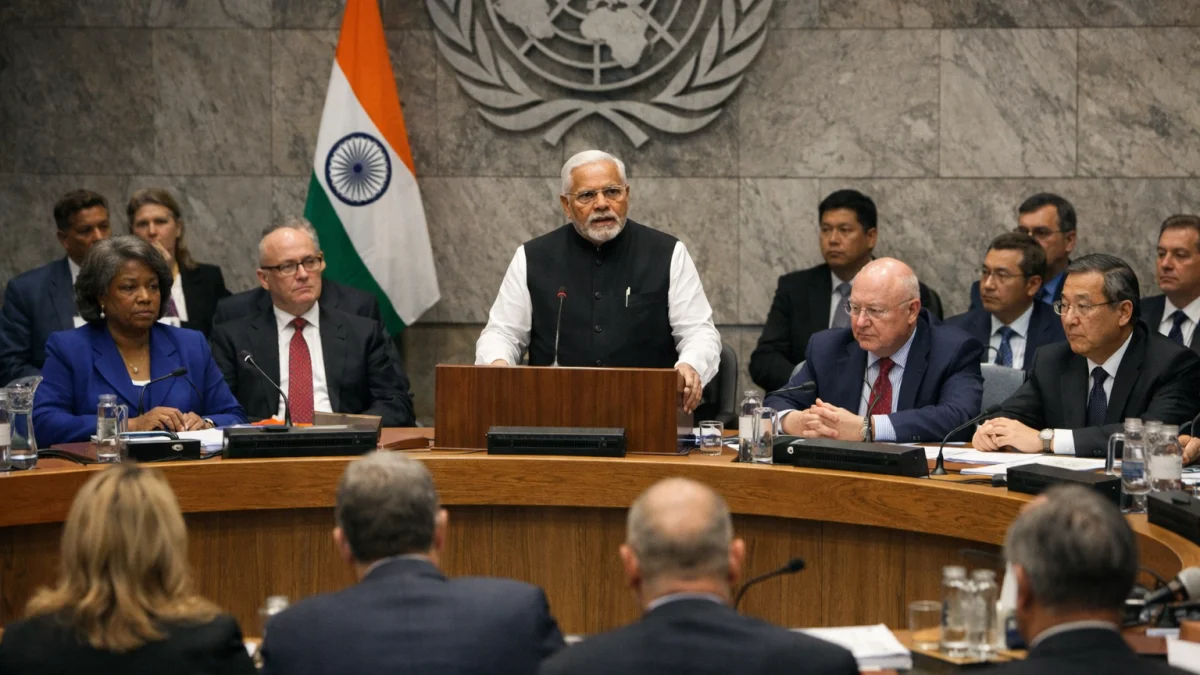
External Affairs Minister S. Jaishankar formally launched India's candidacy at the United Nations on July 13, presenting a campaign framework titled "SHANTI" — an acronym for Securing Holistic Advancement through Norms, Trust and Integrity. He said India would seek to strengthen multilateralism, promote the interests of the Global South and contribute to international peace and security if elected.
Speaking to diplomats and UN officials, Jaishankar said the Security Council must adapt to today's global challenges and become more representative, reiterating India's long-standing position that reform of the UN's principal security organ should include an expansion of permanent membership. He said India was prepared to assume greater responsibilities in global governance.
India has campaigned for decades for permanent membership of the 15-member Security Council, arguing that its population, economic weight, record in UN peacekeeping operations and role in international diplomacy justify a permanent seat. New Delhi is a member of the G4 grouping, alongside Brazil, Germany and Japan, which advocates expansion of both permanent and non-permanent categories of Council membership.
The campaign launched this week concerns India's bid for a non-permanent Security Council seat for 2028–2029. Elections are scheduled for 2027, with India expected to contest the Asia-Pacific Group seat against Tajikistan.
Jaishankar said India's approach would emphasize peace, development and a rules-based international order while ensuring that developing countries have a stronger voice within the United Nations. He also highlighted India's record in UN peacekeeping missions and its engagement with countries across the Global South.
Several countries have reiterated support for India's broader aspiration to become a permanent member of the Security Council in recent months. During Prime Minister Narendra Modi's visit to Seychelles in June, Seychelles publicly endorsed India's permanent membership bid, saying reform was needed to reflect present-day realities.
Any expansion of the Security Council's permanent membership would require broad agreement among UN member states and amendments to the UN Charter, a process that has remained stalled despite years of intergovernmental negotiations on Security Council reform.