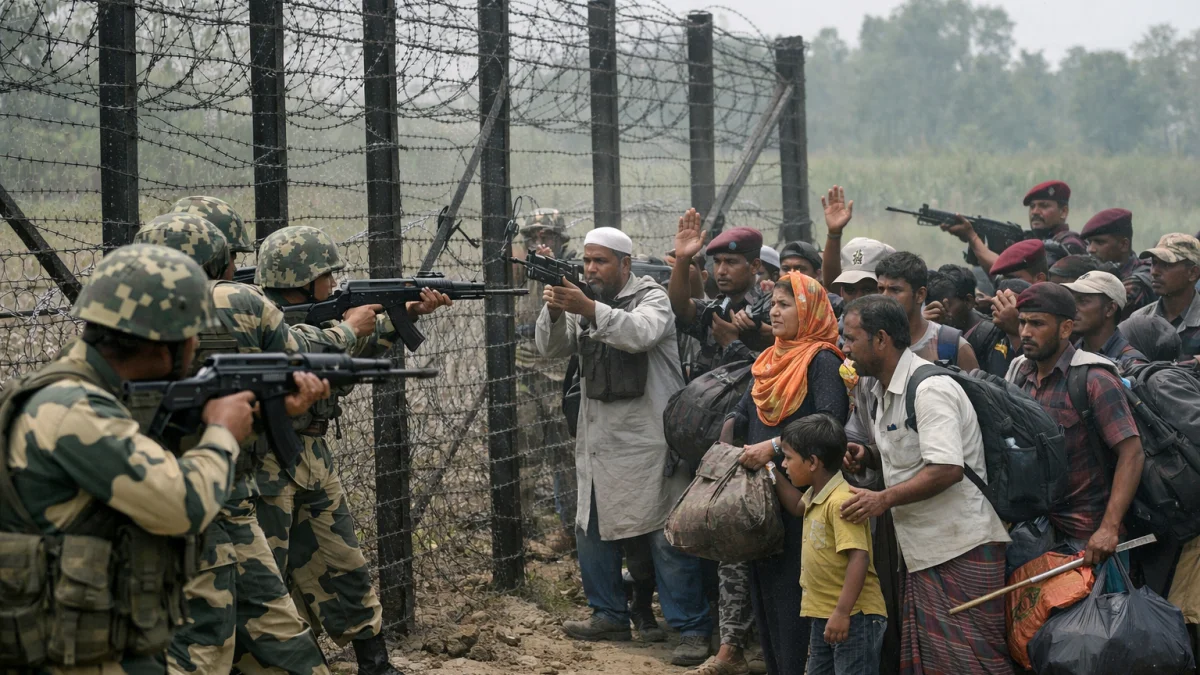
NEW DELHI—India's campaign to expel suspected undocumented Bangladeshi migrants has triggered a series of armed standoffs along the India-Bangladesh border, as Bangladeshi border guards have repeatedly refused to accept groups pushed across without prior nationality verification, deepening tensions between the neighboring countries.
Bangladesh's Border Guard Bangladesh (BGB) has said it blocked multiple attempts by India's Border Security Force (BSF) since early June to move people into Bangladeshi territory outside established repatriation procedures. Dhaka has maintained that individuals identified as Bangladeshi citizens will be accepted only after verification through bilateral mechanisms, rejecting what officials describe as unilateral "push-in" operations.
The incidents have left groups of men, women and children stranded in "zero line" areas between the two countries, with BSF and BGB personnel facing each other in tense confrontations until local commanders negotiated temporary arrangements or individuals were taken back by Indian authorities after Bangladesh declined entry.
India has intensified efforts to identify and remove undocumented migrants, particularly those suspected of entering from Bangladesh, with officials saying the country has laws governing illegal immigration and that deportations proceed after nationality is confirmed. Indian Foreign Ministry spokesperson Randhir Jaiswal has previously said New Delhi had submitted numerous verification requests to Bangladesh and would continue deportations once citizenship was established.
Bangladesh, however, has argued that established diplomatic procedures must be followed before any repatriation takes place and has protested what it says are repeated attempts to force people across the frontier without coordination. The issue was also discussed during recent director general-level talks between the BSF and BGB, where both sides addressed illegal crossings and border security.
Human Rights Watch has criticized India's actions, alleging that authorities forcibly expelled ethnic Bengali residents, many of them Muslims, without due process and left some families stranded between border forces. The rights group called on India to halt expulsions conducted without legal safeguards and urged both governments to ensure nationality verification and humane treatment. Indian authorities have not publicly responded in detail to those specific allegations.
The India-Bangladesh border, stretching about 4,000 kilometers (2,500 miles), has long been a flashpoint over irregular migration and cross-border crime. Recent deportation efforts have added strain to bilateral ties at a time when both governments continue discussions on border management and repatriation procedures. Officials from both countries have said existing mechanisms remain available to resolve disputed nationality cases, while security forces continue patrols along the frontier.