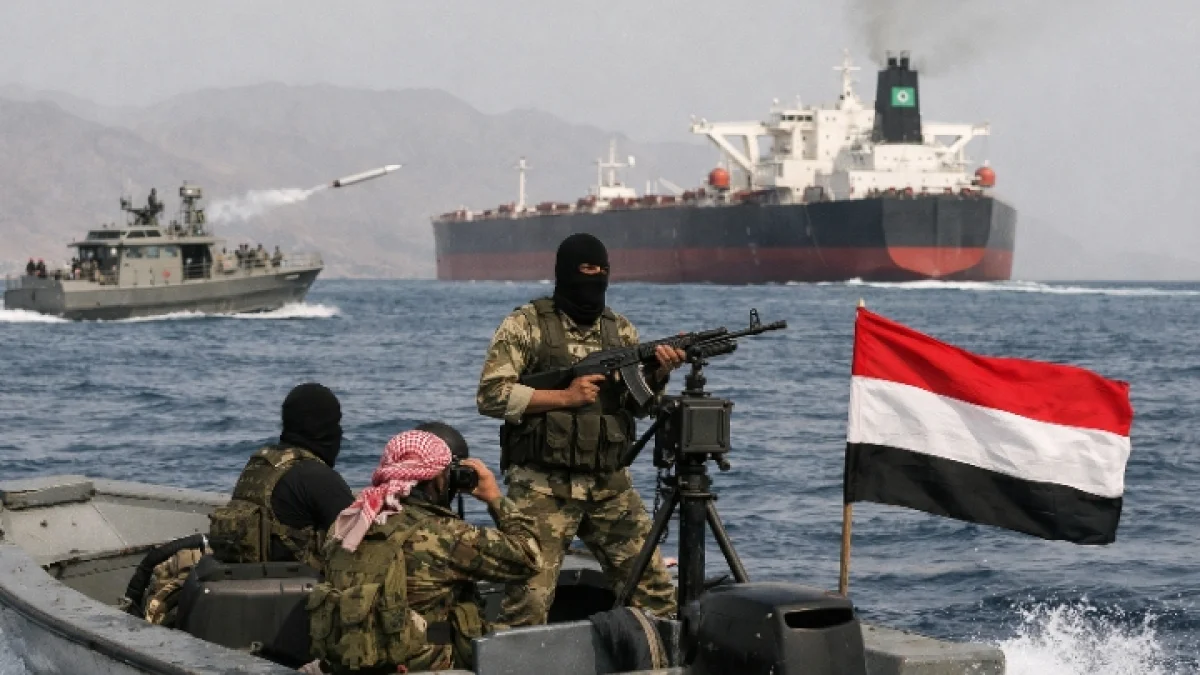
The Houthi movement's announcement that it is imposing a maritime embargo against Saudi Arabia marks a significant escalation in Red Sea security risks, reviving concerns that regional conflict could threaten another critical energy and trade corridor alongside existing disruptions elsewhere in the Middle East. The declaration follows renewed exchanges of fire between the Iran-aligned group and Saudi Arabia after years in which a fragile truce had substantially reduced direct cross-border attacks.
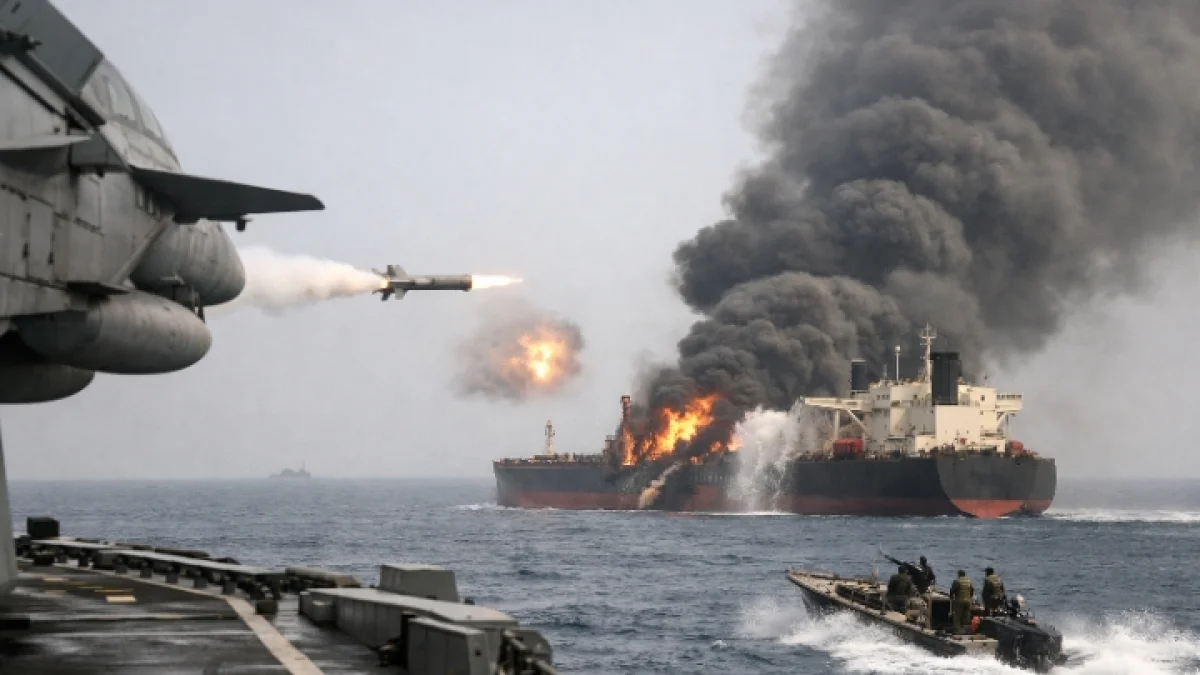
The significance of the announcement lies less in the declaration itself than in the potential consequences for commercial shipping, energy markets and regional diplomacy. Even if the Houthis do not establish a complete physical blockade, security analysts have long noted that missile, drone and anti-ship attacks can be sufficient to discourage commercial traffic, increase insurance costs and alter shipping patterns. Previous Houthi operations against vessels in the Red Sea demonstrated that perceived risk alone can lead shipping companies to reroute vessels or suspend operations.
The Bab el-Mandeb Strait, linking the Red Sea with the Gulf of Aden, is among the world's most strategically important maritime chokepoints. Large volumes of oil, petroleum products and containerized cargo transit the waterway between Europe and Asia. Any sustained disruption would therefore have implications extending well beyond the Gulf, affecting freight costs, delivery times and energy supplies across multiple regions.
The timing also amplifies the announcement's importance. Regional energy markets are already responding to heightened geopolitical uncertainty following broader conflict involving Iran and the United States and concerns over shipping through the Strait of Hormuz. Saudi Arabia has increasingly relied on Red Sea export routes to reduce exposure to risks in the Gulf. Analysts cited by Reuters said that if Red Sea exports also became vulnerable, Saudi Arabia's flexibility to redirect crude shipments could be significantly reduced.
The Houthis have presented the embargo as retaliation for what they describe as Saudi Arabia's long-running blockade of Yemen and for recent attacks on Sanaa International Airport. Saudi Arabia had not immediately issued a public response following the announcement. The absence of an official Saudi reaction leaves uncertainty over whether Riyadh will seek military, diplomatic or economic measures to contain the escalation while preserving the broader ceasefire framework that has largely held since 2022 despite periodic violations.
From a security perspective, the announcement highlights how non-state armed groups can influence global commerce without matching the naval capabilities of state militaries. Maritime security specialists have repeatedly observed that relatively inexpensive drones, missiles and sea-based attacks can impose disproportionate economic costs by increasing insurance premiums, delaying shipments and requiring additional naval escorts. Such disruptions need not halt all shipping to affect commercial calculations.
For oil markets, the development reinforces the geopolitical risk premium that traders have attached to crude prices during recent weeks. Reuters reported that oil prices initially rose on concerns over expanding regional conflict before easing as expectations of renewed diplomatic engagement between Washington and Tehran tempered immediate fears of a broader supply shock. Market participants continue to weigh physical supply risks against uncertainty over whether announced threats will translate into sustained disruption.
The announcement also carries broader diplomatic implications. Saudi Arabia has spent several years attempting to reduce direct military confrontation with the Houthis while pursuing negotiations aimed at ending Yemen's prolonged conflict. Renewed attacks and threats against maritime trade risk complicating those efforts and could increase pressure on regional and international actors seeking to prevent further escalation. The episode also illustrates how developments inside Yemen remain closely connected to wider regional rivalries involving Iran and its allied groups.
Historical experience suggests that maritime threats can have economic consequences even when shipping continues. During previous Red Sea security crises, many shipping companies rerouted vessels around southern Africa, extending voyage times and increasing transportation costs. Such responses affected supply chains despite the absence of a complete closure of the waterway. Whether similar adjustments emerge will depend on the frequency, location and credibility of any future Houthi operations as well as the security measures adopted by naval forces operating in the region.
The immediate situation remains fluid. The Houthis have declared the maritime embargo effective immediately, while Saudi Arabia has yet to announce an official response. Governments, shipping companies, insurers and energy markets are closely monitoring whether the declaration is followed by attacks on commercial shipping, changes in tanker movements through the Bab el-Mandeb Strait, additional military exchanges, or renewed diplomatic efforts to prevent further deterioration in regional security.