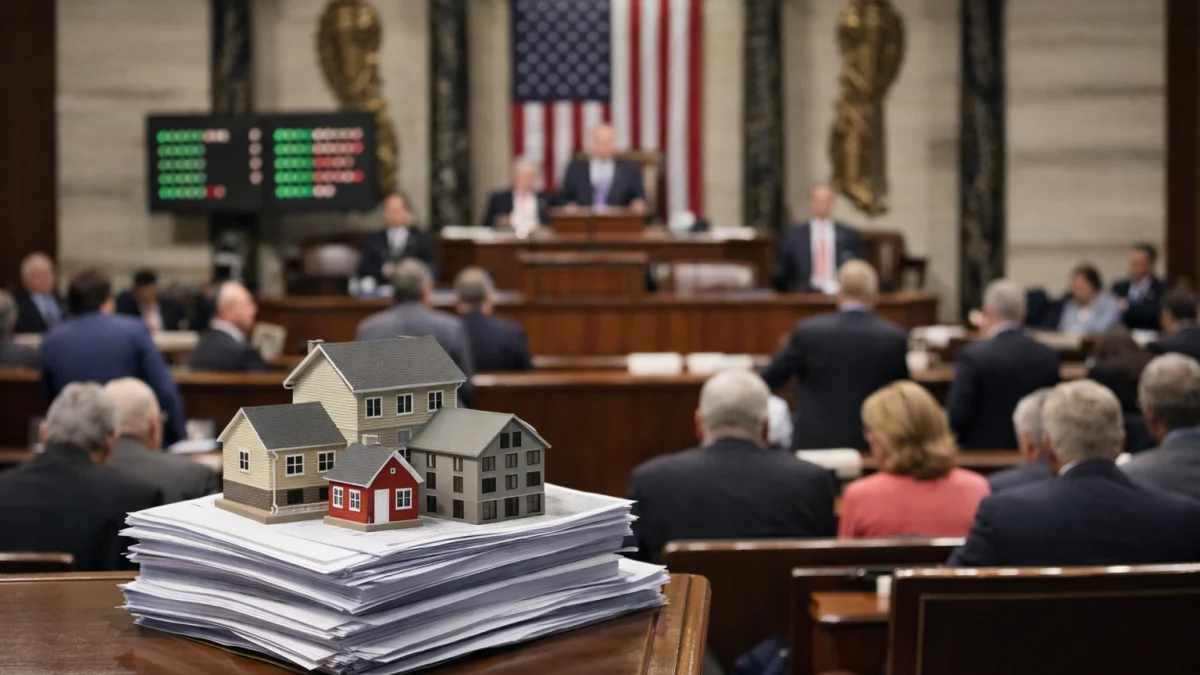
WASHINGTON — The U.S. House of Representatives approved a sweeping bipartisan housing affordability bill this week, sending the measure to President Donald Trump before the White House delayed a planned signing ceremony and linked the legislation to an unrelated voting proposal.
The legislation, known as the 21st Century ROAD to Housing Act, cleared the House on Tuesday by a vote of 358-32 after passing the Senate on Monday with broad bipartisan support. Lawmakers from both parties said the measure was intended to increase housing supply, reduce regulatory barriers to construction and address affordability concerns that have become a major issue for voters.
House Financial Services Committee Chairman French Hill, a Republican, said during debate that the United States faced a long-term housing shortage. “America is facing a housing supply shortage that’s been years in the making,” Hill said before the vote.
The legislation emerged from months of negotiations between House and Senate lawmakers. According to congressional summaries and media reports, the bill would streamline certain federal reviews, modernize housing-related banking regulations and place restrictions on large institutional investors purchasing single-family homes. Supporters said the measure represented one of the most significant housing initiatives considered by Congress in decades.
Democratic Representative Maxine Waters, who helped negotiate the package, said rising rents and home prices had made ownership increasingly difficult for many Americans. She described the legislation as an effort to address affordability pressures facing households nationwide.
The bill's progress appeared to set the stage for a ceremonial signing at the Capitol. However, on Wednesday, Trump announced that the event had been canceled and said he would not sign the measure until Congress passed the SAVE America Act, a separate election-related proposal that the president has promoted in recent months.
In a social media post, Trump described passage of the voting measure as a priority and called it a “national emergency,” according to reports. The decision drew criticism from some lawmakers, including Senator Elizabeth Warren, who argued that the housing legislation should move forward independently.
House Speaker Mike Johnson said Trump still intended to approve the housing bill, according to media reports. Under constitutional procedures, the legislation could become law without the president's signature if no further action is taken within the required time period.
As of Thursday, the housing bill remained pending presidential action while discussions over the SAVE America Act continued in Washington.