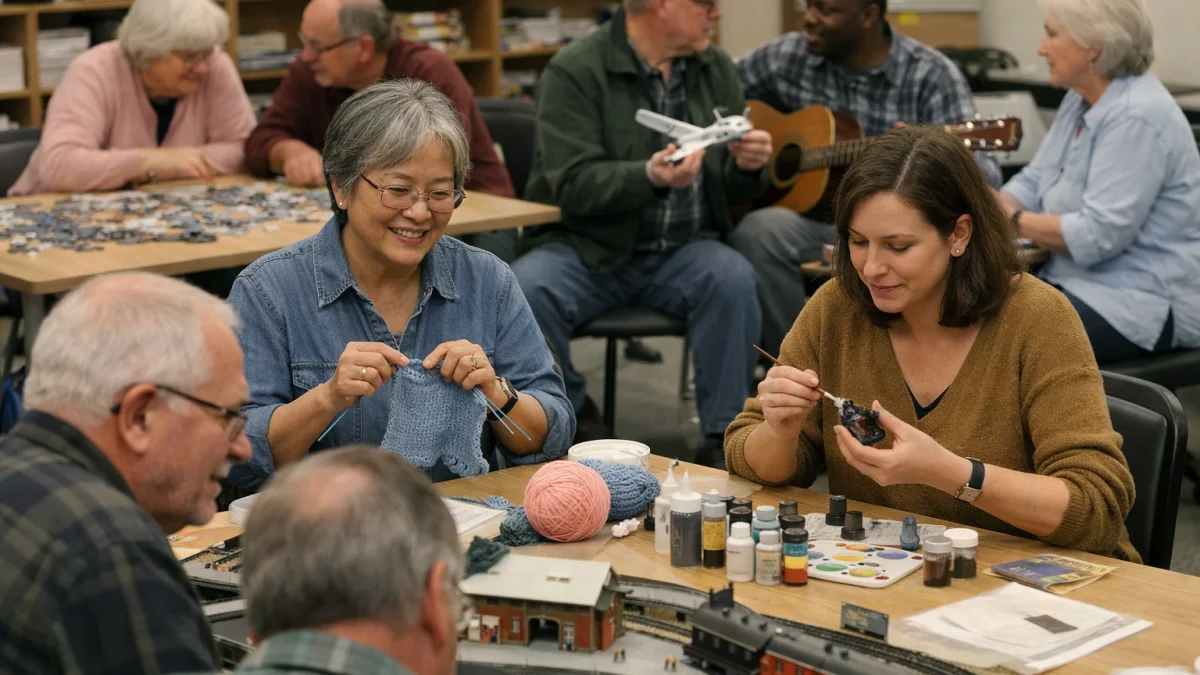
On a recent weekend in Philadelphia, hundreds of residents wandered between tables advertising everything from cookbook groups and choirs to cycling clubs, sketching circles and skill-sharing meetups. Some had recently moved to the city. Others had lived there for decades but still felt they were searching for a community. Organizers of the Philadelphia Activities Fair described the event as a simple way to help people discover groups that matched their interests—and perhaps find friendships along the way.
The gathering reflected a wider challenge facing many societies in 2026: loneliness has become an increasingly prominent public health concern, while community organizations and hobby clubs are emerging as practical places where people can reconnect. Rather than offering therapy or formal treatment, these groups provide regular opportunities for people to meet around shared interests, lowering the barriers to conversation and helping transform strangers into familiar faces.
For Caitlin Squier-Roper and her husband, Anthony Fernandez, attending the fair became an important first step after relocating from Seattle to Philadelphia. Squier-Roper had already discovered a local cookbook club online but hesitated to attend alone. Meeting organizers and other participants in person at the fair gave her greater confidence to join. Their experience illustrates a challenge researchers have increasingly identified: opportunities for connection may exist, but taking the first step can be difficult without a welcoming point of entry.
Activity fairs are modeled on a familiar idea—bringing dozens of community groups together under one roof. Brian Adoff, founder of Join Philly, which organized the event, told Vox that people often struggle to discover local activities despite an abundance of online listings. By allowing visitors to speak directly with club organizers, the fairs reduce uncertainty and encourage participation before people return to their routines.
Researchers say the value of such groups extends beyond the hobbies themselves.
A review published this year in Frontiers in Psychology argues that group-based physical activity can reduce loneliness not simply because participants exercise together, but because repeated interactions foster familiarity, trust and shared identity. The authors describe this as a "social dose"—the accumulated benefits that come from belonging to a group with regular meetings and common goals.
Other recent research points to friendship itself as a critical protective factor. A study published in Social Science & Medicine examining data from 25 countries found that regular contact with friends consistently reduced loneliness across different populations. While family relationships remain important, the researchers concluded that frequent friendships play an especially significant role in protecting against loneliness.
The importance of companionship also appears across generations. A study published in Social Networks reported that losing companion relationships increased loneliness among younger adults, while stable networks rich in companionship were associated with lower loneliness among older adults. The findings suggest that the quality and consistency of everyday social relationships matter as much as the number of contacts people maintain.
For many participants, hobby clubs provide exactly that consistency.
Weekly choir rehearsals, monthly book discussions, cycling outings or knitting circles create recurring opportunities for conversation without requiring members to explain why they came. The activity itself becomes the starting point, allowing relationships to develop gradually through shared experience rather than formal introductions.
Evidence supporting that pattern has accumulated over several years. Earlier research examining Australia's Life Activities Clubs Victoria found that members reported reduced loneliness after joining multi-activity community groups, with participants describing new friendships and broader social support as important outcomes, particularly after major life transitions such as retirement or relocation.
Those transitions frequently appear in contemporary accounts of loneliness.
Recent movers, retirees, people beginning new jobs and older adults whose social circles have changed often describe a similar challenge: rebuilding everyday relationships. The Philadelphia Activities Fair drew many visitors facing exactly those circumstances, including Deborah Winter, who was preparing to move to the city, and Terry Borden, a longtime resident who said community remained an ongoing pursuit. "It's hard to find your people," Borden told Vox.
Researchers caution that clubs are not a universal solution.
A recent analysis in Frontiers in Psychiatry, drawing on two large international surveys, found that people experiencing loneliness use many different coping strategies. Joining clubs and social activities was frequently viewed as helpful, but effectiveness varied according to personal circumstances, financial resources and cultural context. The authors argued that efforts to address loneliness should recognize the diversity of people's experiences rather than assume a single approach will work for everyone.
Digital communities may also play a role. A 2026 observational study published in JMIR Formative Research reported that adults participating in a professionally moderated gaming community experienced improvements in several measures of psychological well-being over two months. While the researchers called for further controlled studies, they suggested structured online communities can provide meaningful social support when carefully designed.
Still, many community organizers believe face-to-face interaction retains unique strengths.
Sav Thorpe Capizzi, who launched Pennsylvania's Stuff to Do Fair after discovering the enjoyment of square dancing, told Vox she wanted adults to imagine new possibilities for themselves through clubs they might otherwise never consider. Her fairs have expanded in attendance as more organizations participate and more residents seek ways to meet others beyond digital platforms.
By the end of the Philadelphia event, visitors left carrying flyers for book clubs, choirs, craft guilds and volunteer organizations. Whether those groups ultimately become lasting friendships remains to be seen. But for many attendees, the fair offered something immediately tangible: a place to begin.
As communities continue searching for responses to widespread loneliness, hobby clubs are increasingly being viewed not merely as leisure activities, but as part of the social infrastructure that helps people rebuild the everyday connections on which healthy communities depend.