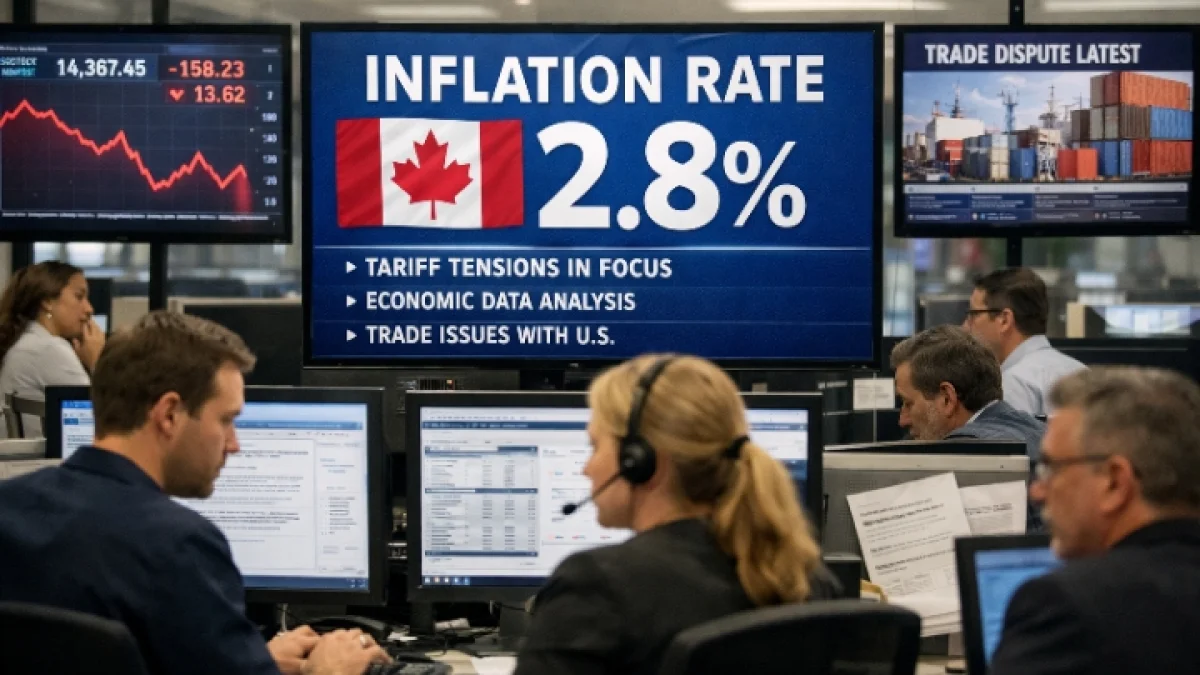
OTTAWA — Canada’s annual inflation rate eased to 2.8% in June from 3.2% in May, Statistics Canada said, as lower gasoline prices helped slow overall consumer price growth while businesses and households continued to face uncertainty from trade tensions and tariff measures.
The Consumer Price Index fell 0.4% on a monthly basis in June, the largest monthly decline since December 2024, according to Statistics Canada data. Gasoline prices dropped more than 10% from May, contributing significantly to the slowdown in headline inflation.
Excluding gasoline, inflation was unchanged at 2.2% year over year, indicating that underlying price pressures remained relatively stable despite the decline in energy costs. Core inflation measures monitored by the Bank of Canada also eased, with the CPI-median and CPI-trim measures moving below 2%.
Food prices continued to rise faster than overall inflation, with grocery prices increasing about 3.9% from a year earlier, although the pace moderated from the previous month. Transportation costs remained elevated, reflecting continued pressure from energy-related expenses.
The inflation data came as Canada’s economy faces renewed uncertainty from trade disputes with the United States. The Bank of Canada has previously said the economy was adjusting to U.S. tariff measures and uncertainty surrounding the future of the Canada-United States-Mexico trade relationship.
U.S. tariff actions announced in July added pressure to Canadian businesses and policymakers, raising concerns about potential effects on supply chains, export costs and future consumer prices. Canadian officials have said they remain engaged in discussions aimed at addressing trade issues.
The Bank of Canada kept its policy interest rate unchanged at 2.25% in July, saying inflation had been easing gradually but that uncertainty remained high because of global developments and trade conditions.
Financial markets viewed the softer inflation reading as reducing pressure for further interest-rate increases. The Canadian dollar weakened after the report, while investors adjusted expectations for the path of monetary policy.
Statistics Canada is scheduled to release the next Consumer Price Index report, covering July inflation, on Aug. 17.