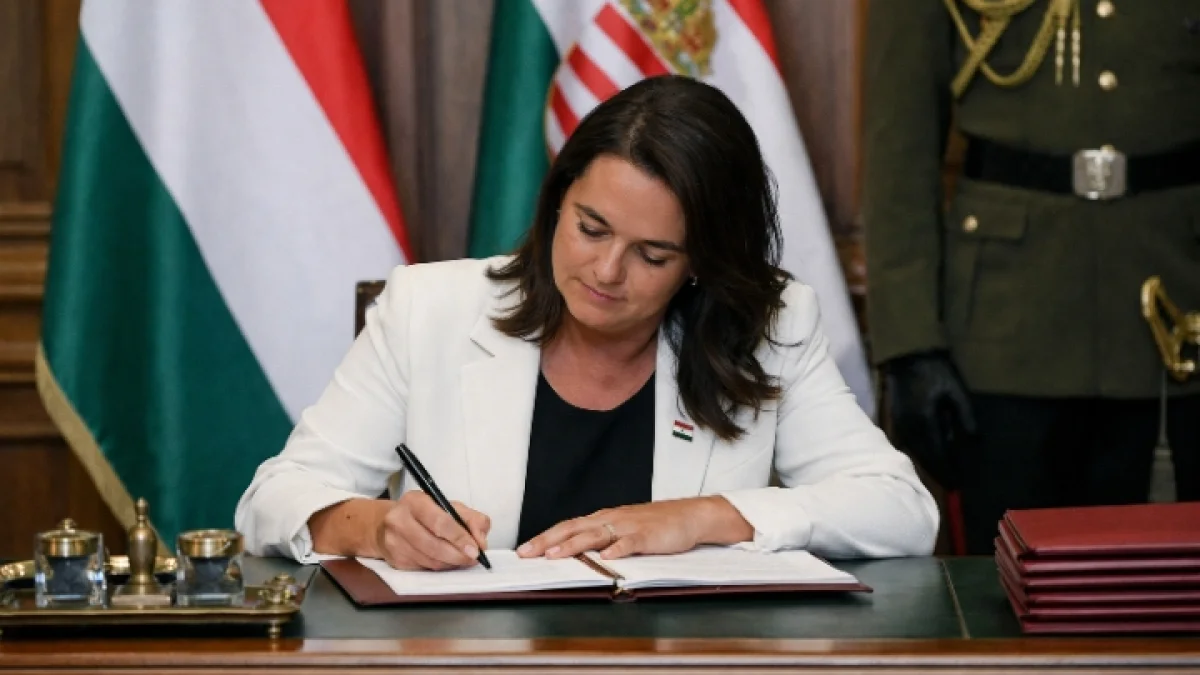
BUDAPEST — Hungarian President Tamás Sulyok has signed a constitutional amendment ending his own mandate, bringing to a close a confrontation with the country's new government and paving the way for the appointment of an interim head of state before parliament elects a successor.
The amendment, approved by parliament on July 13 after the governing Tisza party secured a two-thirds majority, provides that Sulyok's term ends the day after the legislation takes effect. The measure forms part of a broader package of constitutional and judicial reforms introduced by Prime Minister Péter Magyar following his landslide election victory in April.
In a statement posted on social media, Sulyok said he had signed the amendment despite believing it represented an abuse of political power. He said he was fulfilling his constitutional obligation after weighing his legal responsibilities and conscience, while arguing that the provision terminating the sitting president's mandate would stand as a damaging precedent.
Magyar has repeatedly urged Sulyok, who was elected president in 2024 with the backing of former Prime Minister Viktor Orbán's Fidesz party, to resign. The prime minister has argued that officials appointed during Orbán's years in power failed to safeguard democratic institutions and that institutional reforms are needed to restore accountability.
Fidesz has strongly criticized the constitutional changes, describing them as an attack on democratic norms. Orbán has also condemned the reforms, while the party boycotted the parliamentary session in which the amendment was adopted.
The constitutional package extends beyond the presidency. It introduces a 12-year limit on parliamentary service, lowers the term of Constitutional Court judges to nine years, imposes a mandatory retirement age of 70 for constitutional judges, and creates a new National Asset Recovery and Asset Protection Office, according to the adopted legislation.
Under the amended constitution, Parliament Speaker Ágnes Forsthoffer is due to serve as interim president until parliament elects a new head of state, who will remain in office until a new constitution takes effect or for a maximum of five years under the transitional arrangements. Prime Minister Magyar said on July 19 that he intended to nominate chess grandmaster Judit Polgár for the largely ceremonial presidency, although parliament has yet to hold the election.