CARACAS, June 28, 2026 — Two powerful earthquakes that struck northern Venezuela on June 24 are being assessed by seismologists as a rare “seismic doublet,” a phenomenon that significantly increased destruction across already vulnerable urban areas and intensified the scale of the disaster response.
The earthquakes, measuring magnitude 7.2 and 7.5 and occurring roughly 40 seconds apart, hit near north-central Venezuela, with strong shaking felt in Caracas and surrounding coastal regions. The U.S. Geological Survey (USGS) said the events represent one of the strongest seismic episodes in the region in decades and were unusually damaging due to their shallow depth and near-simultaneous rupture.
Experts say the back-to-back nature of the quakes likely compounded structural failures.
A seismic doublet occurs when two major earthquakes of similar magnitude strike in close succession, preventing weakened buildings from stabilizing between shocks. In Venezuela’s case, analysts note that the second, slightly larger quake likely caused widespread collapse of structures already compromised by the first.
USGS data indicates both events were shallow-focus earthquakes, a type known to produce more intense surface shaking and greater structural damage than deeper seismic activity.
The scale of destruction reflects not only the strength of the earthquakes but also longstanding infrastructure vulnerabilities in affected regions.
Large portions of residential and public buildings in Caracas and nearby areas include older construction not designed to withstand high-magnitude seismic events. Urban density in hillside and coastal zones further increased the risk of collapse and landslides.
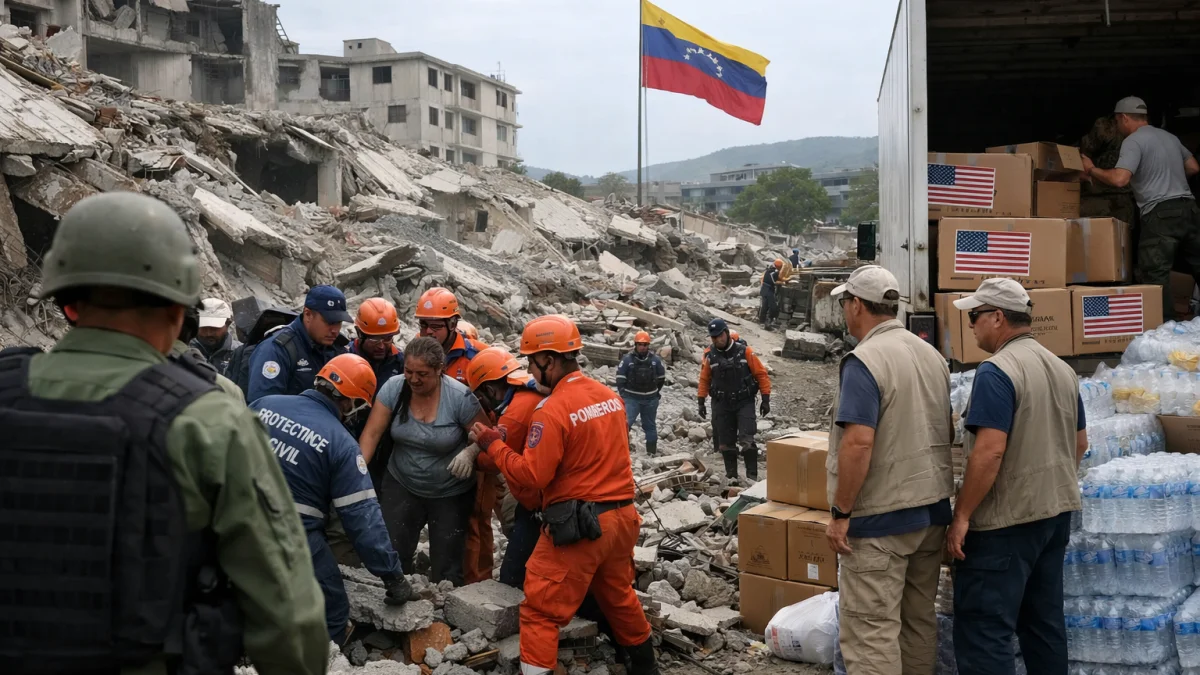
Humanitarian agencies report widespread damage to housing, transport links, and essential services, complicating rescue operations and slowing access to affected communities.
Authorities have reported more than 1,400 deaths, with thousands injured and many others still missing, though officials and aid groups caution that figures remain preliminary and are expected to change as search-and-rescue operations continue.
International assistance has been mobilized, including search-and-rescue teams and emergency supplies from several countries in Latin America, North America, and Europe. The United Nations and partner agencies have warned of significant displacement risks and pressure on already strained public services.
Aftershocks continue to be recorded, further complicating recovery efforts and raising concerns about additional structural failures in weakened buildings.
Beyond the immediate destruction, the disaster highlights deeper structural vulnerabilities.
Analysts say Venezuela’s capacity to respond to large-scale natural disasters has been constrained by years of economic stress, underinvestment in infrastructure, and limited redundancy in critical public systems. These factors have reduced resilience in urban centers, where population density is highest.
Humanitarian coordination efforts are ongoing, but logistics challenges, damaged infrastructure, and communication disruptions have slowed the delivery of aid to some areas.
Seismologists caution that aftershock sequences could continue for days or weeks, maintaining elevated risk for already damaged structures. Authorities are focusing on search-and-rescue operations while beginning preliminary damage assessments in the hardest-hit regions.
The event is expected to prompt renewed discussion on building standards, disaster preparedness, and emergency response capacity in earthquake-prone regions of northern South America.
For now, officials say the priority remains locating survivors and stabilizing essential services as the full scale of the disaster continues to emerge.