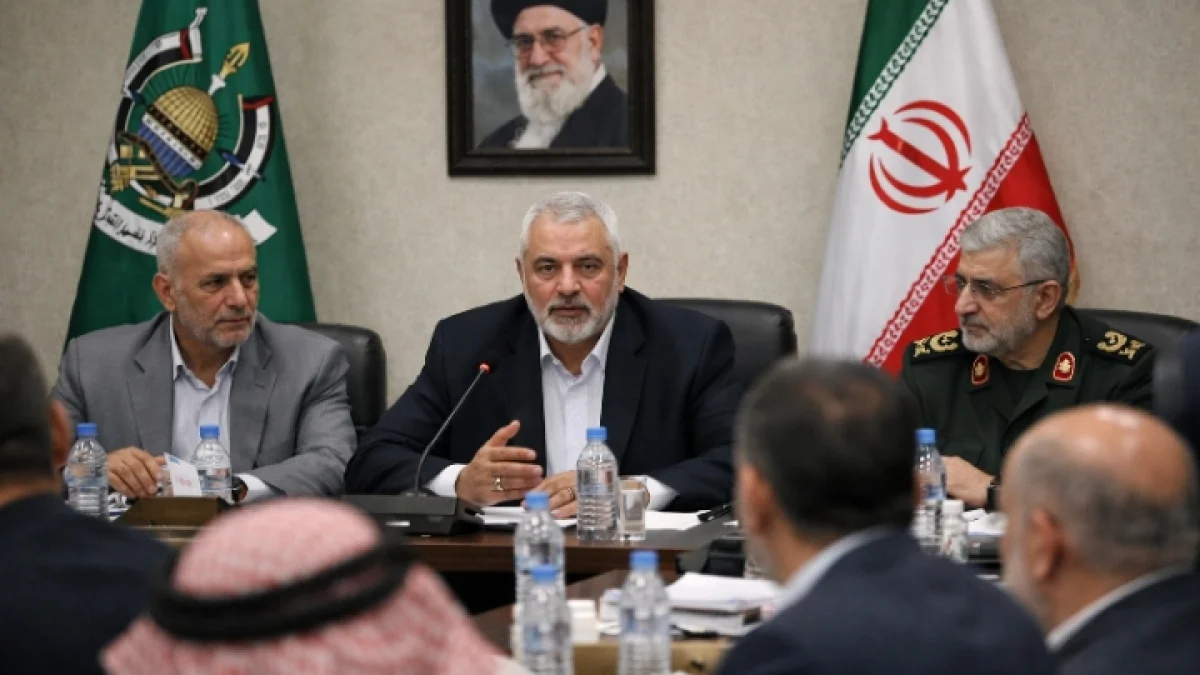
DOHA — Hamas has elected senior official Khalil al-Hayya as head of its political bureau, elevating a veteran leader widely viewed by regional analysts as closely aligned with Iran and placing him at the helm of the Palestinian Islamist movement as it seeks to navigate the aftermath of nearly three years of war with Israel.
The group announced al-Hayya's election in a statement on Monday, saying he would succeed Yahya al-Sinwar, who was killed by Israeli forces in Gaza in 2024. The appointment followed an internal voting process involving representatives from Hamas in Gaza, the occupied West Bank, prisons and its external leadership, according to the statement.
Al-Hayya, 65, has served as Hamas's lead negotiator in indirect ceasefire talks with Israel and has been one of the movement's most prominent officials based outside Gaza. He has long maintained close ties with Iran, a principal backer of Hamas, while also working with mediators in Qatar and Egypt during negotiations over ceasefires and hostage exchanges.
Political analysts cited by Reuters said the choice of al-Hayya over other senior figures, including former political bureau chief Khaled Meshaal, signaled Hamas's intention to retain its military capabilities and strategic alliance with Tehran despite sustained international pressure for the group to disarm as part of any long-term settlement.
Hamas said al-Hayya was chosen after the completion of an internal electoral process but did not provide details of the vote. The movement has been led by a temporary leadership council since Sinwar's death.
Israel has accused Hamas of orchestrating the Oct. 7, 2023, attack that triggered the war in Gaza and has vowed to dismantle the group. Hamas says it is fighting against Israeli occupation and has rejected calls to surrender its weapons without guarantees for Palestinian statehood.
Al-Hayya, a founding member of Hamas, has survived multiple Israeli assassination attempts over the years. He became increasingly influential after the deaths of several senior Hamas leaders and played a central role in negotiations mediated by Qatar and Egypt.
His appointment comes as ceasefire negotiations remain stalled and humanitarian conditions in Gaza continue to draw international concern. Mediators have continued efforts to revive talks, but no comprehensive political agreement has been announced.