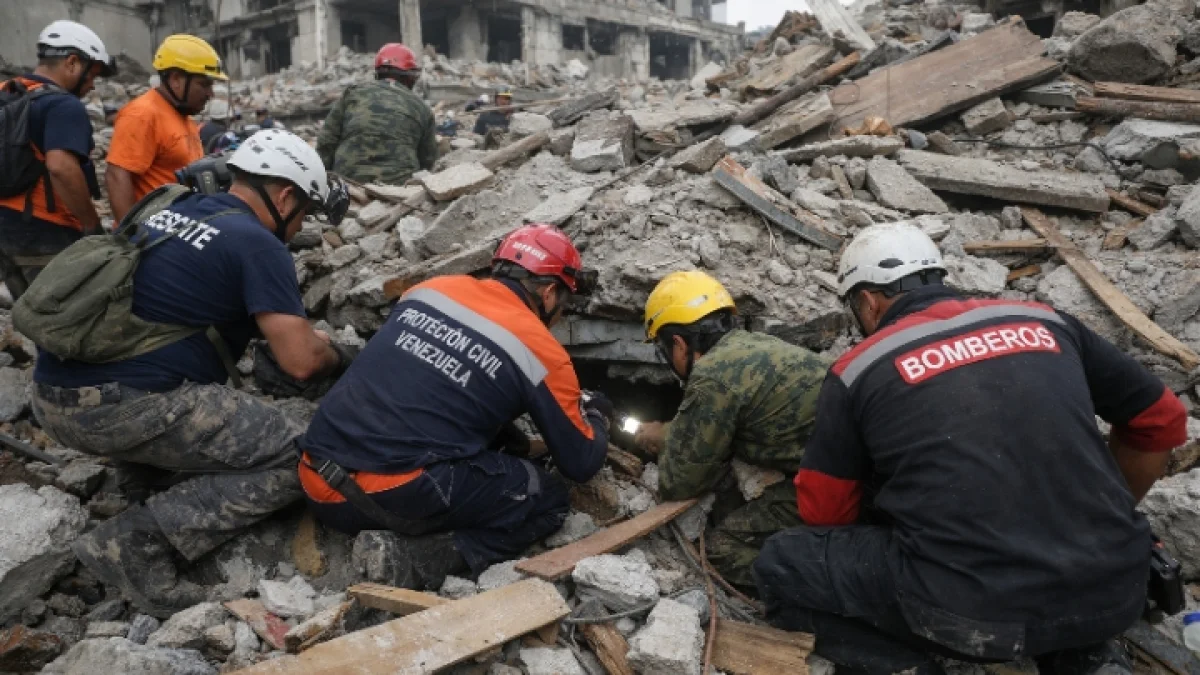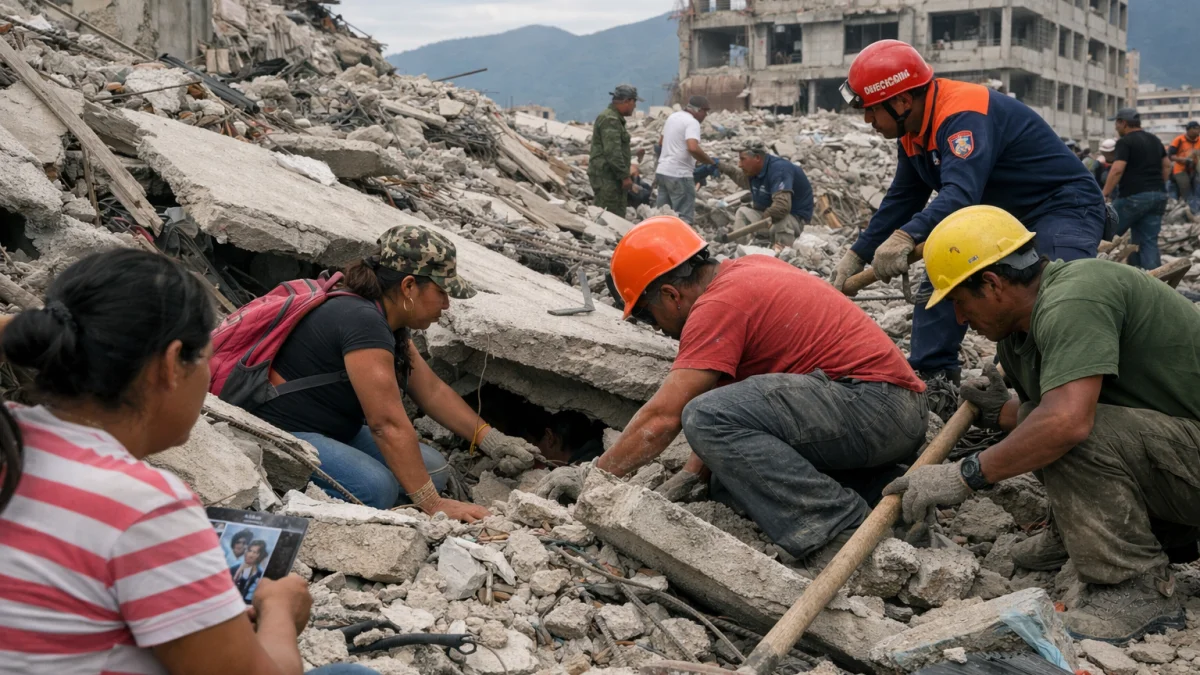
La Guaira, Venezuela — In the dust-choked ruins of a collapsed apartment block in this coastal city north of Caracas, Franklin Fuentes sifted through chunks of concrete and twisted rebar with his bare hands. Five days after twin earthquakes flattened much of his neighborhood, he paused only to call out the names of his missing relatives.
Similar scenes unfolded across La Guaira and parts of Caracas in the aftermath of the magnitude 7.2 and 7.5 earthquakes that struck on June 24, 2026. The quakes, occurring just 39 seconds apart near Veroes in Yaracuy state, caused widespread destruction, collapsing buildings and leaving families to search for loved ones long after official rescue efforts slowed.
The human toll remains staggering. As of late June, officials reported more than 1,700 deaths, over 10,000 injuries, and tens of thousands still missing, with independent counts and family registries suggesting even higher figures for the unaccounted. In La Guaira alone, more than 1,400 buildings were destroyed or severely damaged, according to reports from the area.
The earthquakes, the strongest to hit Venezuela in more than a century, exposed vulnerabilities in the country's aging infrastructure. Many residential high-rises in Caracas and coastal communities like La Guaira, built decades ago, crumbled under the intense shaking. The Simón Bolívar International Airport near Caracas sustained heavy damage, disrupting aid flows.
For families like Fuentes', the immediate chaos gave way to a grinding vigil. Neighbors and volunteers, often without heavy machinery or protective gear, dug through debris using pickaxes, shovels, and their hands. They listened for faint voices or taps from those still trapped.
One widely reported rescue offered a rare glimmer of hope. On June 29, a father and his son were pulled alive from rubble after four days entombed, emerging weakened but responsive to medical teams in La Guaira. Crowds gathered as rescuers carried them on makeshift stretchers to ambulances.
Other survivors recounted narrow escapes. In one verified case, a family including a four-year-old child was found alive after more than 24 hours beneath collapsed concrete. Social media filled with digital flyers—photos, names, and last known locations—posted by relatives in Venezuela and abroad desperately seeking information on those unaccounted for.
Vanesa Marcano, 31, living in Madrid, posted images of her uncle and aunt in La Guaira, joining thousands using WhatsApp groups and platforms to compile missing persons lists.
The broader context adds layers of strain. Venezuela's economy and public services have faced long-term challenges, leaving many buildings poorly maintained and emergency response capacity stretched. International teams from multiple countries, including the United States and India, arrived with specialized equipment and field hospitals, yet coordination issues persisted amid ongoing aftershocks.
Residents described the quakes' terror. The initial 7.2 foreshock was followed almost immediately by the stronger mainshock, giving people little time to react. In densely populated areas, the shallow depth amplified damage to homes and infrastructure.
Community perspectives vary. Some praised spontaneous local efforts and arriving foreign aid, while others voiced frustration over delays in heavy equipment and official response. In hardest-hit zones, ordinary Venezuelans led much of the initial search, loading trucks with water, food, and tools.
Experts note the region's seismic risk, situated near active fault lines. The events recalled the 1967 Caracas earthquake, though this disaster's scale appears greater in terms of collapsed structures.
As search operations continue into the second week, the focus for many families has shifted from immediate rescue to recovery and accounting for the missing. In La Guaira, volunteers and relatives maintain vigils at rubble sites, hoping for more miracles even as the odds diminish.
Fuentes, still searching, expressed the quiet determination shared by many. He and others continue methodically clearing debris, one piece at a time, refusing to abandon the possibility that their loved ones might still be found.
The earthquakes have left a profound mark on Venezuelan society, highlighting both resilience in the face of tragedy and the urgent need for stronger preparedness in a seismically active nation. For families in the rubble, the story is simpler and more immediate: the search goes on.