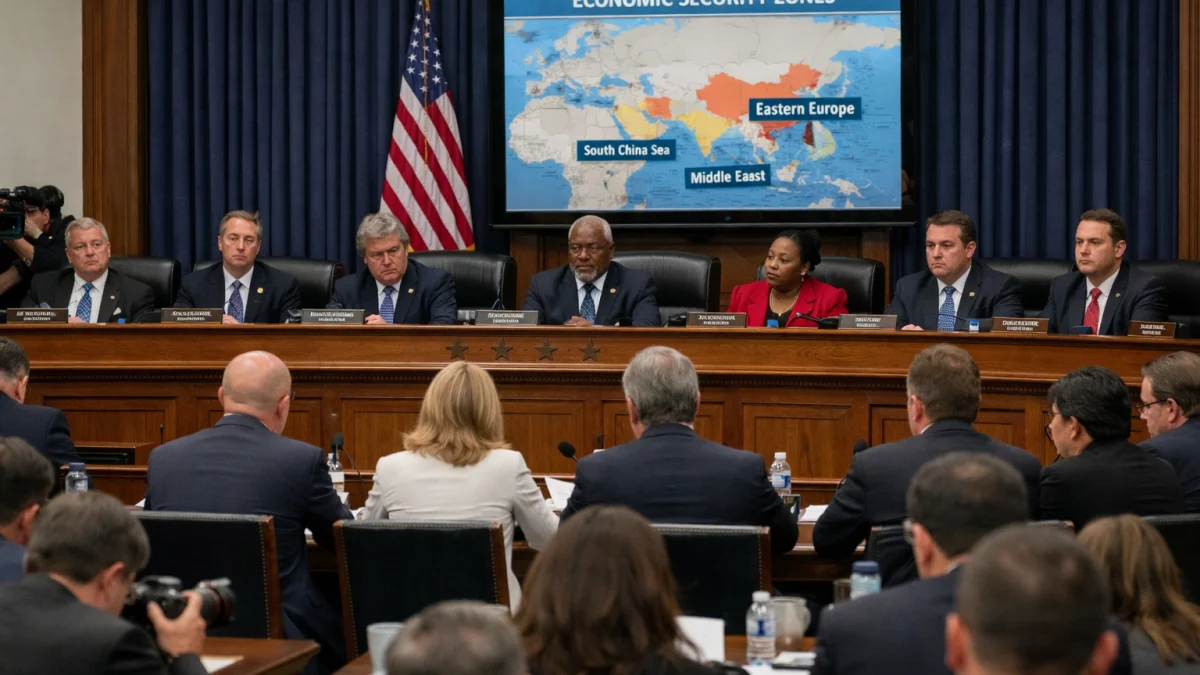
WASHINGTON — A U.S. House of Representatives panel convened a hearing on Tuesday to examine proposals aimed at expanding the use of economic security zones abroad, as lawmakers assessed whether the approach could strengthen supply chains, encourage U.S. investment in strategic sectors and reduce dependence on geopolitical rivals.
The House Foreign Affairs Committee's Oversight and Intelligence Subcommittee scheduled the hearing, titled "U.S. Economic Security and Investment Abroad: Assessing Economic Security Zones," as part of a broader congressional focus on economic security and international competitiveness. The session was listed for 2 p.m. EDT on July 14.
According to the committee, witnesses included Erick A. Brimen, founder and chief executive of Prospera International; Michael R. Hollomon II, chief commercial officer of US Strategic Metals; and Paul Sullivan, president of international business at Acrow Bridge. The committee published hearing documents and a formal notice in advance of the proceedings.
Lawmakers said the hearing would examine whether designated economic security zones in partner countries could help attract private investment, support the production of critical materials and manufacturing, and reinforce U.S. economic and national security objectives. The discussion comes as Congress continues to debate policies intended to diversify supply chains and reduce vulnerabilities in industries viewed as strategically important.
The hearing formed part of a busy schedule for the House Foreign Affairs Committee on Tuesday that also included a separate session on aligning U.S. commercial diplomacy between the Departments of State and Commerce, reflecting broader congressional interest in economic statecraft and international trade policy.
Public committee materials identified the event as an oversight hearing but did not indicate that members would vote on legislation during the session. Instead, lawmakers were expected to gather testimony from industry representatives as they considered possible policy options related to overseas investment and economic resilience.
The hearing took place against the backdrop of continuing congressional efforts to examine how U.S. economic policy can support foreign policy objectives, including strengthening partnerships with allied nations and securing access to critical supply chains. Recent committee hearings have focused on issues ranging from commercial diplomacy to technology competition and export controls.
As of Tuesday, the committee had scheduled the hearing and published its witness list and supporting documents. No legislative action had been announced in connection with the proceeding, and further committee recommendations, if any, were expected to follow after lawmakers reviewed the testimony presented during the hearing.