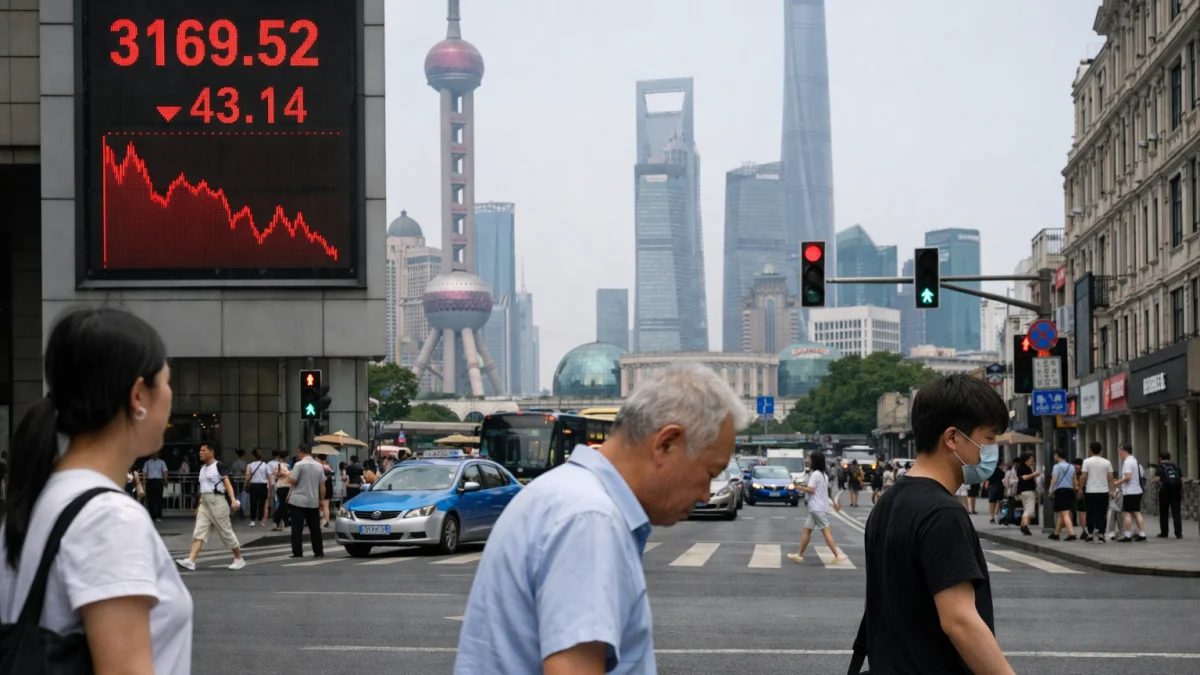
BEIJING—China's economy expanded 4.3% in the second quarter from a year earlier, one of the country's weakest growth rates outside the COVID-19 pandemic period, as persistent weakness in the property sector and subdued domestic demand offset resilience in manufacturing and exports, according to official data released on July 16.
The National Bureau of Statistics (NBS) said gross domestic product grew 4.7% in the first half of 2026 from a year earlier, with growth slowing from 5.0% in the first quarter to 4.3% in the April-June period. On a quarterly basis, the economy grew 0.9% from the previous three months.
The second-quarter reading ranks among China's lowest annual growth rates since quarterly records began in the early 1990s, excluding the sharp disruptions caused by the COVID-19 pandemic, underscoring the challenges facing the world's second-largest economy as it seeks to shift toward consumption-led growth.
The NBS said the economy had "operated within an appropriate range" despite mounting external pressures, citing stable employment, continued industrial production and the rapid development of new growth industries. The agency said macroeconomic policies had helped support activity during the first half of the year.
Official data showed the services sector expanded 5.2% in the first six months of the year, while the industrial sector grew 3.9%. Manufacturing continued to outperform several traditional sectors, but construction activity remained weak and real estate output declined slightly from a year earlier, reflecting the prolonged downturn in the housing market.
Economists said the figures highlighted the economy's uneven recovery, with export-oriented industries providing support while household spending and private-sector confidence remained under pressure. Analysts have increasingly called for additional fiscal measures to strengthen domestic demand and help authorities achieve their annual growth objective.
China entered 2026 with an official economic growth target of about 4.5% to 5.0%, lower than in previous years as policymakers acknowledged a more challenging domestic and global environment. Officials have repeatedly said they will continue implementing proactive fiscal policies and supportive macroeconomic measures to stabilize growth.
The NBS said it would continue monitoring economic conditions as authorities pursue policies aimed at supporting employment, boosting domestic demand and fostering new sources of growth during the remainder of the year.